TDEE Calculator Singapore for Smarter Meal Planning
TDEE calculator Singapore
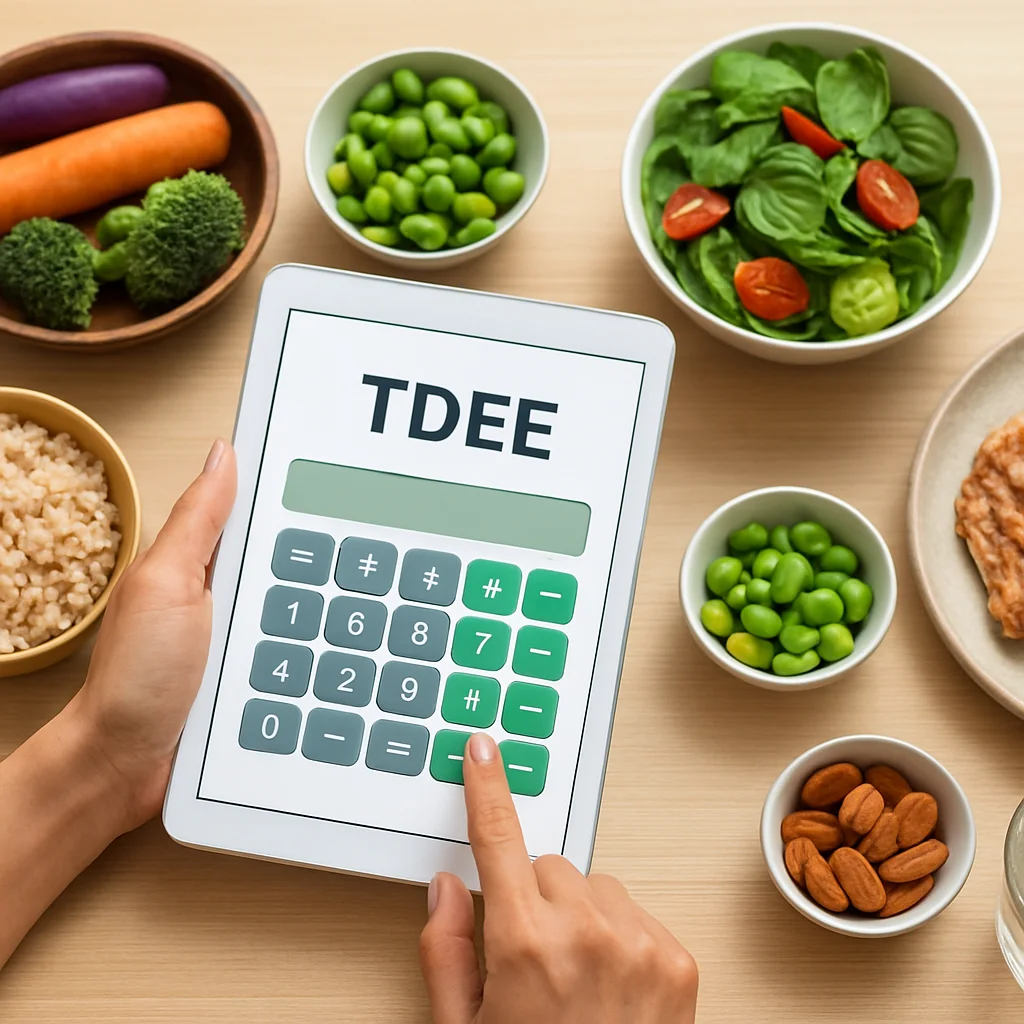
A TDEE calculator Singapore gives you a solid starting point for maintenance calories, fat loss, muscle gain, or body recomposition. It won’t be perfect on day one, but it’s usually good enough to begin planning meals, then adjust based on real results over 2–3 weeks.
This guide shows you how maintenance calories work, how activity levels actually change your number, and how to estimate a starting point using Singapore-friendly food choices. You’ll also learn how to translate TDEE into macros, what to do if you have insulin resistance or high blood pressure, and how to avoid the classic mistake of eating “healthy” while still overshooting calories.
What TDEE means, and why it matters
TDEE stands for Total Daily Energy Expenditure. It’s the total number of calories you burn in a day from basic body functions, movement, exercise, digestion, and the normal chaos of life.
If your intake matches your TDEE, your weight usually stays about the same. Eat below it, and you tend to lose weight. Eat above it, and you tend to gain. Physics is rude like that.
For Singapore users, TDEE is useful because food is abundant, portions vary wildly, and many meals look healthy while packing more calories than expected. A caifan plate with rice, three dishes, and a kopi with sugar can quietly become a 900–1,200 calorie event before lunch is even emotionally processed.
If you’re planning meals for body recomposition, diabetes management, or family meal prep, a TDEE baseline helps you set the right calorie target before you start choosing recipes.
[INTERNAL LINK: macro tracking basics]
How a TDEE calculator Singapore estimates your calories
A decent TDEE calculator Singapore starts with your BMR or basal metabolic rate, then multiplies it by an activity factor. BMR is the energy your body uses at rest for things like breathing, circulation, and keeping your organs running.
Most online calculators use equations such as:
- Mifflin-St Jeor
- Harris-Benedict
- Sometimes proprietary formulas
The Mifflin-St Jeor equation is widely used because it performs reasonably well for many adults. Research has shown it tends to be more accurate than older formulas for estimating resting energy needs, though no calculator can perfectly capture your actual daily burn.
Here’s the catch: two people with the same height, weight, age, and sex can still have different TDEEs if their jobs, step counts, and exercise routines differ. That’s why activity level matters so much.
A simple example
Let’s say a 35-year-old woman in Singapore weighs 68 kg, is 160 cm tall, works a desk job, and walks 7,000–8,000 steps a day with two 45-minute strength sessions weekly.
A rough TDEE might land around 1,900–2,100 calories depending on the formula and actual daily movement. Another woman with the same stats but a retail job, daily stairs, and 10,000+ steps could easily be 100–300 calories higher.
That gap is enough to stall fat loss or create confusion. Not because the calculator is useless, but because your real life isn’t a lab.
[IMAGE: TDEE formula breakdown chart + alt text: Simple TDEE breakdown showing BMR, work activity, exercise, and total daily energy expenditure]
Why activity level should be measured properly
Many calculators ask you to pick “sedentary,” “lightly active,” or “very active.” That’s fine for quick estimates, but it’s a blunt tool. KnowMeal uses a more practical component-based activity model that looks at work type + exercise sessions + duration, which is more useful for real meal planning.
That matters because a finance analyst who trains four times a week is not the same as a delivery rider who also lifts weights. Same checkbox. Very different calorie burn.
A better way to think about activity
Break your week into three parts:
- Work movement: desk job, retail, nursing, logistics, cleaning
- Exercise sessions: number of sessions and duration
- Daily movement: steps, stairs, school runs, commuting
This is more honest than a single activity label. In Singapore, this distinction is especially useful because many people have low-NEAT lifestyles during office hours but still do evening exercise, or the reverse.
NEAT means non-exercise activity thermogenesis. It’s the calories you burn through ordinary movement, and it can change a TDEE estimate more than people expect.
Practical activity examples in Singapore
- Desk job + 3 gym sessions/week: often closer to moderate, not “very active”
- Retail or service work + weekend exercise: usually higher than sedentary
- Primary caregiver or teacher on feet all day: often underestimated by calculators
- Personal trainer demonstrating sessions all day: may need more than standard “active” assumptions
This is one reason people say, “I’m eating 1,600 calories and not losing weight.” Sometimes the math is wrong. Sometimes the portions are. Sometimes both are quietly collaborating against you.
How to estimate your maintenance calories in Singapore
Start with a calculator, then treat the result as a starting point, not gospel.
A practical method:
- Estimate your TDEE.
- Eat near that number for 10–14 days.
- Weigh yourself 3–7 times per week under the same conditions.
- Compare your weekly average, not a single day.
- Adjust by 100–200 calories if needed.
If your average weight stays stable, you’re close to maintenance. If it trends down, you’re below maintenance. If it trends up, you’re above it.
A useful real-world pattern I’ve seen: people often overestimate exercise and underestimate snacks. A couple of kaya toast sets, two iced coffees, and a “small” portion of fried noodles can erase a carefully planned calorie deficit before dinner.
For Singaporean meal planning, this is why transparent calorie ranges matter. Rounding to the nearest 50 calories makes tracking easier without pretending every seed from a sesame bun can be measured with divine certainty.
[INTERNAL LINK: calorie budgeting for meal plans]
Turning TDEE into a goal
Once you know your maintenance calories, you can set the right target.
For weight loss
A common starting deficit is 250–500 calories per day. That usually supports steady fat loss without making meals feel miserable.
For many people, a smaller deficit works better when the goal is long-term compliance. If you’re juggling work, family, and traffic on the PIE, a brutal deficit can backfire fast.
For muscle gain
Add 150–300 calories above maintenance and keep protein high. You’ll gain more slowly, but you’re less likely to put on unnecessary fat.
For body recomposition
Stay near maintenance or use a small deficit while lifting regularly and eating enough protein. This is often the best route for beginners, returning exercisers, and people who want a leaner waist without aggressive dieting.
For maintenance
This is underrated. Maintenance is not “doing nothing.” It’s often the phase that teaches you how to eat like a functioning adult instead of treating every meal like a temporary ceasefire.
If you want a personalised breakdown, a structured system like KnowMeal can convert your TDEE into daily calorie and macro targets automatically, then build meal plans around Singapore-friendly foods.
Macros: the simple version that actually helps
A TDEE number tells you how much to eat. Macros tell you what that food should do.
Protein
Protein helps preserve and build muscle, supports satiety, and is especially useful during fat loss. For many adults, a practical target is 1.6–2.2 g per kg body weight for body recomposition or active fat loss.
Good local options include:
- Eggs
- Chicken breast or thigh, skin removed if needed
- Fish like salmon, tenggiri, batang, or selar
- Tofu and tempeh
- Greek yogurt or high-protein yogurt
- Prawns
Carbs
Carbs are your main fuel for training, walking, and everyday energy. For Singaporean diets, carbs don’t need to be villainised. The issue is usually portion size and source.
Better choices:
- Brown rice or mixed rice portions
- Oats
- Sweet potato
- Wholemeal bread
- Fruit
- Lentils and chickpeas
Fat
Fat supports hormones, brain health, and absorption of fat-soluble vitamins. It’s calorie-dense, so it’s easy to overshoot with oils, coconut milk, fried foods, and “just a bit more sambal.”
Use sensible portions of:
- Avocado
- Eggs
- Nuts
- Seeds
- Olive oil
- Canola oil
- Fatty fish
A practical split for many people is:
- Protein: prioritise first
- Fat: moderate, not minimal
- Carbs: adjust based on activity and preference
If you’re planning meals for insulin resistance, protein and fibre become especially important because they help control appetite and blunt glucose spikes.
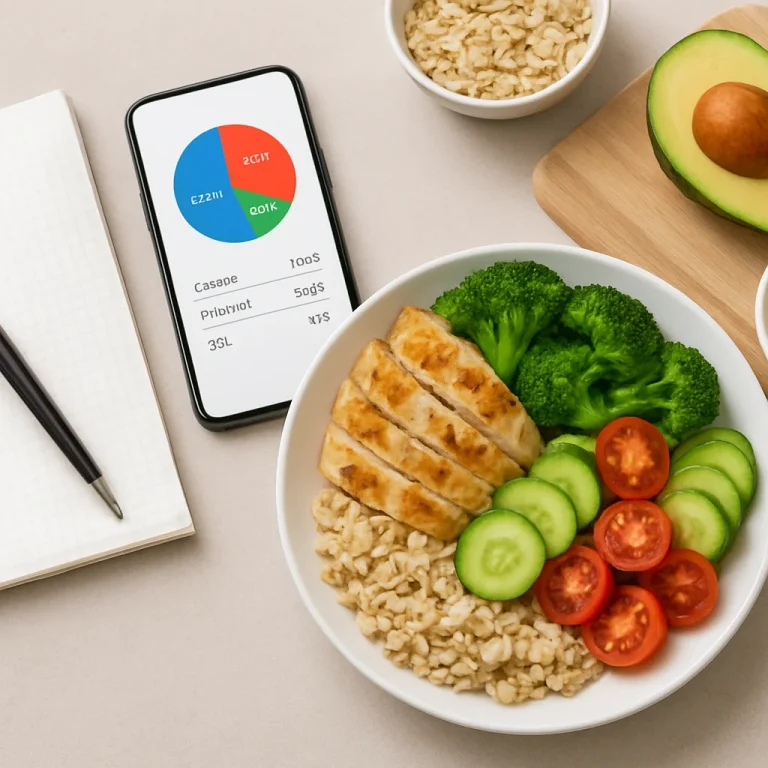
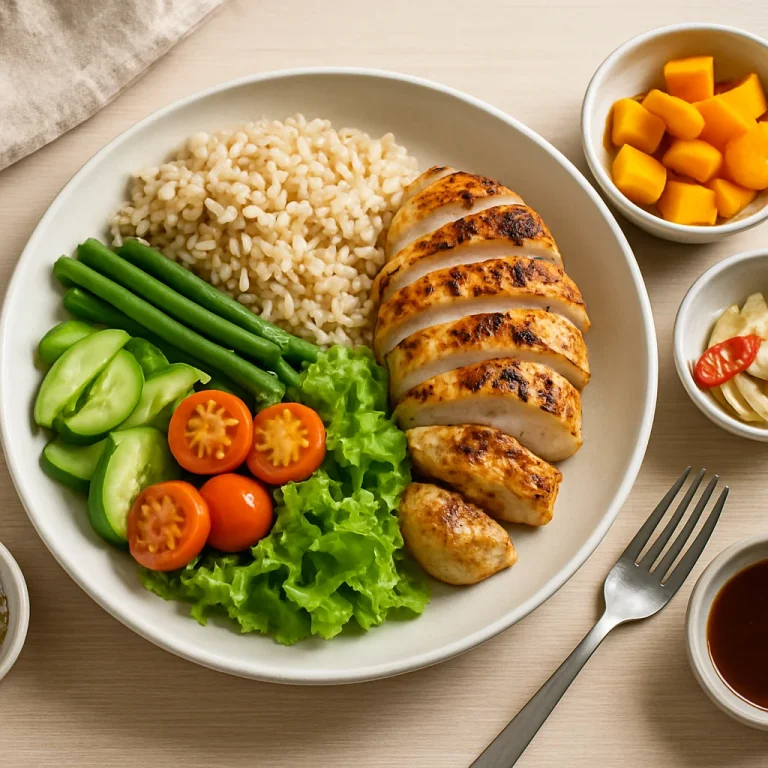
[IMAGE: macro plate example + alt text: Balanced meal plate with rice, chicken, vegetables, and tofu labeled with protein carbs and fat]
Singapore-specific food choices that fit a TDEE plan
The best meal plan is the one you can repeat using groceries you actually buy.
That means food from NTUC FairPrice, Sheng Siong, Giant, Cold Storage, and local wet markets should be the backbone. You don’t need imported powders or luxury ingredients to hit your numbers.
Affordable staples that work well
- Eggs
- Chicken breast, minced chicken, chicken thigh
- Tau kwa and tofu
- Cabbage, kangkong, bok choy, spinach
- Tomatoes, cucumbers, carrots
- Brown rice, white rice in controlled portions
- Oats
- Bananas, papaya, guava, apples
- Canned tuna or sardines in water or tomato sauce
Practical local meals
- Yong tau foo with more vegetables, tofu, and soup-based choices
- Mixed rice with one protein, two vegetables, and smaller rice portions
- Fish soup with added tofu and vegetables
- Economy bee hoon with more egg and less fried side items
- Home-cooked chicken, stir-fried leafy greens, and rice
For body recomposition or weight loss, the trick is not to ban foods. It’s to build meals with enough protein and fibre so you’re not hungry again 45 minutes later.
[INTERNAL LINK: high-protein Singapore meal ideas]
Insulin resistance, blood pressure, and fibre considerations
If you’re using a TDEE calculator Singapore because of insulin resistance or prediabetes, the calorie number is only part of the picture.
For insulin resistance
Focus on:
- Regular meal timing if it helps you
- Higher protein intake
- At least 20g fibre daily, with 25–30g being a useful target for many adults
- More minimally processed carbs
- Better portion control for rice, noodles, and sweet drinks
Fibre matters because it slows digestion and supports better post-meal glucose response. Whole foods like vegetables, beans, chia seeds, oats, and fruit are your friends here.
For high blood pressure
A calorie plan should also consider sodium. Hawker food can be delicious and salty enough to make your blood pressure monitor sigh.
Helpful habits:
- Choose soup less often if it’s very salty
- Ask for less sauce
- Build more meals at home
- Use herbs, pepper, garlic, ginger, and lime for flavour
- Eat potassium-rich foods like bananas, spinach, and beans if medically appropriate
Kidney health considerations
If you have kidney disease or reduced kidney function, protein targets may need individual adjustment. Don’t copy a high-protein plan from the internet and assume it fits your labs.
That’s where medical guidance matters. KnowMeal can support planning, but it should sit alongside advice from your doctor or dietitian if you have kidney concerns, diabetes complications, or medication changes.
This article is informational only, not medical advice.
How to use TDEE in real meal planning
Once you have your maintenance calories, the next step is to convert them into meals.
A simple framework:
- Set calories
- Set protein
- Fill the rest with carbs and fats
- Build meals around repeatable dishes
- Review after 2 weeks
If you’re busy, consistency beats cleverness. A good weekly structure might use the same breakfast four days a week, rotate two lunches, and keep dinner flexible. That keeps shopping cheaper and reduces the “what on earth do I cook now?” problem that hits around 6.30 pm.
Example structure for one day
- Breakfast: oats, eggs, and fruit
- Lunch: rice, chicken, vegetables
- Snack: yogurt or fruit
- Dinner: fish, tofu, greens, and a smaller carb portion
That’s not glamorous. It works.
If you’re meal prepping for family members, the smartest system is usually one shared menu with portion adjustments, rather than cooking five completely different dinners. KnowMeal’s family mode is designed for exactly that kind of household reality.
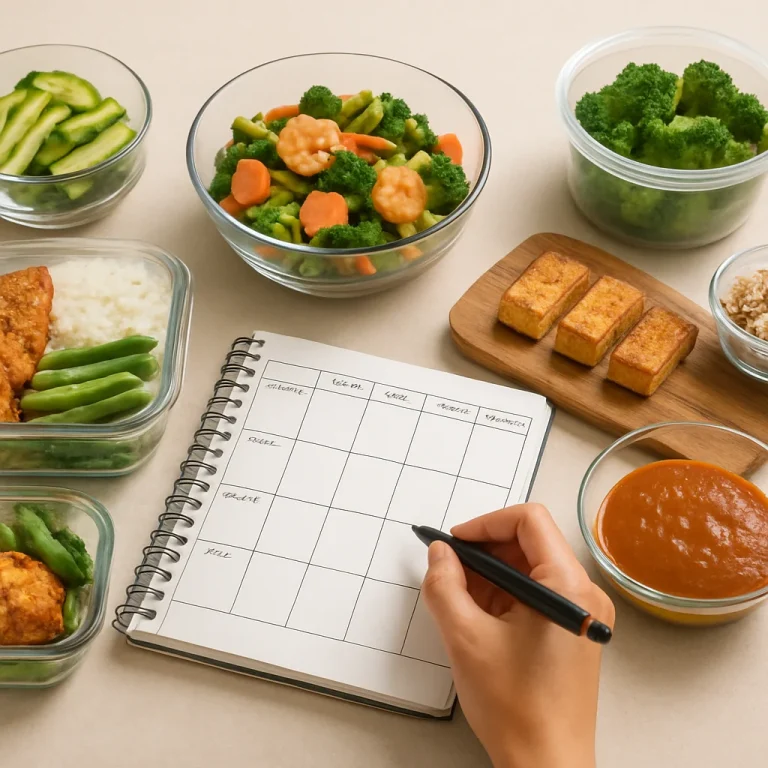
[IMAGE: weekly meal prep containers + alt text: Singapore-style weekly meal prep containers with chicken rice vegetables and tofu]
Common mistakes when using a TDEE calculator Singapore
A calculator is only useful if you use it honestly.
Mistake 1: Choosing the wrong activity level
Desk job plus three workouts does not automatically mean “very active.” Many people overshoot here and then wonder why fat loss stalls.
Mistake 2: Ignoring food tracking errors
Cooking oil, sauces, sugar drinks, and snack bites add up fast. One tablespoon of oil is roughly 120 calories, which is why stir-fry “just a little oil” often isn’t little.
Mistake 3: Expecting day-to-day weight changes to mean much
Salt, menstrual cycle changes, late dinners, and carbs can shift water weight. Watch trends across a week or two.
Mistake 4: Copying someone else’s calories
Your friend’s deficit is not your deficit. Different body size, job, steps, and training volume. Same kopi, different biology.
Mistake 5: Cutting too hard
Aggressive deficits often backfire through hunger, poor training, and rebound eating. A smaller deficit is often more sustainable.
FAQs about TDEE, maintenance calories, and Singapore meal planning
A good next step is to calculate your starting point, then build meals that fit your real schedule. If you want a system that handles calories, macros, family meals, and drag-and-drop meal planning in one place, that’s where a personalised platform becomes useful.
Frequently asked questions
What is a TDEE calculator used for?
A TDEE calculator estimates how many calories you burn in a day. You can use it to set maintenance calories, fat loss targets, or muscle gain targets.
Is a TDEE calculator accurate for Singaporeans?
It gives a useful estimate, but it’s still a starting point. Singaporean food portions, daily steps, commuting patterns, and hawker meals can make real-world needs differ from the calculator.
How do I know if my TDEE is correct?
Track your weight trend for 2–3 weeks while eating the estimated calorie amount. If your average weight stays stable, the estimate is close to maintenance.
Should I eat below my TDEE to lose weight?
Yes, usually by about 250–500 calories per day. The best deficit is one you can maintain without constant hunger or rebound eating.
How much protein should I eat?
Many active adults do well with 1.6–2.2 g protein per kg body weight. That range supports muscle retention, satiety, and body recomposition.
Can I use TDEE if I have diabetes or kidney issues?
You can use it as a general planning tool, but medication, blood glucose control, and kidney function can change what’s appropriate. Please check with a doctor or dietitian for medical conditions, and use this information as general guidance only.
Key Takeaways
- TDEE estimates maintenance calories, not perfection
- Activity level changes the number significantly
- Protein should be prioritised in most plans
- Fibre helps with fullness and glucose control
- Adjust calories after 2–3 weeks of tracking
Frequently Asked Questions
Q: What is a TDEE calculator used for?
Is a TDEE calculator accurate for Singaporeans?
How do I know if my TDEE is correct?
Should I eat below my TDEE to lose weight?
How much fibre should I aim for?
Can I use TDEE if I have diabetes or kidney issues?
Want a calorie target that fits your real work schedule, workouts, and family meals? Try KnowMeal to turn your **TDEE calculator Singapore** result into practical macro-based meal plans with Singapore-friendly whole foods.