
Healthy Eating for Busy Professionals | KnowMeal
healthy eating for busy professionals
Healthy eating for busy professionals means building meals that are fast, filling, and predictable enough to repeat on a hectic workweek. The simplest way to do it is to anchor each meal with protein, add high-fibre carbs and vegetables, and keep a few go-to options for breakfast, lunch, and dinner so you’re not deciding food while already starving.
This guide shows you how to eat well without complicated recipes or 90-minute Sunday meal prep marathons. You’ll learn how to structure macros simply, choose affordable foods in Singapore, build office-friendly meals, and avoid the common traps that make weekdays harder than they need to be.
Why busy professionals struggle with food choices
The problem usually isn’t knowledge. Most office workers already know that cai png with three fried items is not the same as a balanced lunch.
The real issue is friction.
If lunch takes too long to think about, you’ll default to whatever is nearest: grab-and-go bread, caffeine plus pastry, or a huge hawker plate that leaves you sleepy at 2 p.m. I’ve seen this pattern repeat with clients who work in CBD offices, industrial estates, and hybrid setups. Once the day gets busy, food decisions become an afterthought.
There’s also a Singapore-specific reality: many people are eating around meetings, train rides, school pickups, and evening traffic. That means healthy eating for busy professionals has to be built around convenience, not perfection. If the plan doesn’t fit your actual day, it will fail by Wednesday.
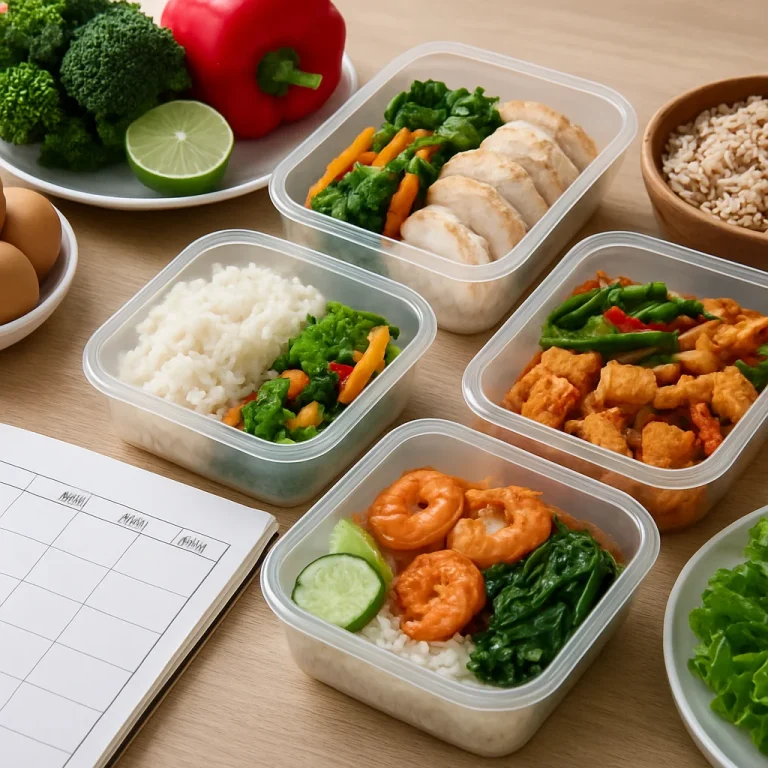
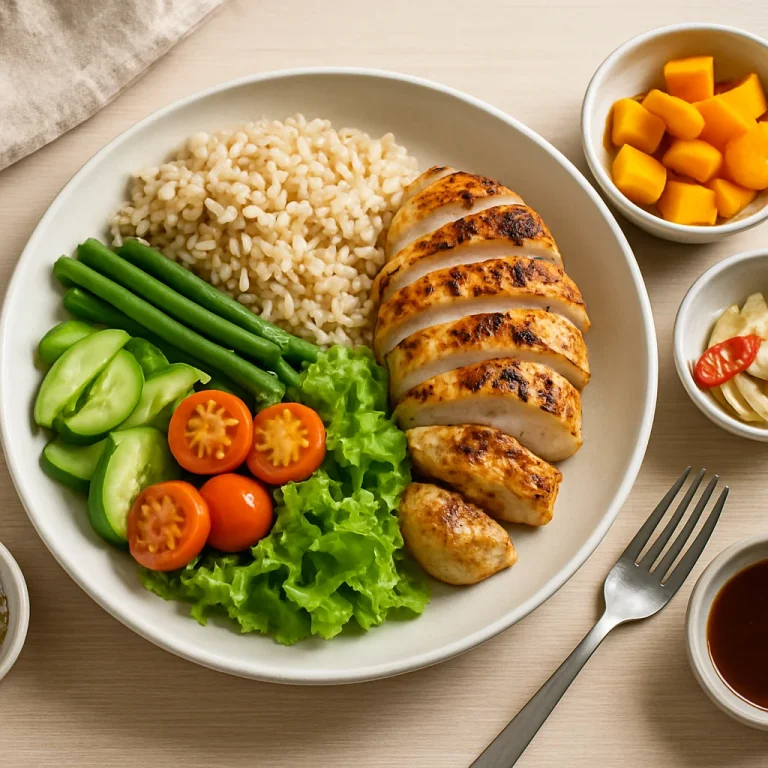
[IMAGE: Office lunchbox with rice, chicken, vegetables — alt text: balanced packed lunch for busy professionals in Singapore]
The three traps that derail weekday eating
- Decision fatigue: too many options, not enough time.
- Under-eating early: then overeating at dinner.
- “Healthy” convenience food: often high in sugar, sodium, or refined carbs.
A 2023 review in the journal Nutrients linked regular meal planning with better diet quality and less impulsive eating. That doesn’t mean you need colour-coded containers and a freezer full of identical chicken breasts. It means reducing the number of food decisions you make when you’re tired.
The simplest nutrition framework: protein, carbs, fat, fibre
You don’t need a nutrition degree to eat well. You need a framework you can remember while answering Slack messages.
Start with four building blocks:
- Protein supports muscle repair and helps you stay full.
- Carbs provide energy for work, walking, and training.
- Fat supports hormones and keeps meals satisfying.
- Fibre helps digestion, blood sugar control, and fullness.
That’s the simplest version of healthy eating for busy professionals. No spreadsheet required before breakfast.
A practical plate method that actually works
For lunch and dinner, use this rough structure:
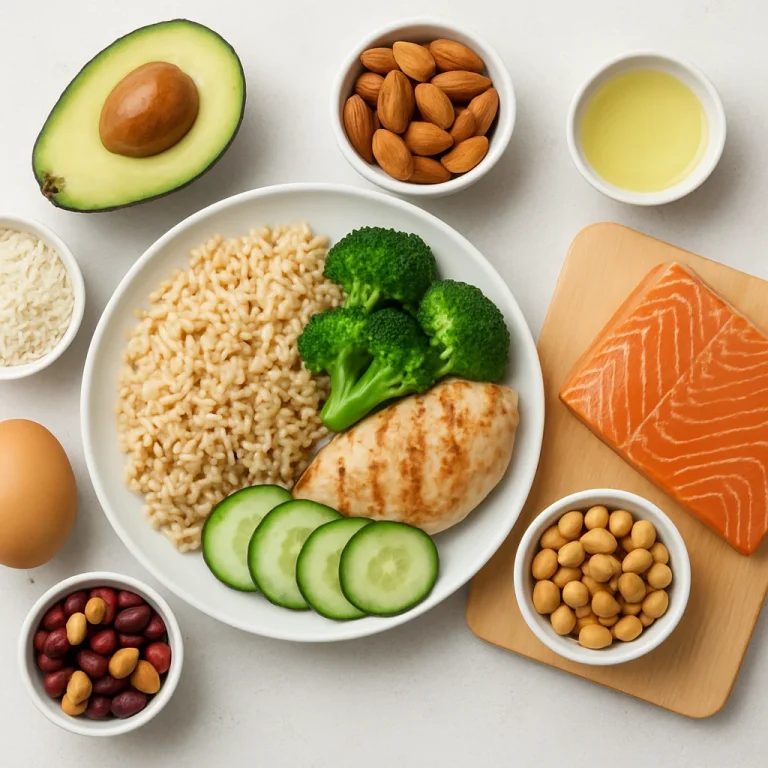
- 1 palm protein: chicken breast, eggs, tofu, tempeh, fish, prawns, Greek yoghurt
- 1 fist carbs: rice, brown rice, sweet potato, oats, wholemeal bread
- 2 fists vegetables: cai xin, bok choy, cabbage, spinach, cucumber, tomato
- 1 thumb fat: olive oil, avocado, peanuts, sesame, nuts
If you train regularly, you may need more carbs. If you’re managing insulin resistance or trying to reduce appetite, you may do better with smaller carb portions and more vegetables. If you have kidney disease or reduced kidney function, protein targets should be discussed with a doctor or renal dietitian.
That last point matters. Not every “high-protein” internet plan is suitable for every person, and your kidneys don’t care about fitness slogans.
Macro basics without the jargon
For most office workers, the goal isn’t macro obsession. It’s consistency.
A simple starting point:
- Protein: 25–40g per main meal
- Carbs: adjust based on activity and goals
- Fat: moderate amounts, not piled on accidentally
- Fibre: aim for 20g+ daily, ideally more
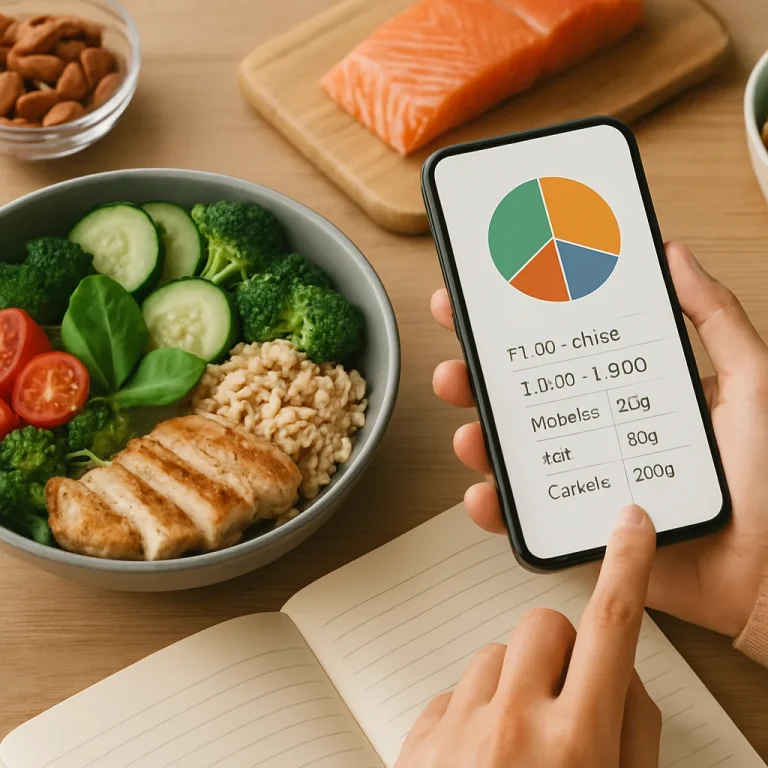
If you want body recomposition, protein becomes more important. If you’re trying to reverse insulin resistance, fibre, meal timing, and carb quality matter a lot. If weight loss is the goal, the main issue is usually total intake, not one magical food.
[INTERNAL LINK: macro-based meal planning for weight loss]
A workweek eating framework you can repeat
Healthy eating for busy professionals gets easier when you stop reinventing meals every day. Use a repeatable weekly structure instead.
I’ve found this works well for people who are in meetings most of the day, especially those commuting into Singapore’s office districts like Raffles Place, Tanjong Pagar, and One-North. The idea is simple: choose a few anchor meals and rotate them.
Breakfast: fast, high-protein, low drama
Good breakfast options in Singapore include:
- 2 boiled eggs + wholemeal toast + fruit
- Greek yoghurt + oats + chia seeds + banana
- Unsweetened soy milk + peanut butter sandwich
- Overnight oats with cinnamon and berries
If you buy ingredients at NTUC FairPrice, Giant, or Sheng Siong, breakfast can be very affordable. A tray of eggs often runs around S$3–6, oats about S$3–5, and a loaf of wholemeal bread around S$2.50–4.50, depending on brand and promotion.
For many people, breakfast should be boring on purpose. Boring breakfast is underrated. It behaves itself.
[IMAGE: High-protein breakfast bowl — alt text: simple high-protein breakfast for healthy eating for busy professionals]
Lunch: the most important weekday meal
Lunch is where most office diets collapse. You’re hungry, time is short, and the line at the hawker centre is moving at the speed of a sleepy Monday.
Use these lunch templates:
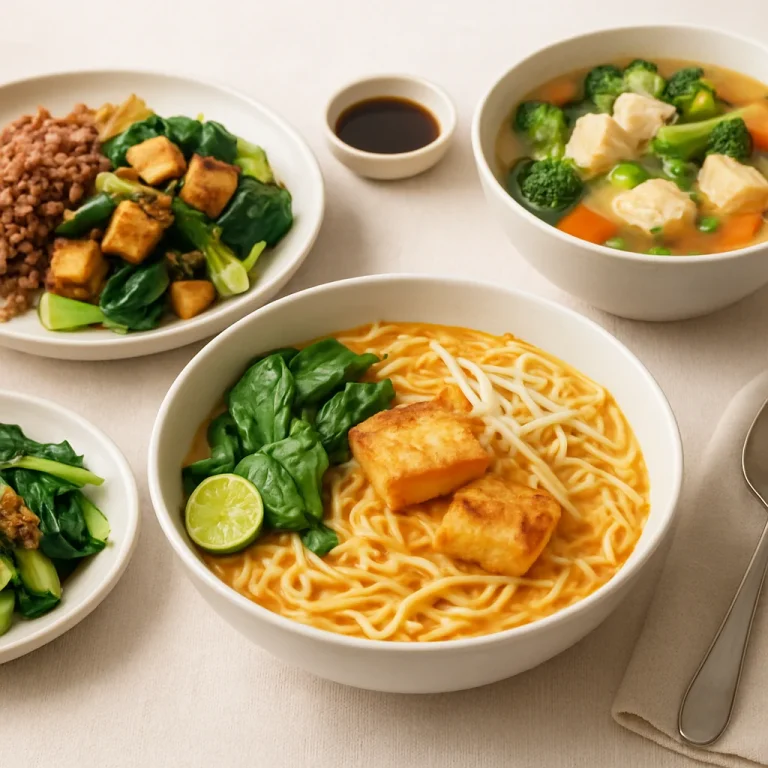
- Economic rice / cai png: choose 1 protein, 2 vegetables, 1 small rice
- Yong tau foo: choose more stuffed tofu, vegetables, fewer fried items
- Chicken rice: ask for less rice, more cucumber, skip skin if needed
- Fish soup with rice: add vegetables, keep the broth clear
- Mixed grain bowl: brown rice, grilled protein, greens, egg
At hawker centres, the trick is not “eat out” versus “don’t eat out.” The trick is ordering strategically. I’d rather see someone eat a sensible cai png lunch five days a week than burn out trying to prep quinoa bowls nobody wants to reheat.
Be careful with sauces and hidden calories. Curry gravy, deep-fried toppings, and sweet dressings can quietly add a few hundred calories without improving satiety much. That matters when your goal is sustainable weight management.
Dinner: lighter, but still complete
Dinner should not be a reward for surviving the day. It should be a meal that helps you recover.
Good options:
- Stir-fried tofu with vegetables and rice
- Steamed fish, greens, and a small serving of rice
- Chicken soup with cabbage and mushrooms
- Egg omelette with salad and sweet potato
- Sambal tempeh with sautéed veg
For families, dinner is often the best time for shared eating. That’s where a system like family meal planning helps, because everyone can eat the same main food with small portion adjustments. Less cooking chaos. Fewer complaints about making “another set of food.”
[INTERNAL LINK: family meal prep for shared dinners]
How to meal prep without spending your Sunday in the kitchen
Meal prep works best when it’s short, repeatable, and not theatrical.
A practical session can take 60–90 minutes and cover most of the workweek. You’re not building a restaurant line. You’re making the next few days easier.
A low-effort prep sequence
- Cook one protein in bulk.
- Cook one carb base.
- Wash and cut vegetables.
- Make one sauce.
- Portion into 3–5 containers.
Examples that work well in Singapore:
- Protein: soy sauce chicken breast, pan-seared salmon, baked tofu, minced turkey, boiled eggs
- Carb base: jasmine rice, brown rice, sweet potato, oats
- Vegetables: kai lan, broccoli, carrots, cabbage, lettuce
- Sauce: garlic soy, sambal-lime, sesame-ginger, yoghurt curry
If you’re worried about food safety, keep cooked food in the fridge within 2 hours of cooking and aim to eat refrigerated leftovers within 3–4 days. Reheat until steaming hot. A microwave is fine. You do not need a sous chef to eat well.
Foods that store well
These are especially useful for healthy eating for busy professionals:
- Hard-boiled eggs
- Roasted chicken thigh or breast
- Tempeh
- Firm tofu
- Steamed broccoli and carrots
- Brown rice
- Oats
- Apples, oranges, bananas
Foods that get weird fast
- Crisp lettuce after dressing
- Fried food after refrigeration
- Soft noodles sitting in sauce
- Avocado if cut too early
- Seafood if left too long
That doesn’t mean you can’t prep them. It means you should know what you’re signing up for.
Eating well when you’re out of the office
The modern workday is a migration pattern. Office, client site, coffee shop, school pickup, gym, home. Food has to travel with you.
Healthy eating for busy professionals gets easier if you keep a few “emergency meals” ready.
Emergency meal ideas
- Protein drink plus banana when you’re stuck in back-to-back meetings
- Tuna sandwich on wholemeal bread from 7-Eleven or a supermarket deli
- Yoghurt cup plus fruit
- Boiled eggs and peanuts
- Plain soy milk and a fruit bun only if needed, not as a full meal
If you’re choosing between skipping lunch and buying something decent at a nearby convenience store, buy the food. A small, imperfect meal beats the 4:30 p.m. crash that leads to dinner demolition.
For office pantries, keep a stash of:
- Oats
- Unsalted nuts
- Instant miso or soup sachets with lower sodium
- Wholegrain crackers
- Peanut butter
- Fruit
What to do at cafés
At cafés like Starbucks, Toast Box, or Ya Kun, you can still make workable choices:
- Choose eggs or yoghurt over pastry when possible.
- Ask for less sugar in drinks.
- Pick sandwiches with real protein.
- Share larger bakery items instead of treating them like an obligation.
One practical rule: if the meal is mostly white flour and sugar, treat it as a snack, not lunch.
Handling insulin resistance, blood pressure, and energy crashes
Many readers looking for healthy eating for busy professionals are also dealing with blood sugar issues, high blood pressure, or family history of diabetes. Food choices matter, but the approach should stay realistic.
For insulin resistance
Focus on:
- More fibre
- More protein
- Less liquid sugar
- Better carb portions
- Regular meal timing
A 2022 systematic review in The American Journal of Clinical Nutrition found that higher-fibre diets were associated with improved glycaemic outcomes. That’s one reason vegetables, beans, chia, oats, and whole grains deserve space on the plate.
Practical examples:
- White rice becomes better with tofu, veg, and egg.
- Fruit is better than juice.
- Oats are more filling than sweet cereal.
- A mixed meal is usually better than carbs alone.
For high blood pressure
Watch:
- Sodium-heavy sauces
- Processed meats
- Instant noodles
- Soups with salty broth
Choose more:
- Fresh protein
- Home-cooked meals
- Herbs, garlic, lime, ginger
- Potassium-rich foods like bananas, spinach, and beans
The DASH diet still holds up for blood pressure support, and it doesn’t require imported superfoods with a fancy label. It requires consistent meals with fewer salty shortcuts.
For energy crashes
If you feel sleepy after lunch, check:
- Portion size
- Carb quality
- Whether lunch had protein
- Whether breakfast was skipped
A huge rice-only lunch followed by three meetings is not a life strategy. It’s a nap invitation.
A realistic shopping list for Singapore
Healthy eating for busy professionals gets much easier when the shopping list stays short.
Budget-friendly staples
You can buy these at NTUC FairPrice, Sheng Siong, Cold Storage, wet markets, or neighbourhood provision shops:
- Eggs
- Chicken breast or thigh
- Canned tuna in water
- Tofu and tempeh
- Oats
- Brown rice or jasmine rice
- Wholemeal bread
- Greek yoghurt or plain yoghurt
- Bananas, apples, oranges
- Cabbage, carrots, spinach, cai xin, broccoli
- Peanut butter
- Olive oil or canola oil
- Garlic, onions, ginger, black pepper, soy sauce
As of recent supermarket pricing, eggs can often be found around S$3–6 per tray, tofu at roughly S$1–2, and basic vegetables remain among the most cost-effective ways to improve fibre intake. Prices fluctuate, so promotions matter. Singaporeans know the thrill of a good shelf tag.
A sample 3-day foundation
Day 1
- Breakfast: eggs, toast, fruit
- Lunch: cai png with chicken, cabbage, rice
- Dinner: tofu stir-fry with brown rice
Day 2
- Breakfast: oats with yoghurt and banana
- Lunch: fish soup with extra veg
- Dinner: chicken soup with sweet potato
Day 3
- Breakfast: soy milk, eggs, wholemeal bread
- Lunch: yong tau foo with more veg, fewer fried items
- Dinner: salmon, broccoli, rice
This is not glamorous. It works.
How KnowMeal makes this easier for office workers
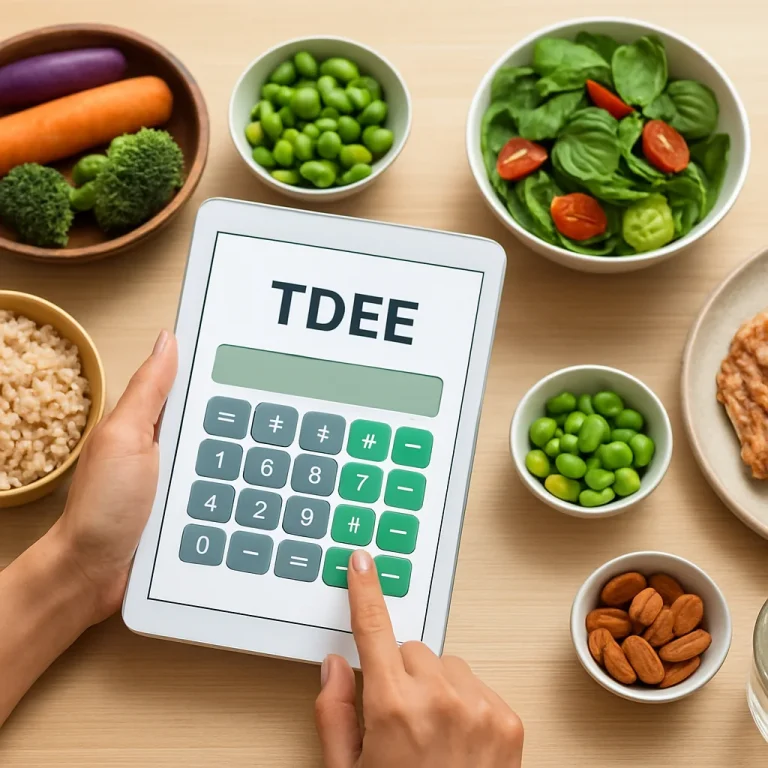
If you’re trying to stay consistent, the biggest help is a plan that does the math for you without making food feel like homework. That’s where personalised meal planning becomes useful.
KnowMeal can support healthy eating for busy professionals by turning your goals into daily meals based on calorie and macro targets. It also handles family meal planning, so households can align meals instead of cooking separate dishes every night.
What makes a good system for busy people
You want tools that:
- calculate calories from your actual activity level, not a crude guess
- keep meals practical and repeatable
- support drag-and-drop meal swaps
- update macros in real time
- generate grocery lists that make shopping faster
For trainers, being able to manage multiple clients without building every plan from scratch saves time. For families, shared meals reduce friction at dinner. For everyone else, less thinking usually means better follow-through.
[INTERNAL LINK: personalised meal planning for weight loss]
Soft CTA: If you’ve been trying to eat better by “being more disciplined,” that’s usually a sign the system needs fixing, not your willpower.
Common mistakes to avoid
A few patterns show up again and again:
- Skipping breakfast, then overeating later
- Building meals around drinks and snacks
- Choosing only low-calorie foods and getting hungry
- Adding exercise but not enough protein
- Trying to change everything at once
The fix is boring, but boring works:
- keep protein in every main meal
- prep just enough
- repeat meals on busy days
- use restaurants and hawker stalls strategically
- stop waiting for a perfectly calm week
Healthy eating for busy professionals is less about discipline and more about reducing chaos.
Key takeaways for weekday eating
- Build meals around protein first.
- Keep lunch decisions simple.
- Use hawker food strategically.
- Prep only a few staples.
- Aim for 20g+ fibre daily.
- Repeat meals to reduce friction.
- Match food to your real schedule.
FAQ
Can I eat hawker food and still be healthy?
Yes. Choose meals with a clear protein source, add vegetables where possible, and keep an eye on portions, sauces, and fried add-ons. Cai png, yong tau foo, fish soup, and chicken rice can all fit into a sensible plan.
How much time do I need for meal prep?
Most busy professionals can get meaningful results from 60–90 minutes once or twice a week. You’re preparing building blocks, not cooking five separate gourmet dinners.
What’s the easiest lunch for office workers?
A simple lunch with protein, vegetables, and a moderate carb portion is easiest to sustain. Think cai png with one meat and two vegetables, or yong tau foo with fewer fried items.
Do I need to count calories every day?
Not always. Calorie tracking helps many people learn portions, but repeatable meals and portion templates are often enough for long-term consistency. If you want more precision, macro-based planning can make the process easier.
Is high-protein eating safe for everyone?
Not always. People with kidney disease or specific medical conditions should speak with a doctor or renal dietitian before increasing protein significantly. For most healthy adults, protein is useful, but the right amount depends on the person.
How can I make healthy eating easier for my family too?
Use one dinner base for everyone, then adjust portions for adults, kids, and training goals. Family meal planning cuts down on duplicate cooking and makes grocery shopping simpler.
Final thought
Healthy eating for busy professionals doesn’t require fancy recipes, expensive ingredients, or an idealised Sunday prep routine. It needs a simple structure, a short shopping list, and meals that fit your workday instead of fighting it.
If you want a plan that turns your goals into daily meals, grocery lists, and macro targets without the spreadsheet headache, KnowMeal can help you build it around your real schedule, real food, and real appetite.
Disclaimer: This article is for informational purposes only and is not medical advice. If you have diabetes, kidney disease, hypertension, or another medical condition, consult a qualified healthcare professional for personalised guidance.
Key Takeaways
- Protein first makes weekday meals easier.
- Repeat meals to reduce decision fatigue.
- Hawker food can still fit your goals.
- Fibre supports fullness and blood sugar.
- Prep simple staples, not complicated recipes.
- Plan around your actual work schedule.
Frequently Asked Questions
Q: Can I eat hawker food and still be healthy?
How much time do I need for meal prep?
Do I need to count calories every day?
Is high-protein eating safe for everyone?
How can I make healthy eating easier for my family too?
Want a healthier weekday plan without the guesswork? Try KnowMeal to generate personalised meal plans, track macros simply, and make healthy eating fit your real work schedule.