How to Create a Home Paperwork System That Prevents Lost Documents
Why a Home Paperwork System Matters
A reliable home paperwork system saves time, reduces stress, and stops important documents from disappearing into random drawers, bags, and countertops. Whether you are managing school forms, medical letters, warranties, bills, or passports, having one clear process makes it much easier to find what you need when you need it.
For busy households, paperwork is often the invisible clutter that causes the most frustration. A school notice goes missing, a bill gets misplaced, or an insurance document is needed urgently but cannot be found. The good news is that a simple system does not need to be complicated. With a few clear categories, a regular reset habit, and a dedicated storage space, your paperwork can stay under control all year long.
If you are building broader household organisation habits too, you may also find [LINK_TO: How to Set Up a Family Command Center That Actually Gets Used] helpful as a companion system.
Start With a Simple Paperwork Sort
The first step in any home paperwork system is to gather everything in one place. Do not start by organising individual piles across the home. Instead, collect all loose papers from kitchen counters, bags, bedrooms, drawers, and desks into a single sorting area.
Then split everything into these practical categories:
- Action needed – forms to sign, bills to pay, appointments to book
- Reference – warranties, school information, contact details, receipts
- Archive – tax records, legal papers, old medical documents
- Shred or recycle – outdated papers, duplicates, junk mail
This first sort should be quick and realistic. The goal is not perfection. The goal is to stop paper from drifting around the house without a home.
Choose One Main Paper Storage Zone
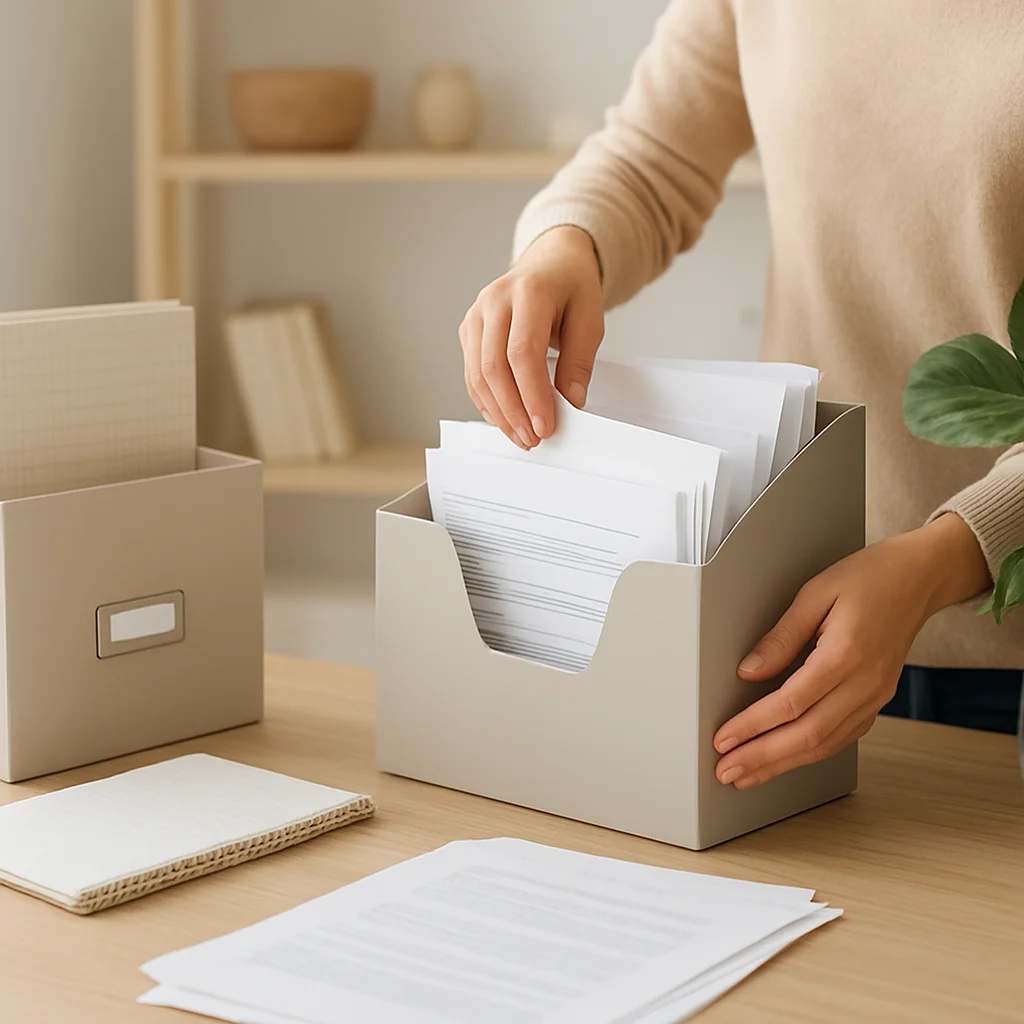
A strong home paperwork system depends on consistency, so choose one main location for paper storage. This could be a drawer, a shelf, a lidded box, or a small cabinet. What matters most is that everyone in the household knows where important papers belong.
Try to keep the main storage zone near where paperwork enters the home, such as the kitchen, entryway, or home office. If you have children, a central space makes it easier for school forms and notices to be processed before they get lost in backpacks.
To keep the system usable, avoid scattering papers across multiple rooms. A single hub works better than several almost-organised spots that no one remembers to use.
Use Clear Labels and Broad Categories
Label folders or dividers with simple categories that reflect your real life. For example:
- To Action
- Bills
- School
- Health
- Home
- Finance
- Tax
- Archive
If your household prefers a more family-focused setup, [LINK_TO: How to Create a Family Information Binder That Everyone Can Use] can work well alongside this paperwork system.
Create a Quick-Find Filing System
An effective home paperwork system should help you find documents fast, not just store them neatly. That is why the filing method needs to match how you actually use papers.
For documents you need often, use open or easy-access folders. For less frequently used files, use labelled envelopes or binders. For example, a health folder may hold vaccination records, appointment summaries, and insurance paperwork, while a home folder may contain appliance manuals, renovation receipts, and utility records.
Keep the most important documents in a secure but accessible place. That usually includes:
- Passports and identity documents
- Birth and marriage certificates
- Insurance policies
- Property or rental documents
- Tax records
If your household needs a bigger system for storing essential information, [LINK_TO: How to Build a Family Information Hub That Keeps Everything in One Place] is a useful next step.
Build a Daily In-Tray Habit
Lost documents often happen because paper enters the home and never gets processed. A simple in-tray can fix that. In your home paperwork system, create one spot where incoming mail, school notices, receipts, and forms land immediately.
This can be a tray, basket, or folder. The important part is that new paper does not float around the house. It goes into the in-tray first, then gets sorted during a regular admin time.
A good habit is to spend five to ten minutes each day clearing the in-tray. File what you can, action what is urgent, and discard what is unnecessary. This small routine prevents paper piles from building up.
Set a Weekly Paperwork Reset
Just like tidying the kitchen or planning meals, paperwork needs a repeatable reset. A weekly review keeps your home paperwork system working even during busy periods.
Choose one time each week to:
- Empty the in-tray
- Pay bills or note due dates
- File new documents
- Shred outdated papers
- Check for school, work, or household deadlines
Many families pair this task with a Sunday reset. If you like structured routines, [LINK_TO: A Simple Weekly Reset Routine That Makes Monday Feel Easier] or [LINK_TO: How to Build a Sunday Evening Reset Routine for a Smoother Monday] can support a calmer weekly rhythm.
Go Paper-Light Where Possible
A smarter home paperwork system is not just about organising more paper. It is also about reducing the amount of paper that enters the house in the first place.
Whenever possible, opt for:
- Digital bills and statements
- Email receipts instead of printed copies
- Online forms and e-signatures
- Cloud backups for scanned documents
That said, keep physical originals for documents that need to be preserved. Scan key records and store the digital copies in clearly named folders as a backup. This adds protection in case of loss, damage, or emergencies.
Make the System Easy for the Whole Family
The best home paperwork system is one that everyone can follow. If only one person understands the setup, the system will eventually break down. Keep instructions simple and teach family members where to place incoming paper.
You can improve adoption by using visual labels, colour-coded folders, and a shared rule such as: “If it is important, it goes in the tray.” For school-age children, create a separate folder for school forms and notices so they know exactly where to put things.
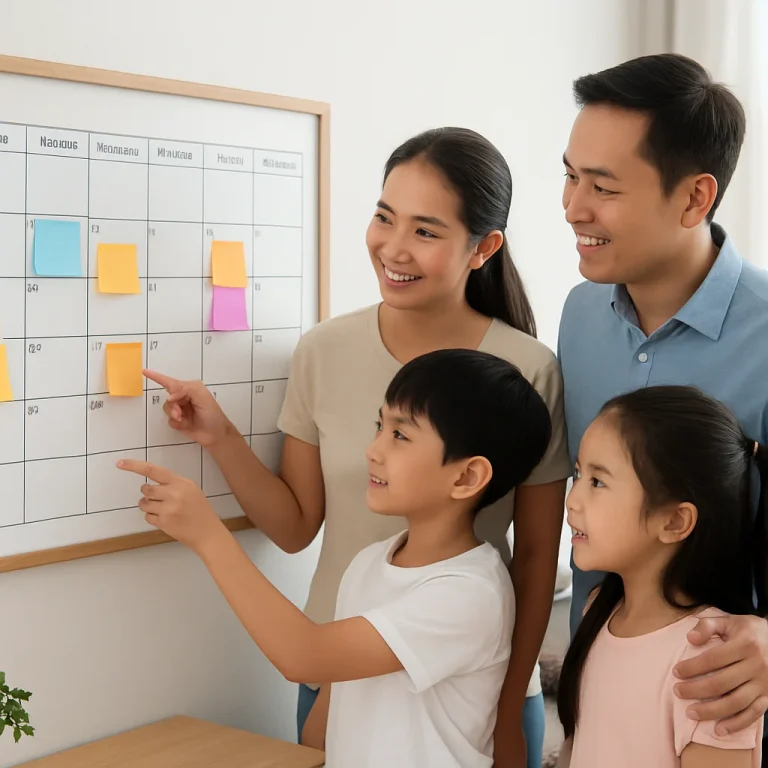
If your household already uses shared planning tools, a family paperwork system fits nicely with [LINK_TO: How to Set Up a Family Command Center That Actually Gets Used] and [LINK_TO: Weekly Family Calendar Template That Keeps Busy Households Aligned].
What to Keep, Shred, and Archive
One of the biggest reasons paperwork gets messy is uncertainty. People keep too much because they are afraid to throw something important away. A simple rule can help you decide.
Keep temporarily: bills to pay, forms to complete, letters requiring action
Keep long term: legal, tax, medical, insurance, and property records
Shred or recycle: duplicate copies, outdated statements, expired warranties, junk mail, old papers with personal details
For anything you are unsure about, place it in a short-term review folder and revisit it during your weekly reset. That keeps your decisions manageable.
Conclusion: A Paperwork System That Saves Time and Stress
A well-designed home paperwork system does not need to be fancy. It just needs a clear place for incoming papers, simple categories, and a regular habit for sorting and filing. When your documents have a proper home, you spend less time searching and more time focusing on what matters.
Start small, stay consistent, and adjust the system to fit your household. If you want to build a more complete home organisation routine, explore the related family planning and reset guides linked throughout this article. Ready to get started? Set up your paperwork tray today and begin with one small sort session this week.