
How to Create a Family Meal Planning System That Saves Time, Money, and Stress
How to Create a Family Meal Planning System That Actually Works
A strong family meal planning system can completely change how your household runs. Instead of scrambling at 5 p.m., overspending on takeout, or forgetting ingredients halfway through the week, you get a simple repeatable process that saves time, money, and stress. For busy families, meal planning is not just about dinner—it is about reducing decision fatigue, keeping everyone fed, and making weeknights feel calmer.
The best part is that a family meal planning system does not need to be complicated. In fact, the simpler it is, the more likely your family will stick with it. The goal is to create a rhythm that works with your schedule, preferences, and budget—not against them.
Start with a Realistic Weekly Meal Framework
The foundation of any family meal planning system is consistency. Rather than trying to plan every meal from scratch, create a weekly framework. This gives you structure without making the process feel rigid.
A simple weekly framework might look like this:
- Monday: quick dinner
- Tuesday: protein + vegetables + rice or noodles
- Wednesday: leftovers or pantry meal
- Thursday: family favourite
- Friday: flexible meal or takeaway night
- Saturday: batch-cooked meal or home-cooked comfort food
- Sunday: prep day and easy dinner
This approach reduces daily decision-making while still leaving room for real life. If your family has sports practice, late work meetings, or school activities, build your plan around those realities. A good family meal planning system should make busy nights easier, not add pressure.
Build Your Family Meal Planning System Around Your Household Needs
Every family is different. A system that works for a household with toddlers may not suit a family with teens, shift workers, or elderly parents living together. Your family meal planning system should reflect how your family actually eats.
Ask these questions before you plan:
- How many meals are eaten at home each week?
- Which nights are busiest?
- Who eats lunch at school or work?
- Are there dietary needs such as diabetes, weight management, or food allergies?
- What foods does your family already enjoy?
If you are planning for blood sugar control or healthier weight management, it may help to use a more structured approach like [LINK_TO: Insulin Resistance Meal Plan for Better Blood Sugar] or [LINK_TO: Diabetes Friendly Meal Plan Singapore Guide]. That way, your family meal planning system supports health goals as well as convenience.
Create a Repeatable Grocery Shopping Routine
A meal plan only works if the groceries are in the house. That is why shopping needs to be part of the system, not an afterthought. A repeatable grocery routine helps you avoid impulse buys, reduce food waste, and stay within budget.
Use these steps:
- Check what is already in the fridge, freezer, and pantry.
- Choose meals that use ingredients you already have.
- Write a grocery list by category: produce, protein, grains, dairy, pantry.
- Shop once or twice a week instead of making multiple emergency trips.
- Keep a running list of staples that run out often.
In Singaporean households, this can be especially helpful when planning around wet market visits, supermarket runs, and school lunch needs. A family meal planning system built on repeatable shopping patterns saves time because you stop starting from zero every week.
Use a Rotation of Easy Meals and Family Favourites
One of the biggest reasons meal planning fails is burnout. If you try to invent new meals every week, the process becomes exhausting. Instead, build a meal rotation that includes a mix of family favourites, fast meals, and a few new ideas.
A balanced rotation could include:
- 3 to 4 go-to dinners everyone likes
- 2 quick meals for hectic nights
- 1 leftover or pantry meal
- 1 new recipe to keep things fresh
This keeps your family meal planning system flexible while still reducing mental load. You do not need a huge recipe library—just a dependable list of meals that you can repeat confidently.
If lunch planning is also a challenge, pair your dinner system with [LINK_TO: How to Make a Family Lunch Planner That Saves Time Every Week]. When lunch and dinner are planned together, your whole week feels more organised.
Set Up a Weekly Planning Habit
The most effective family meal planning system is one you review at the same time every week. A short planning session keeps the plan current and prevents last-minute chaos. Many families do this on Sunday, but any day works as long as it is consistent.
During your weekly planning time:
- Review the family schedule
- Choose meals for the week
- Check what ingredients you need
- Assign cooking duties if appropriate
- Prep anything that will save time later
For even better results, combine meal planning with a broader household reset. A [LINK_TO: A Simple Weekly Reset Routine That Makes Monday Feel Easier] can help you clear out leftovers, update your calendar, and start the week with less stress.
Make Meal Prep Light and Practical
You do not need to spend all Sunday cooking to benefit from a family meal planning system. Light prep is often enough. Small actions make weeknights easier without taking over your weekend.
Helpful meal prep tasks include:
- Washing and cutting vegetables
- Cooking rice, noodles, or grains in advance
- Marinating proteins
- Portioning snacks and breakfast items
- Batch-cooking one or two components for multiple meals
When prep is simple, you are more likely to keep doing it. This is especially important for families balancing work, school, and after-school activities. The goal is not perfection—it is reducing friction during the busiest parts of the week.
Use Tools That Keep the Plan Visible
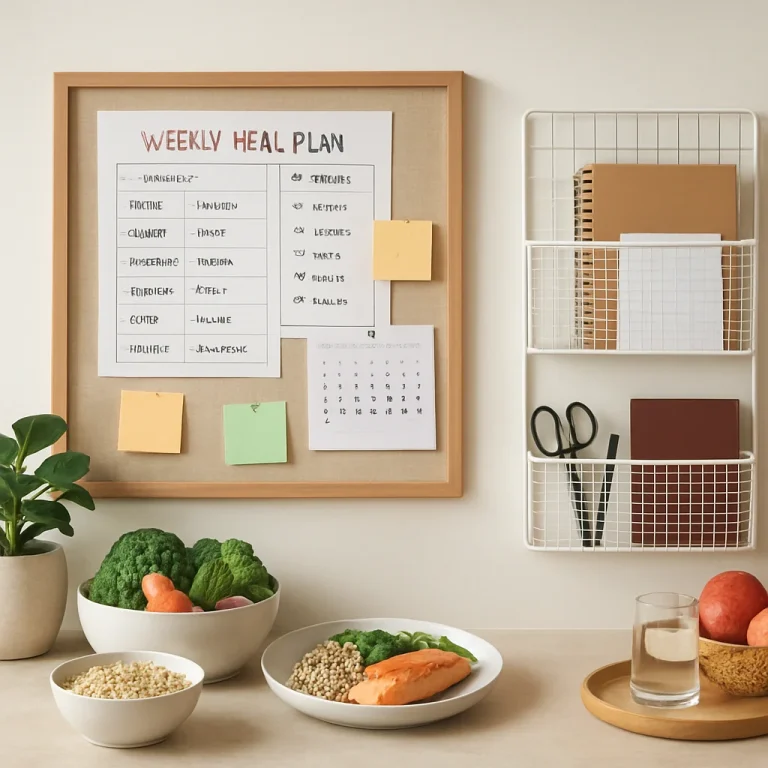
A meal plan that lives in someone’s head will not last. Make your family meal planning system visible and easy to access so everyone knows what is happening.
You can use:
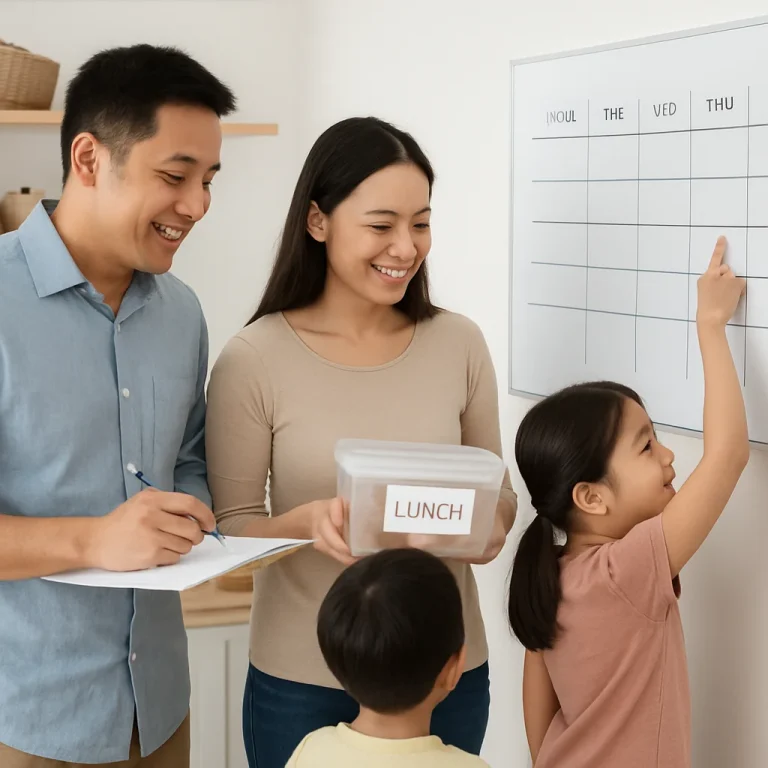
- A fridge whiteboard
- A shared digital calendar
- A printed weekly menu
- A household command centre
If you already use a family calendar, your meal plan should connect to it. That way, sports practices, late meetings, and school events are part of the planning process. For households building a bigger organisation setup, [LINK_TO: How to Create a Household Command Center That Keeps Your Family on Track] and [LINK_TO: How to Set Up a Family Calendar System That Everyone Actually Uses] are great next steps.
Keep Your System Budget-Friendly
A good family meal planning system should help you save money, not just time. To keep costs under control, plan around affordable staples and reduce food waste.
- Use seasonal vegetables and local ingredients
- Plan meals that share ingredients
- Cook larger portions for leftovers
- Buy protein in bulk when possible
- Limit expensive convenience foods
You can also align your meal plan with your family budget system. If you are working on overall household organisation, [LINK_TO: How to Create a Family Budget System That Actually Works Every Month] can help you connect food spending with the bigger financial picture.
Conclusion: Make Meal Planning Simple, Repeatable, and Family-Friendly
The most successful family meal planning system is not the fanciest one—it is the one your family will actually use every week. Start with a simple meal framework, build around your household schedule, keep shopping and prep realistic, and make the plan visible. Over time, these small habits create a calmer kitchen, fewer rushed decisions, and lower grocery bills.
If you want less stress at dinner time and more confidence in your weekly routine, begin with one small change this week. Choose your meals, make your list, and keep it simple. For more family systems that support a smoother home life, explore [LINK_TO: How to Create a Family Organization System That Keeps the Whole House Running Smoothly] and [LINK_TO: How to Create a Family Meal Planning System That Saves Time and Reduces Stress].
Ready to make weeknight meals easier? Start building your family meal planning system today and turn chaos into a routine your whole household can rely on.