
The Ultimate Family Routine Template That Keeps Everyone on Track
A strong family routine template can transform a chaotic household into one that feels calmer, more organised, and far easier to manage. Instead of relying on memory, mood, or last-minute scrambling, a good template gives everyone a clear rhythm for mornings, school runs, meals, chores, homework, downtime, and bedtime. For busy families, this kind of structure can reduce stress, improve cooperation, and make the week feel much more predictable.
Whether you are managing toddlers, school-age kids, teenagers, or even multi-generational household needs, this guide walks you through a practical family routine template you can adapt to real life. You will learn how to structure your day, balance responsibilities, and create a system that supports the whole family instead of just adding more pressure.
Table of Contents
- Why family routines matter
- What to include in a family routine template
- Morning routine template
- After-school and evening routine template
- Weekend and reset routine
- How to adapt for different ages and schedules
- Common mistakes to avoid
- How to make it stick
- Sample family routine template
- Conclusion
Why a family routine template matters
A household runs more smoothly when everyone knows what happens next. A well-built routine reduces decision fatigue, cuts down on repeated reminders, and helps children develop independence. It also supports better time management for parents who are juggling work, meals, transport, school activities, and home care.
At its best, a family routine template is not rigid. It is a framework that creates stability while still leaving room for flexibility. That balance matters, especially in homes where schedules change often. Families who build repeatable systems tend to spend less time reacting to problems and more time enjoying daily life.
If you are also trying to reduce household overwhelm, it can help to pair your routine with a structured planning system like [LINK_TO: How to Create a Weekly Planning System That Reduces Stress] and [LINK_TO: A Simple Family Calendar Setup for Busy Households].
What to include in a family routine template
A complete family routine should cover the moments that shape the day. Think in sections rather than a single long checklist. The goal is to make the routine easy to follow and easy to repeat.
- Wake-up and morning prep – getting dressed, hygiene, breakfast, packing bags
- Departure routine – school, work, childcare, or commute prep
- Afternoon return – snacks, rest, homework, decompression time
- Chores and cleaning – small daily tasks that keep the home manageable
- Meal times – breakfast, lunch, dinner, and snack planning
- Evening wind-down – screens off, showers, prep for the next day
- Bedtime routine – brushing teeth, reading, lights out
- Weekly reset – laundry, meal prep, planning, organising
If your family struggles with chores, it may help to build structure alongside your routine using [LINK_TO: How to Create a Family Chore Chart That Actually Gets Used] and [LINK_TO: How to Create a Family Cleaning Schedule That People Actually Follow].
Morning routine template for families
Mornings set the tone for the rest of the day. A good family routine template should make mornings predictable, not frantic. The key is to simplify choices and front-load as much preparation as possible the night before.
Sample morning flow
- Wake up – everyone gets up at a consistent time
- Personal hygiene – toilet, wash face, brush teeth, shower if needed
- Get dressed – clothes laid out the night before when possible
- Breakfast – simple, repeatable options that are easy to prepare
- Pack and check – water bottles, school items, work essentials, lunch, sports gear
- Final sweep – shoes, bags, keys, lunchboxes, devices
- Leave on time – avoid last-minute delays by building in buffer time
To make mornings easier, use a visible checklist for each child and keep non-negotiables consistent. For example, if breakfast, uniforms, and bags are always in the same place, the family saves time and energy every day.
If you want to reduce weekday stress further, pair your morning flow with [LINK_TO: How to Build a Realistic Morning Routine That Actually Sticks].
After-school and evening routine template
Afternoons and evenings are often where routines fall apart. Kids are tired, parents are stretched thin, and everyone wants to switch off. This is exactly why a clear structure matters most during this part of the day.
Sample after-school routine
- Arrive home and decompress – 15 to 30 minutes of quiet time or snack time
- Hydrate and snack – especially important before homework or activities
- Homework or revision – set a consistent start time
- Household reset – quick tidy-up, bag unpacking, school notices
- Activity block – sports, play, reading, screen time, or family time
- Dinner – keep it simple and mostly repeatable
- Clean-up – dishes, counters, and lunch prep for tomorrow
- Evening wind-down – shower, prepare clothes, pack bags
- Bedtime routine – same order every night
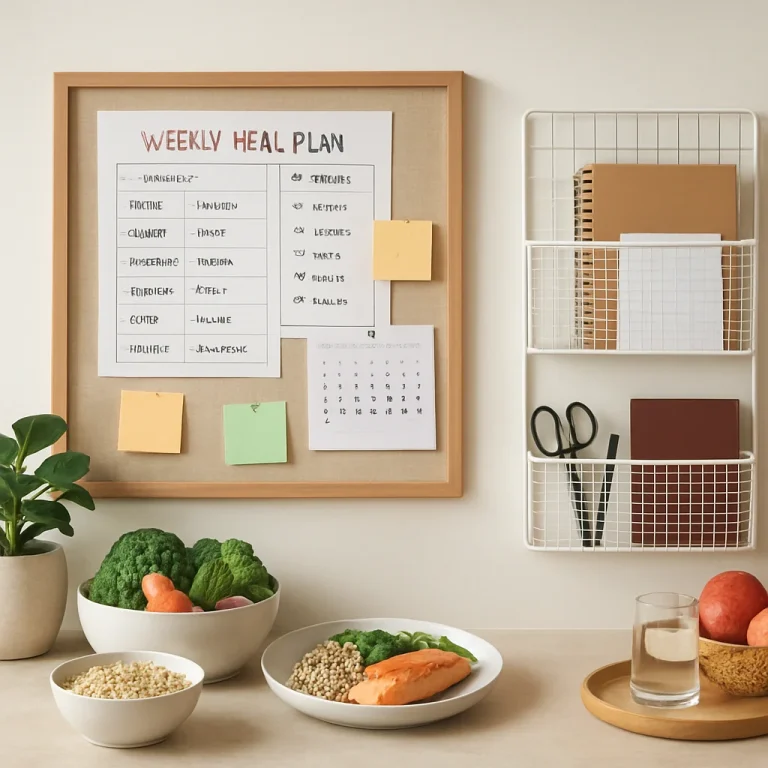
A calm evening routine becomes even easier when meals are planned in advance. Families who want less dinner stress can use [LINK_TO: Weekly Meal Prep Planner for Families | KnowMeal], [LINK_TO: A Simple Meal Prep System for Busy Weeks], or [LINK_TO: Healthy Family Meal Prep Singapore | KnowMeal].
For households focused on better nutrition and energy levels, planning balanced meals can also support family health goals. Options like [LINK_TO: Healthy Eating for Busy Professionals | KnowMeal] and [LINK_TO: Singaporean Food Healthy Meal Plan for Real Life] help make nourishing meals more realistic on busy days.
Weekend and reset routine
A successful family routine template should include a weekly reset. Weekends are the best time to catch up on life admin, refresh the house, and prepare for the next week without feeling rushed.
What to include in a weekend reset
- Laundry and wardrobe refresh
- Grocery shopping and meal planning
- Kitchen reset and fridge check
- Calendar review for the week ahead
- School forms, events, and appointments
- Light cleaning and decluttering
- Family check-in about the coming week
A Sunday reset is especially useful because it creates a smoother Monday. If you need a structured version, explore [LINK_TO: How to Build a Sunday Evening Reset Routine for a Smoother Monday], [LINK_TO: The Best Sunday Reset Routine for a Less-Stressful Week], and [LINK_TO: A Simple Sunday Reset Routine for a More Productive Week].
You can also support your planning with [LINK_TO: How to Create a Weekly Planning Routine That Actually Works] and [LINK_TO: How to Build a Weekly Review Routine That Keeps You Organized].
How to adapt the family routine template for different ages and schedules
No two families run the same way, so the best family routine template is one you can customise. A toddler, a primary school child, a teenager, and a working adult all need different levels of support and responsibility.
For younger children
- Use pictures and simple words
- Keep steps short and repeatable
- Offer one instruction at a time
- Use routines for transitions like bath time and bedtime
For school-age children
- Assign age-appropriate chores
- Teach them to pack their own bags
- Build in homework and reading time
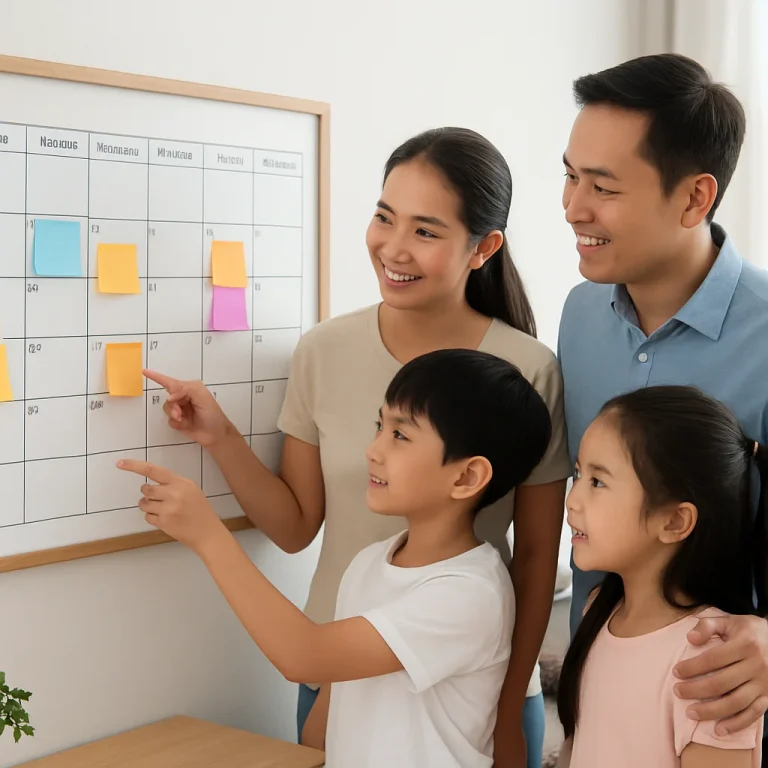
- Use a visible family calendar
For teenagers
- Give them responsibility for parts of the routine
- Include their sports, tuition, and social activities
- Encourage self-management with reminders and checklists
- Let them help shape the routine so they buy into it
For busy adults and caregivers
- Keep the routine realistic, not perfect
- Batch similar tasks together
- Use meal prep and calendar systems to save time
- Leave buffer time between commitments
For homes that also care for older adults, meal and timing needs may be different. Resources like [LINK_TO: Healthy Meal Planning for Seniors | Simple SG Meals] can help support more balanced household planning.
Common mistakes that make family routines fail
Many routines fail not because families are unmotivated, but because the system is too complicated. The goal is to make life easier, not create another source of stress.
- Making it too strict – rigid schedules break easily when real life happens
- Trying to change everything at once – start with one or two key habits
- Not involving the family – people follow routines better when they help create them
- Forgetting the transition moments – mornings, after school, and bedtime need the most structure
- Ignoring meal planning – food decisions often derail the whole day
- Expecting instant success – habits need repetition before they feel natural
If your household tends to drift off course, a stronger overall structure can help. See [LINK_TO: How to Build a Household Routine That Actually Sticks] and [LINK_TO: The Ultimate Weekly Planning System for Busy People].
How to make your family routine template actually stick
The best routines are easy to remember, visible, and rewarding. Start by choosing the most stressful parts of the day and fixing those first. Once those are stable, build out the rest of the routine step by step.
Practical ways to make it stick
- Keep it visible – use a printed chart, whiteboard, or shared calendar
- Use consistent timing – routines work better when they happen at the same time daily
- Prepare the night before – clothes, bags, lunch items, and key documents
- Assign ownership – each person should know what they are responsible for
- Celebrate small wins – positive reinforcement improves follow-through
- Review weekly – adjust what is not working instead of abandoning the system
Pairing routine-building with meal structure can also make a big difference. Families with fitness goals may benefit from [LINK_TO: Body Recomposition Meal Plan for Fat Loss + Muscle], while households seeking simplicity may prefer [LINK_TO: Healthy Family Meal Prep Singapore | KnowMeal].
Sample family routine template
Here is a simple example you can adapt for your own household:
Weekday family routine template
- 6:00 a.m. – Wake up, personal care
- 6:15 a.m. – Breakfast and bag check
- 7:00 a.m. – Leave for school/work
- 3:30 p.m. – Return home, snack, decompression
- 4:00 p.m. – Homework, reading, or quiet time
- 5:00 p.m. – Chores and quick tidy-up
- 6:30 p.m. – Dinner
- 7:15 p.m. – Family time or prep for tomorrow
- 8:00 p.m. – Bath, wind-down, bedtime routine
- 9:00 p.m. – Lights out for kids, adult reset time
Weekend family routine template
- Morning – slower start, breakfast, laundry
- Late morning – groceries, errands, cleaning
- Afternoon – family activity, rest, prep for next week
- Evening – review calendar, pack bags, simple reset
This format is flexible enough for most families, but you can shift the times to match school start times, shift work, transport needs, or extra-curricular schedules.
Conclusion: build a family routine that supports real life
A good family routine template does not need to be complicated. It just needs to be clear, realistic, and repeatable. When your family knows what to do and when to do it, daily life becomes calmer, responsibilities are easier to share, and the home feels more organised overall.
Start small, focus on the busiest parts of the day, and keep adjusting until the routine fits your family’s real rhythm. If you are ready to create a smoother, less stressful household, use this template as your starting point and build a system that helps everyone stay on track.
Ready to make your home run more smoothly? Start by choosing one routine to improve this week, then explore the linked guides to build a complete family system that actually works.