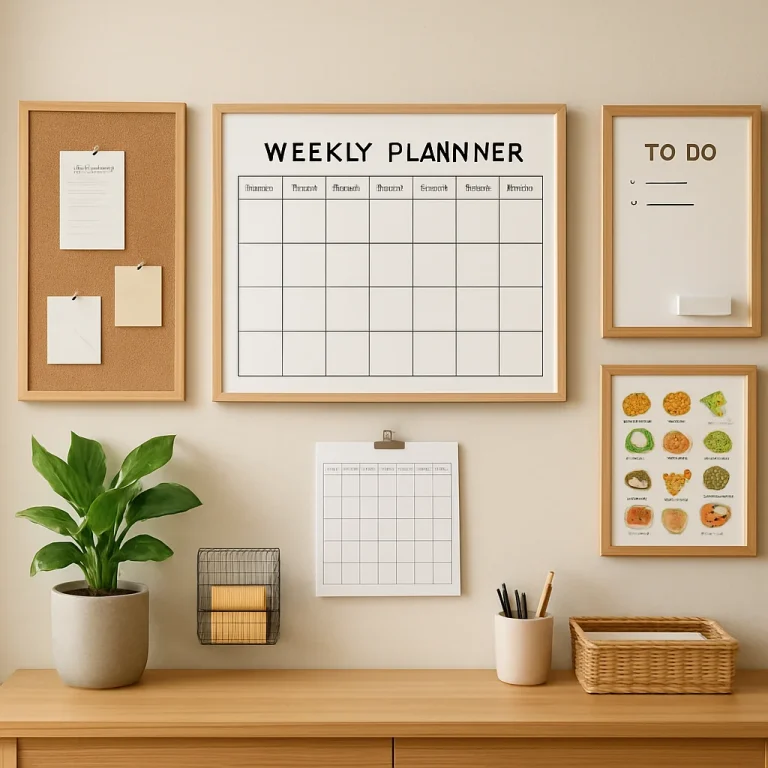

How to Build a Household Routine That Actually Sticks
Creating a household routine that sticks is less about being perfectly disciplined and more about designing a system your family can actually follow on busy weekdays. When routines are clear, realistic, and tied to daily life, they reduce decision fatigue, lower stress, and make home life feel calmer for everyone.
Why most household routines fail
Many families start with a big list of goals: wake up early, tidy the house daily, plan meals, prep lunches, track school tasks, and finish everything before dinner. The problem is that these routines often depend on motivation instead of structure. A routine becomes fragile when it is too ambitious, too rigid, or built for an ideal day rather than real life.
A household routine that sticks usually has three things in common: it is simple, it is repeatable, and it matches your family’s current season of life. If you have young children, shift work, school runs, or elderly parents in the home, your routine should reflect that reality.
Start with the non-negotiables
Instead of planning an entire “perfect” day, begin with the few things that keep your household running smoothly. These are your non-negotiables. Think in terms of:
- Getting everyone out the door on time
- Keeping meals predictable
- Managing laundry before it piles up
- Maintaining a basic tidy-up routine
- Reviewing the next day before bed
When you focus on the essentials first, your routine becomes easier to maintain. You can always add more later, but a routine that starts too big often breaks within a week.
Build your household routine around daily anchors
Anchors are moments that already happen every day, such as waking up, meal times, after school, or bedtime. These fixed points make it much easier to attach habits. For example:
- Morning anchor: make beds, check bags, and review the day’s schedule
- After-school anchor: unpack bags, have a snack, and start homework
- Evening anchor: reset the kitchen, prepare lunches, and set out clothes
This approach works because it reduces the need to remember everything from scratch. If you want a smoother start to the day, you may also like [LINK_TO: How to Build a Realistic Morning Routine That Actually Sticks].
Keep the routine small enough to repeat
The best routines are not impressive on paper; they are easy to repeat on tired days. A good rule is to make each routine step take no more than 5 to 10 minutes. If it takes longer, break it into smaller parts.
For example, instead of “clean the house,” use:
- Clear the dining table
- Load the dishwasher
- Fold one basket of laundry
- Put away visible clutter
This is the kind of consistency that helps a household routine that sticks become automatic over time.
Assign responsibilities clearly
Routines fail when everyone assumes someone else will do the task. Clear ownership matters. Each person in the household should know what they are responsible for, when they are responsible, and what “done” looks like.
If you need a simple way to do this, pair your routine with [LINK_TO: How to Create a Family Chore Chart That Actually Gets Used]. A chore chart does not need to be fancy. Even a basic checklist on the fridge can reduce reminders, arguments, and forgotten tasks.
For families with older adults or seniors at home, routines may also need to support energy levels and meal timing. In that case, [LINK_TO: Healthy Meal Planning for Seniors | Simple SG Meals] can help you keep food planning practical and consistent.
Use a weekly rhythm instead of a perfect daily schedule
Not every task needs to happen every day. In fact, a routine is often easier to maintain when it follows a weekly rhythm. For example:
- Monday: reset the calendar and check appointments
- Tuesday: laundry and school admin
- Wednesday: meal prep and fridge check
- Thursday: home tidy-up and bills
- Friday: light clean and weekend planning
- Sunday: family reset and preparation for the week ahead
This method is especially helpful for busy households that want structure without feeling boxed in. A weekly rhythm also supports meal planning, shopping, and school prep. You can explore [LINK_TO: A Simple Family Calendar Setup for Busy Households] and [LINK_TO: The Ultimate Weekly Planning System for Busy People] to make this even easier.
Make meal planning part of the routine
Meal time is one of the biggest sources of household stress, so it makes sense to build it into your routine. When dinner is unplanned, everything else feels harder. When meals are already decided, your evenings become calmer and more efficient.
Try linking your routine to a simple prep habit once or twice a week. That might mean chopping vegetables, marinating proteins, portioning snacks, or reviewing the grocery list. If you want a practical starting point, [LINK_TO: Beginner’s Guide to Meal Prep for Busy Weekdays] and [LINK_TO: A Simple Meal Prep System for Busy Weeks] are useful companion resources.
For families who want balanced, real-world meals, [LINK_TO: Healthy Family Meal Prep Singapore | KnowMeal] and [LINK_TO: Singaporean Food Healthy Meal Plan for Real Life] can help you keep things both convenient and nourishing.
Use resets to restart without guilt
Even the best household routine will drift sometimes. That is normal. Holidays, illness, late work nights, and school deadlines can throw everything off. The key is to build a reset habit so you can restart quickly instead of waiting for the “perfect Monday.”
A weekly reset can include:
- Checking the upcoming schedule
- Resetting common spaces
- Reviewing meals and groceries
- Preparing school or work items
- Setting one or two priorities for the week
If you like that approach, see [LINK_TO: How to Build a Sunday Evening Reset Routine for a Smoother Monday] and [LINK_TO: The Best Weekly Reset Checklist for a Calm, Productive Week].
Track what is working and simplify what is not
A routine should evolve with your household. What works during school term may not work during holidays. What works for a family with toddlers may not suit a household with teenagers. Review your routine weekly and ask:
- Which parts feel easy?
- Which tasks keep getting skipped?
- What is causing the most friction?
- What can be removed, merged, or simplified?
This kind of review keeps your routine realistic. If you want a structure for that process, [LINK_TO: How to Build a Weekly Review Routine That Keeps You Organized] and [LINK_TO: How to Create a Weekly Planning Routine That Actually Works] are great next steps.
Conclusion: make it easy to succeed
A household routine that sticks is not built on pressure. It is built on clarity, repetition, and a plan that fits real family life. Start small, attach habits to daily anchors, assign clear roles, and use weekly resets to stay on track. When your routine is simple enough to repeat, it stops feeling like a chore and starts feeling like support.
Ready to create a calmer home system? Start by choosing one anchor point today, then build your routine one small habit at a time. If you want more structure, explore our weekly planning, chore chart, and meal prep guides to make your household routine easier to maintain.