How to Set Up a Family Command Center That Actually Gets Used
A good family command center setup does more than look tidy on the wall—it helps your household run with less stress, fewer missed messages, and better follow-through. When done well, it becomes the one place everyone checks for schedules, chores, reminders, and weekly priorities, so you’re not repeating yourself all day.
The key is to keep it simple, visible, and easy to update. If the system takes too long to maintain, the family will stop using it. In this guide, you’ll learn how to create a family command center that fits your real life, supports your routines, and actually gets used.
What a family command center setup should do
A family command center is not just a pretty organizer. It should help your household answer four daily questions quickly:
- What’s happening today?
- Who needs to do what?
- What do we need to remember?
- What’s coming up next?
If your current system does not make those answers obvious, it is too complicated. A strong family command center setup should reduce decision fatigue and keep your week moving. For a broader planning framework, see [LINK_TO: How to Create a Weekly Planning System That Reduces Stress].
Choose the right location first
The best location is one that everyone passes through daily. In many homes, that means the kitchen, entryway, or near the dining area. The ideal spot is visible, easy to reach, and close to where people naturally grab keys, bags, or lunch boxes.
When choosing your location, ask:
- Do we walk past this area every morning?
- Can kids or teens update it without help?
- Is there enough wall space for calendars, lists, and pockets?
- Will it stay clear of clutter?
If your command center is tucked away in a room no one uses, it will fail no matter how nice it looks.
Build your family command center setup around 4 essentials
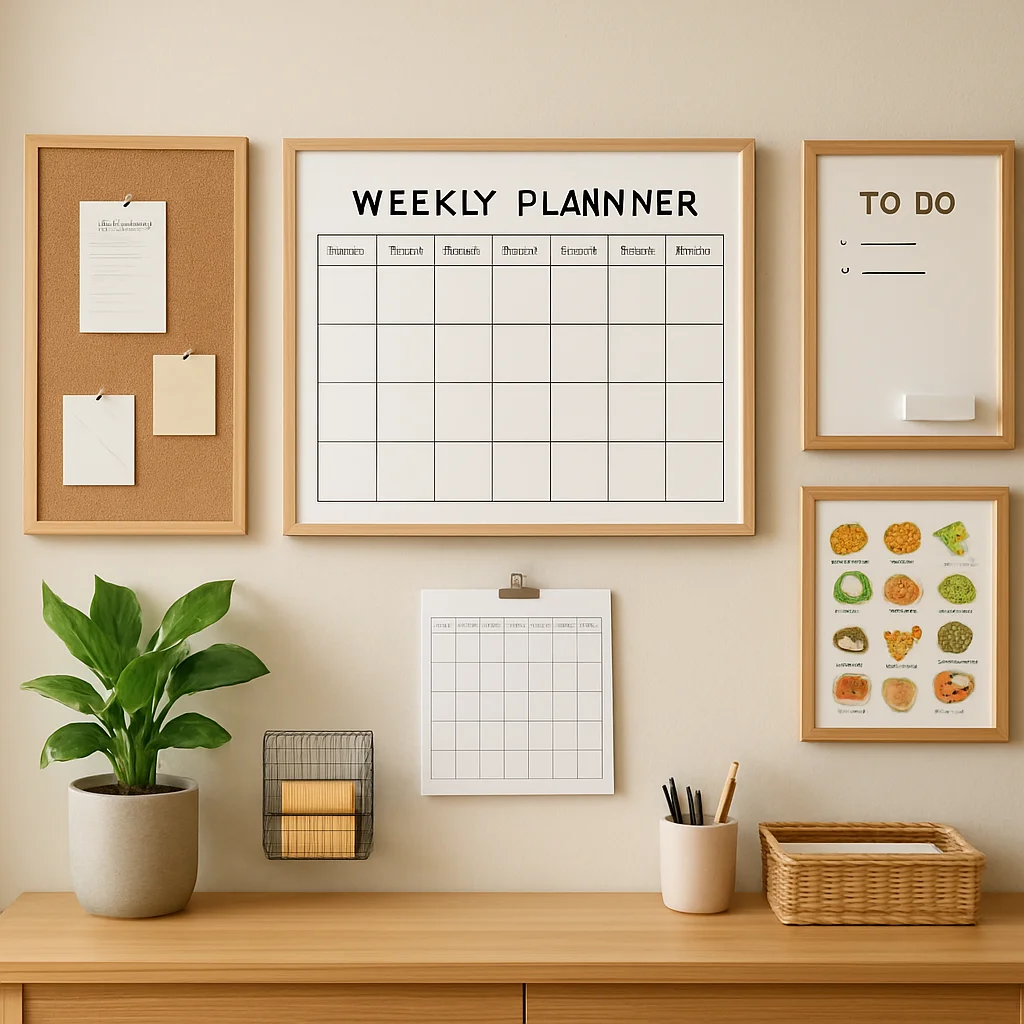
You do not need a giant board with every possible section. Start with the essentials and add only what your family truly uses.
1. A shared calendar
This is the heart of the system. Use it for school events, appointments, travel, sports, deadlines, and family commitments. A visual calendar helps everyone see the week at a glance. If you want a planning tool to pair with your wall setup, try [LINK_TO: Weekly Family Calendar Template That Keeps Busy Households Aligned] or [LINK_TO: A Simple Family Calendar Setup for Busy Households].
2. A to-do or reminder space
Keep a simple space for errands, forms, school notices, bills, and tasks that need action. This could be a whiteboard, clipboard, or magnetic notes.
3. A chore or responsibility tracker
Families work better when expectations are visible. A small chore section helps assign ownership without constant reminders. For a practical system, see [LINK_TO: How to Create a Family Chore Chart That Actually Gets Used] and [LINK_TO: How to Create a Family Cleaning Schedule That People Actually Follow].
4. A quick-grab family hub
Include a place for keys, transit cards, permission slips, stationery, or lunch-related notes. The goal is to reduce last-minute searching and morning chaos.
Keep the design simple enough to maintain
One of the most common mistakes in a family command center setup is overloading it. Too many bins, too many categories, and too much text can make the system feel like work. Simpler wins every time.
Use these design rules:
- Limit the categories to what you check weekly.
- Use clear labels so kids and adults can follow along.
- Keep writing areas large enough to read quickly.
- Choose one update day so the system stays current.
Think of it as a household dashboard, not a scrapbook.
Match the command center to your family routine
Your setup will work better if it reflects how your family already lives. A home with school-aged kids may need homework reminders and lunch plans. A household with shift work may need rotating schedules. A multi-generational home may need clearer meal and medication notes.
This is also where your routines matter. A command center works best when paired with a predictable family rhythm. If you need help with that, explore [LINK_TO: How to Build a Household Routine That Actually Sticks] and [LINK_TO: The Ultimate Family Routine Template That Keeps Everyone on Track].
For many families, the most effective routine is a Sunday reset. That is when you review the week, restock supplies, update calendars, and check what is coming next. You can build that habit with [LINK_TO: How to Build a Sunday Evening Reset Routine for a Smoother Monday] or [LINK_TO: The Best Sunday Reset Routine for a Less-Stressful Week].
Make it easy for every family member to use
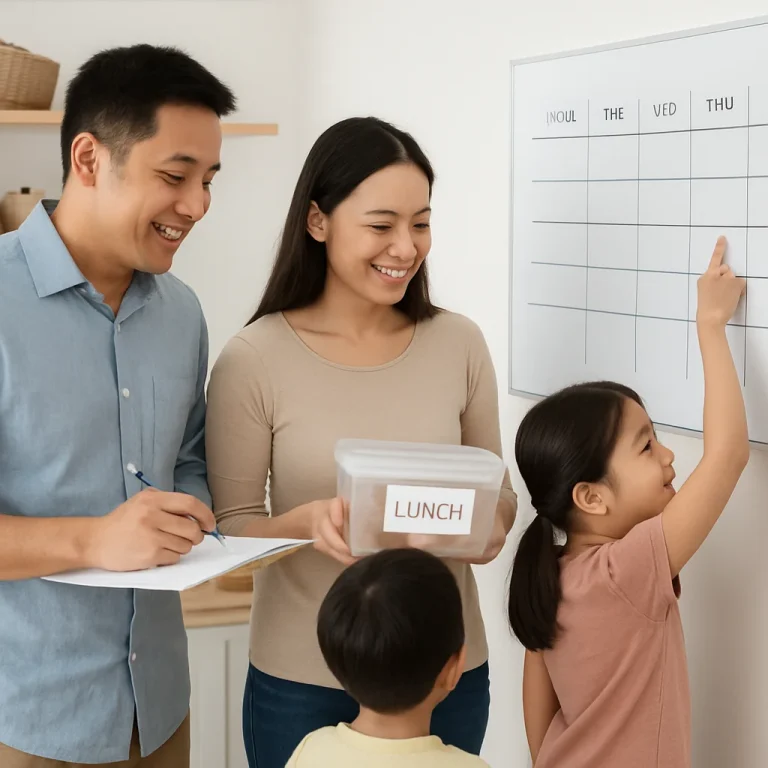
If only one parent can operate the system, it is not really a family command center. Kids, teens, and partners should all be able to understand it quickly.
Here is how to improve usage:
- Use icons or colour coding for each person.
- Place it at eye level for the main users.
- Keep instructions short and visible.
- Let children help update their own items.
- Review it together during a weekly family check-in.
If your family already uses a shared planning routine, connect the command center to it. That creates one reliable workflow instead of several disconnected systems. See [LINK_TO: How to Create a Weekly Planning Routine That Actually Works] and [LINK_TO: How to Build a Weekly Review Routine That Keeps You Organized].
Include meal planning if your week feels chaotic
For many households, meal decisions create the most daily friction. Adding a meal section to your command center can save time and reduce stress. A small weekly meal plan, grocery list, or dinner board makes it easier to avoid repeat questions like “What’s for dinner?”
If you want to make this part even more effective, connect it to [LINK_TO: Weekly Meal Prep Planner for Families | KnowMeal] or [LINK_TO: Healthy Family Meal Prep Singapore | KnowMeal]. For families wanting simple, realistic food planning, [LINK_TO: Singaporean Food Healthy Meal Plan for Real Life] can help keep meals practical and familiar.
This is especially useful for families balancing school, work, sports, and caregiving. If you want a more structured food workflow, see [LINK_TO: A Simple Meal Prep System for Busy Weeks].
What to avoid in your family command center setup
A few common mistakes can make the whole system fail:
- Making it too decorative and not functional
- Creating too many sections
- Using tiny text that no one reads
- Updating it inconsistently
- Hiding it behind cabinet doors or in a study
The goal is daily use, not perfection. If it is hard to maintain, simplify immediately.
Start small and improve over time
You do not need to build the perfect system on day one. Start with a calendar, one list, and one place for important items. After two weeks, notice what gets used and what gets ignored. Then adjust.
A good command center should evolve with your family. As schedules get busier, school needs change, or routines shift, you can add sections only when necessary. That is what keeps it practical, especially in real households with limited time and space.
Conclusion
A well-designed family command center setup gives your household one clear place to track schedules, tasks, and weekly priorities. When it is simple, visible, and tied to your real routines, it becomes a tool everyone actually uses—not just another wall organizer.
Start with the essentials, keep the layout easy to maintain, and build it around your family’s natural habits. If you are ready to make home life feel calmer and more coordinated, use this guide as your starting point and pair it with a weekly planning routine that fits your home.
Call to action: Set up your family command center this week, test it for seven days, and refine it based on what your family actually uses. Then explore our planning and routine templates to build a system that lasts.