How to Build a Simple Personal Budget System That Saves Time and Reduces Stress
Table of Contents
- Why a Simple Budget System Matters
- The Core Principles of a Simple Budget System
- Step-by-Step: Build Your Simple Personal Budget System
- How to Categorise Spending Without Overcomplicating It
- Set Up a Stress-Free Review Routine
- Common Budgeting Mistakes to Avoid
- Budgeting for Families and Busy Households
- Tools and Templates That Help
- How to Stick With It Long Term
- Conclusion
Why a Simple Budget System Matters
A simple personal budget system is not about restriction or tracking every cent forever. It is about creating a clear, low-maintenance way to know where your money is going, what needs attention, and how to stay in control without spending hours on spreadsheets. When your budget is simple, it becomes easier to make decisions, reduce money stress, and stay consistent month after month.
Many people abandon budgeting because it feels too detailed, too rigid, or too time-consuming. A better approach is to build a system that fits your real life. That means a structure that covers the essentials, supports your goals, and still leaves room for flexibility. Whether you are trying to save more, pay down debt, manage family expenses, or simply stop worrying about bills, a simple budget system can make money management feel calm and manageable.
If you enjoy building repeatable systems for daily life, you may also like [LINK_TO: How to Build a Simple Monthly Life Admin System That Saves Time and Reduces Stress] and [LINK_TO: How to Create a Simple Weekly Life Admin System That Saves Time and Reduces Stress].
The Core Principles of a Simple Budget System
The best budgeting systems share a few core principles. First, they are easy to maintain. If a budget takes too much effort, it will not last. Second, they focus on behaviour and decisions, not perfection. Your system should help you act with confidence, even if your income or expenses change from month to month. Third, they are goal-based. A budget should support your priorities, whether that is saving for emergencies, building wealth, or simply having more breathing room.
A simple personal budget system should also be:
- Flexible enough to handle real life
- Visible enough that you can see cash flow clearly
- Repeatable so you do not have to reinvent it every month
- Actionable with a small number of meaningful categories
Think of it like a good routine: the less friction there is, the more likely you are to follow it. The goal is not to build a perfect financial dashboard. The goal is to create a system that makes spending and saving decisions easier.
Step-by-Step: Build Your Simple Personal Budget System
1. Start with your take-home income
Begin with the amount you actually receive after taxes, CPF contributions, insurance deductions, or other automatic deductions. This is the money you can truly allocate. If your income varies, use a conservative average from the last three to six months so your budget stays realistic.
2. List your fixed monthly essentials
Write down the expenses that are non-negotiable or very difficult to change quickly. These usually include rent or mortgage, utilities, insurance, loan repayments, transport, childcare, phone bills, and basic subscriptions. These are the foundation of your budget.
3. Add your flexible spending categories
Next, include categories like groceries, dining out, personal care, entertainment, gifts, and household items. These areas are where you can adjust spending if needed. Keep the list short. Most people only need five to eight categories total to stay organised.
4. Decide your savings targets first
Do not treat savings as whatever is left over. Assign money to savings before you spend on discretionary items. This could include an emergency fund, annual bills, travel, or long-term investing. Even small automated transfers can build momentum and reduce decision fatigue.
5. Set simple limits for each category
Assign a monthly amount to each category based on your priorities. A good budget system is not about guessing perfectly. It is about creating guardrails. If necessary, start with rough numbers and refine them over time. The key is to give every dollar a job.
6. Automate where possible
Automation is one of the easiest ways to reduce stress. Set up automatic transfers for savings, bill payments, and regular commitments. The less you need to remember, the more stable your system becomes. This is similar to how a [LINK_TO: How to Build a Simple Weekly Meal Planning System That Saves Time and Reduces Stress] reduces daily food decisions by preparing the structure in advance.
7. Track only what matters
You do not need to monitor every transaction if that feels overwhelming. Instead, track the main categories that affect your financial goals. For most people, this means checking spending against essentials, flexible spending, and savings at least once a week or once a month.
How to Categorise Spending Without Overcomplicating It
One of the biggest reasons people quit budgeting is category overload. Too many buckets create confusion and make the system harder to use. A simpler approach is to group your spending into broad, meaningful categories that match how you actually live.
Here is a practical structure:
- Needs – housing, utilities, debt, transport, insurance, groceries
- Goals – savings, investments, emergency fund, sinking funds
- Lifestyle – eating out, entertainment, hobbies, personal spending
If you are managing a family household, you can take this one step further by separating shared costs from personal costs. For example, family groceries and kids’ expenses can sit in one shared category, while personal spending remains individual. This can be especially useful when using a [LINK_TO: Shared Grocery List Meal Planner for Families] or organising meals through [LINK_TO: Family Meal Planning on a Budget: The Complete System for Saving Time and Money].
A smart budget also includes sinking funds for irregular costs such as annual insurance, car maintenance, school fees, festive spending, or travel. These are not surprises; they are simply expenses that arrive less often. Planning for them makes your budget much more stable.
Set Up a Stress-Free Review Routine
A budget works best when you review it regularly, but the review process should be short and simple. You do not need to spend hours analysing every dollar. A 10 to 15 minute review can be enough if your system is well organised.
Weekly check-in
Once a week, glance at your spending and ask three questions:
- Am I on track with my main categories?
- Do I need to move money between categories?
- Is anything coming up next week that I should prepare for?
This weekly check helps you catch issues early before they become stressful. If you already use a weekly planning habit in other parts of life, you may find it easier to keep this routine consistent.
Monthly reset
At the end of each month, review what worked and what did not. Look for overspending patterns, recurring bills, and categories that need adjusting. Then reset your limits for the next month. This is also the time to update any sinking funds and savings goals.
If you prefer structured routines, a budget review can sit alongside other monthly systems such as [LINK_TO: How to Build a Simple Monthly Life Admin System That Saves Time and Reduces Stress] or [LINK_TO: Ultimate Family Meal Planning Guide: Save Time, Money, and Stress Every Week].
Common Budgeting Mistakes to Avoid
Many budgeting problems come from trying to do too much too soon. Avoid these common mistakes:
- Making categories too detailed – too many categories cause confusion and inconsistency
- Using unrealistic numbers – if your budget does not match real life, you will ignore it
- Forgetting irregular expenses – annual bills and seasonal spending can wreck a budget if ignored
- Leaving no room for fun – a budget without lifestyle spending feels too strict to sustain
- Not reviewing it – even the best budget needs small updates over time
Another common issue is treating a budget like a test instead of a tool. If you overspend in one category, do not give up. Adjust the system and keep going. A good budget is designed to adapt.
Budgeting for Families and Busy Households
For families, a simple personal budget system often needs a shared structure so everyone knows the priorities. This is especially true when household spending includes groceries, school costs, transport, entertainment, and recurring family activities. The easiest way to stay organised is to keep the system visible and use categories that reflect family life.
For example, you can create shared categories for groceries, household supplies, family outings, school-related costs, and savings goals. If meal costs are a major part of your household budget, pairing your financial system with meal planning can make a huge difference. Resources like [LINK_TO: Budget-Friendly Weekly Meal Plan for Families: Simple, Flexible, and Affordable], [LINK_TO: Cheap Healthy Lunch Ideas for Families on a Budget], and [LINK_TO: Easy Budget Family Dinner Ideas for Busy Weeknights] can help reduce food spending while saving time.
Families who want to save effort can also streamline grocery planning with [LINK_TO: How to Build a Cheap Healthy Grocery List for Weekly Family Meals] and simplify dinners using [LINK_TO: Easy Healthy Family Dinner Ideas for Busy Weeknights]. The more predictable your routine becomes, the easier it is to keep your budget steady.
For larger households, it can help to combine budgeting with shared planning tools such as a household expense list or a shared tracker. This keeps everyone aligned and prevents surprise spending.
Tools and Templates That Help
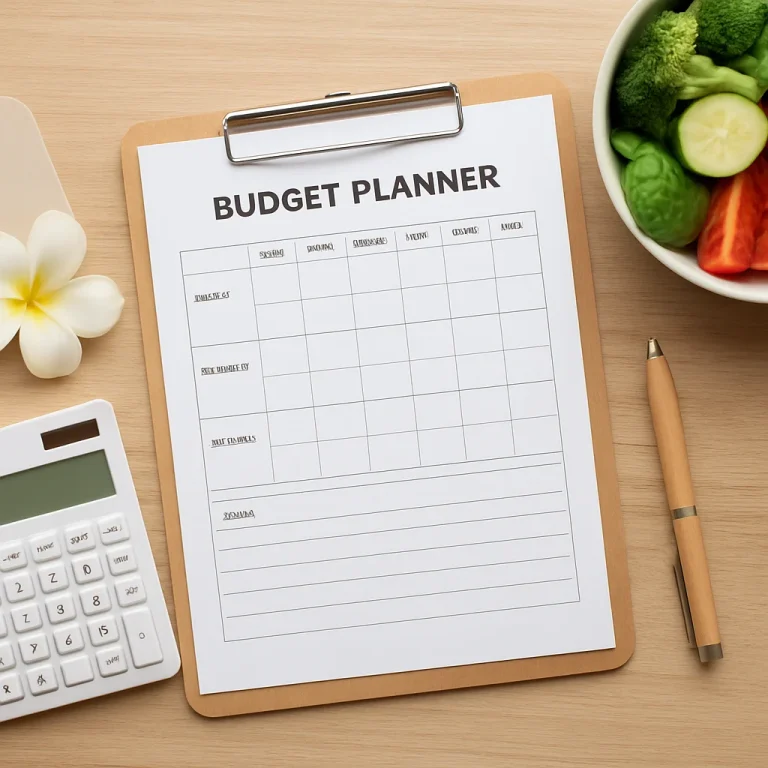
You do not need expensive software to create a simple personal budget system. A notebook, spreadsheet, or budgeting app can all work well. The best tool is the one you will actually use consistently.
Here are a few options:
- Spreadsheet – ideal if you like visibility and customisation
- Budgeting app – useful for automatic syncing and alerts
- Envelope-style system – helpful for people who prefer physical cash control
- Shared family tracker – great for couples and households managing common expenses
If you manage multiple goals at once, a simple dashboard can help you stay organised. For instance, a parent or coach might use budget tracking alongside a meal plan system such as [LINK_TO: Meal Prep Planner for Families | Shared Meal Plan] or [LINK_TO: Personal Trainer Nutrition Software | KnowMeal] to manage both nutrition and household routines efficiently.
For people focused on fitness and body recomposition, financial habits can also support consistency in food planning and supplement spending. Structured planning tools like [LINK_TO: Macro Calculator for Weight Loss | KnowMeal], [LINK_TO: TDEE Calculator Singapore for Smarter Meal Planning], and [LINK_TO: Macro Meal Plan for Easy Weight Loss & Muscle Gain] can help create a parallel system where both money and meals are managed with less stress.
How to Stick With It Long Term
The easiest budget to follow is one that feels natural. To stick with your system, keep it simple, make it visible, and review it regularly. Do not aim for perfect tracking. Aim for sustainable control.
These habits can help:
- Link budgeting to a weekly routine so it becomes automatic
- Use round numbers to reduce mental friction
- Review only the categories that matter most
- Automate bills and savings to remove guesswork
- Celebrate progress when you stay within your plan or hit a savings milestone
It also helps to connect budgeting to a bigger purpose. Maybe your goal is more family time, less end-of-month stress, debt freedom, or the ability to handle emergencies calmly. When the budget supports something meaningful, it becomes easier to keep going.
If you are building systems in other parts of life, budgeting can become part of a broader lifestyle framework. For example, many households pair financial planning with food planning through [LINK_TO: How to Build a Simple Weekly Meal Planning System That Saves Time and Reduces Stress] and family organisation through [LINK_TO: How to Create a Simple Weekly Life Admin System That Saves Time and Reduces Stress].
Conclusion
A simple personal budget system should make life easier, not harder. The best system is clear, flexible, and easy to repeat. Start with your income, list your fixed costs, set savings first, group your spending into a few meaningful categories, and review it regularly. With that foundation, you can reduce money stress, stay on top of your priorities, and make better decisions with less effort.
If you want a calmer, more organised approach to money management, start small and build consistency. A simple system is often the one that lasts.
Ready to create a budget that saves time and reduces stress? Start by mapping your income and top spending categories today, then build from there with a routine you can actually maintain.