Budget Planner Template for Beginners: A Weekly System That Actually Sticks
If you’re looking for a budget planner template for beginners, the best one is not the prettiest spreadsheet — it’s the one you’ll actually use every week. A simple, repeatable system helps you stay in control of spending, reduce money stress, and build better habits without feeling overwhelmed.
In this guide, you’ll learn a beginner-friendly weekly budgeting system that is easy to set up, easy to maintain, and flexible enough for real life. If you want a bigger-picture foundation first, pair this article with [LINK_TO: How to Build a Simple Personal Budget System That Saves Time and Reduces Stress] for the core money system behind it.
What Makes a Budget Planner Template for Beginners Actually Work?
A good budget planner template for beginners should do three things well: show you where your money is going, help you make decisions quickly, and reduce the mental load of tracking every single transaction. If it feels complicated, you’ll stop using it.
The most effective templates usually include:
- Income — what comes in each week or month
- Fixed expenses — rent, transport, bills, subscriptions
- Flexible spending — groceries, eating out, personal spending
- Savings goals — emergency fund, debt payoff, future plans
- Weekly review section — a quick check-in to keep you on track
The goal is not perfection. The goal is consistency.
How to Set Up Your Weekly Budget Planner Template
This weekly system is designed to be simple enough for beginners and strong enough to support long-term habits. You only need 15 to 20 minutes once a week to keep it going.
1. Start with your weekly income
List your take-home pay for the week. If your income is monthly, divide it into a weekly amount so you can make easier decisions. This makes the budget feel more manageable and helps you avoid spending too much too early in the month.
2. Write down fixed costs first
Before you plan anything else, set aside money for unavoidable expenses. These might include:
- Housing
- Utilities
- Insurance
- Transport
- Phone bills
- Debt payments
These are the non-negotiables. Once they’re covered, you can budget the rest with more confidence.
3. Assign weekly amounts to variable categories
Now split your remaining money into weekly categories like groceries, dining out, family activities, and personal spending. If you want help keeping food costs under control, the principles in [LINK_TO: How to Build a Cheap Healthy Grocery List for Weekly Family Meals] can also support your household budget.
4. Add a savings line
Even beginners should include savings, no matter how small. A weekly transfer of $20, $50, or $100 helps build the habit. Over time, this creates stability and reduces the chance of falling back into stress spending.
5. Leave room for real life
A rigid budget often fails because life is unpredictable. Instead of planning every dollar to the cent, build in a small buffer for unexpected costs. That flexibility is what makes a budget planner template for beginners sustainable.
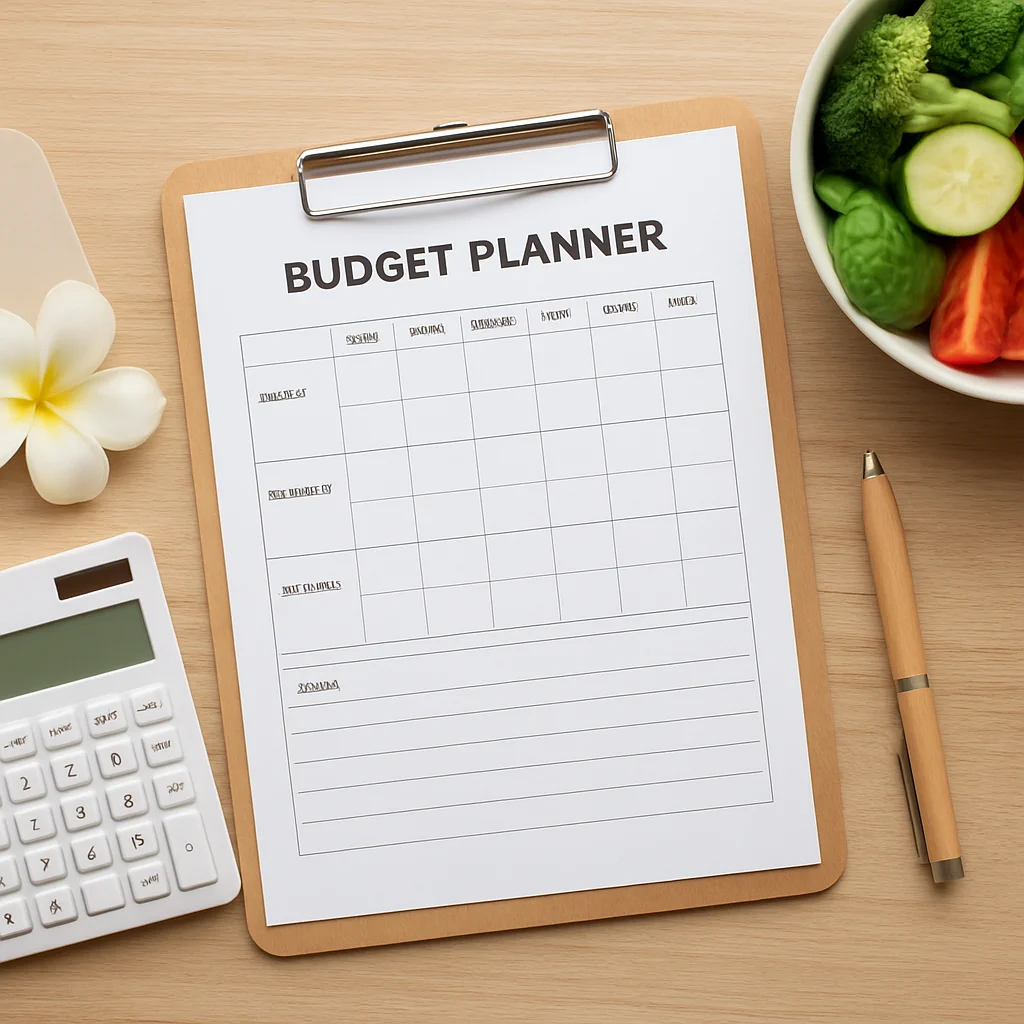
A Simple Weekly Budget Planner Template Structure
You can build your template in a notebook, Notes app, spreadsheet, or budgeting app. Keep the structure simple:
- Weekly income
- Fixed expenses
- Groceries
- Transport
- Eating out / entertainment
- Savings
- Buffer / miscellaneous
- Weekly review
For families, shared tracking works especially well. A [LINK_TO: Shared Grocery List Meal Planner for Families] can be a useful companion if grocery spending is one of your biggest budget leakages.
How to Make the Template Stick Every Week
The reason most budgets fail is not bad math — it’s inconsistency. To make your system stick, connect it to an existing weekly routine.
Choose one budget day
Pick the same day each week, such as Sunday evening or Monday morning. Use that time to review spending, update balances, and plan the next week.
Review only what matters
You do not need to analyse every transaction. Focus on:
- Did I stay within my main categories?
- Did any spending surprise me?
- Do I need to adjust next week’s plan?
Use category caps
Setting a limit for each category makes decisions easier. For example, if you’ve already used most of your dining-out budget, you’ll naturally slow down spending without needing constant self-control.
Keep one goal visible
Beginners often stick better when they focus on one primary goal, such as building savings, cutting food costs, or paying off debt. If your household budget is tied closely to meal spending, articles like [LINK_TO: Budget-Friendly Weekly Meal Plan for Families: Simple, Flexible, and Affordable] and [LINK_TO: Family Meal Planning on a Budget: The Complete System for Saving Time and Money] can help reduce pressure in that category.
Common Budgeting Mistakes Beginners Should Avoid
Even the best budget planner template for beginners can fail if the setup is too ambitious. Watch out for these common mistakes:
- Tracking too many categories — keep it simple at first
- Forgetting irregular costs — birthdays, annual fees, repairs
- Using unrealistic numbers — base your budget on actual habits
- No weekly review — the system needs a reset point
- Trying to be perfect — progress matters more than precision
If you want a more structured system for life admin as a whole, [LINK_TO: How to Create a Simple Weekly Life Admin System That Saves Time and Reduces Stress] and [LINK_TO: How to Build a Simple Monthly Life Admin System That Saves Time and Reduces Stress] can help you build a broader routine around budgeting.
How to Adapt the Template for Different Goals
Your budget should match your current season of life. A student, a young professional, and a parent will all use the same template differently.
- For beginners: focus on awareness and consistency
- For families: prioritise groceries, school costs, and shared expenses
- For debt repayment: direct more money toward extra payments
- For savings goals: automate transfers as early as possible
That same “build the system around the goal” mindset is what makes tools like [LINK_TO: Personalised Nutrition Meal Plan for Any Goal] effective in other parts of life too.
Final Thoughts: Keep It Weekly, Simple, and Sustainable
The best budget planner template for beginners is not the one with the most features. It’s the one that gives you clarity, fits your routine, and helps you make better money choices week after week. When your budget is simple, visible, and easy to review, it becomes much easier to stick with it.
Start small, review weekly, and improve one category at a time. If you want a fuller money system to support this template, go back to [LINK_TO: How to Build a Simple Personal Budget System That Saves Time and Reduces Stress] and build from there.
Ready to get started? Set up your weekly budget planner today, choose one tracking method, and commit to a 15-minute review every week. Small actions done consistently will always beat a complicated plan you never use.