Body Recomposition Meal Plan for Singapore
body recomposition meal plan
A body recomposition meal plan helps you lose fat and build or maintain muscle at the same time by matching calories, protein, carbs, and fat to your real-life routine. For most people in Singapore, that means eating enough protein, keeping fibre high, and using a modest calorie deficit or maintenance intake instead of crash dieting.
This guide shows you how to set calories, choose macros, and build practical meals using foods you can buy at FairPrice, Sheng Siong, Cold Storage, NTUC, and wet markets. You’ll also learn how recomposition differs for people with insulin resistance, high blood pressure, or busy family schedules, plus how trainers can use meal planning workflows without drowning in spreadsheets.
What body recomposition actually means
Body recomposition is not magic. It’s the slow, unglamorous process of reducing body fat while keeping or increasing lean mass, usually through a mix of resistance training, enough protein, and a calorie target that isn’t too aggressive.
For many clients I’ve worked with, the real win is this: clothes fit better, strength goes up, and scale weight may barely move for weeks. That’s normal. If you only chase the scale, recomposition looks boring. If you track waist, photos, gym performance, and energy, it starts making sense.
A good body recomposition meal plan usually has:
- Protein at every meal
- Fibre-rich carbs for energy and fullness
- Moderate fats for hormones and satiety
- A calorie target that fits your goal and training load
If you want a deeper setup for calories and macros, you can also link this with [INTERNAL LINK: TDEE calorie calculator guide] and [INTERNAL LINK: macro meal planning basics].
Recomposition vs weight loss vs muscle gain
These goals overlap, but they’re not identical.
- Fat loss: bigger calorie deficit, muscle retention is the priority
- Muscle gain: small surplus, training performance matters most
- Recomposition: small deficit or maintenance, protein and training drive the change
Recomposition works best for beginners, people returning to training, and those carrying higher body fat. It also works well for people managing insulin resistance, because a measured plan is easier to sustain than an aggressive cut that ends in a 9 p.m. biscuit raid.
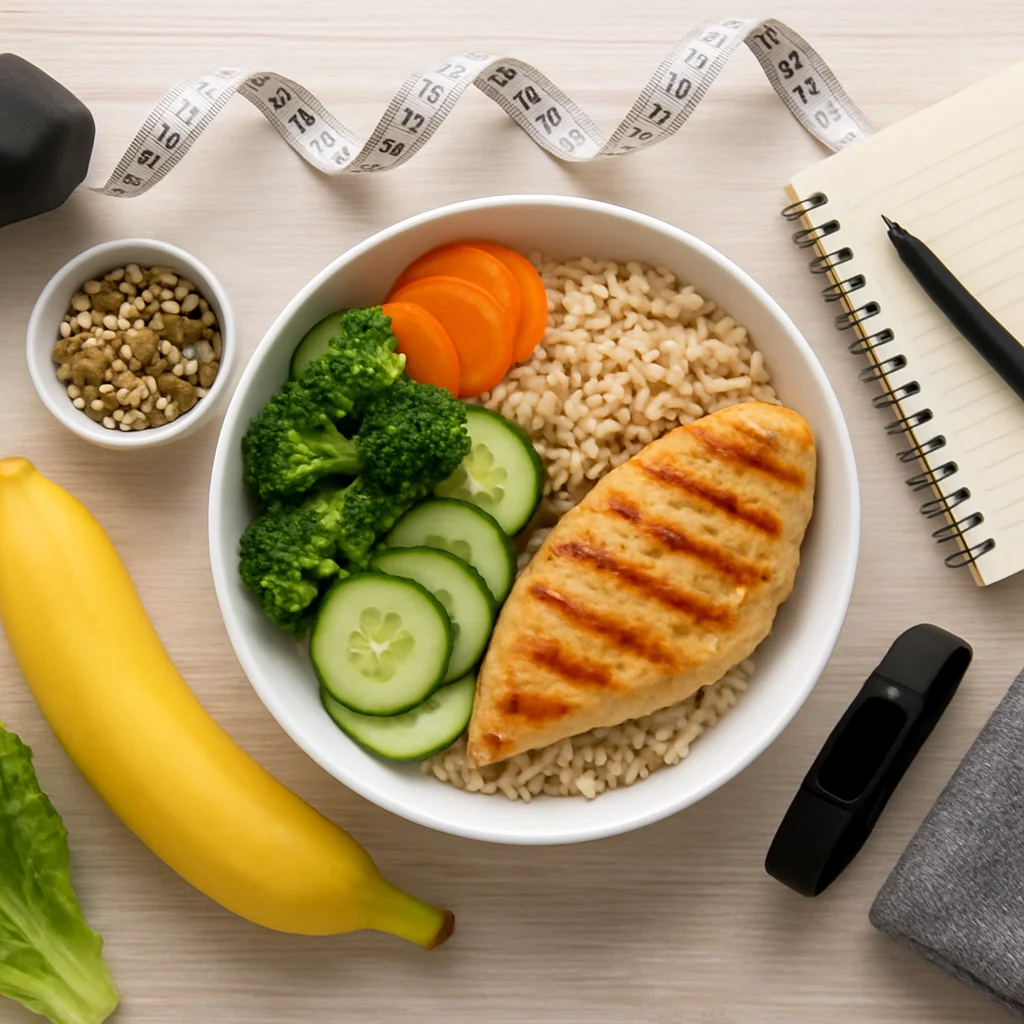
[IMAGE: Plate with chicken, brown rice, vegetables, and boiled eggs + alt text: Balanced body recomposition meal with protein, fibre, and controlled carbs]
How to set calories for recomposition
Your calories are the starting point, not the whole story. For a body recomposition meal plan, most people do best with either maintenance calories or a small deficit of 10–15%.
That range is practical because it leaves enough energy for strength training, recovery, and daily life. Go too low, and the body starts acting like a tired office worker on a Friday afternoon: slow, moody, and unwilling to cooperate.
A simple calorie setup
Use this order:
- Estimate TDEE using work activity + exercise sessions
- Pick a goal:
– Maintenance for slower recomposition – 10% deficit for fat loss with muscle retention – Small surplus only if you’re very lean and training hard
- Set protein first
- Distribute carbs and fats around training and preference
For Singaporean users, the component-based activity level method matters. A security guard doing 10-hour shifts plus three weekly gym sessions has very different energy needs from a desk worker who walks 3,000 steps and lifts twice weekly. A simple 1–5 scale often hides that difference.
Practical example
A 34-year-old male, 78 kg, desk-based job, 4 lifting sessions weekly, moderate daily walking:
- Maintenance might land around 2,300–2,500 kcal
- Recomp target might be 2,100–2,300 kcal
- Protein: 140–170g
- Fibre: 25–35g
- Fats: 60–80g
- Carbs: the rest
Those are estimates, not prescriptions. Real tracking should stay within KnowMeal-style tolerance ranges: calories ±50, protein ±10g, carbs ±8g, fat ±5g. That makes meal prep realistic instead of turning dinner into a laboratory exercise.
Macros made simple: protein, carbs, and fat
A lot of macro advice becomes weirdly theatrical. It doesn’t need to be.
Protein
Protein helps preserve and build muscle during a deficit. It also improves fullness, which is useful if you’ve ever stared at an empty lunchbox at 4 p.m. and considered office kopi as a food group.
Aim for 1.6–2.2g per kg body weight for most active adults. Good options in Singapore include:
- Eggs
- Skinless chicken breast or thigh
- Fish such as dory, salmon, batang, sardines
- Tofu and tempeh
- Greek yogurt or high-protein yogurt
- Lean pork or beef in moderate portions
- Edamame
Carbs
Carbs are your training fuel. They also help many people sleep better and train harder when placed sensibly.
Choose mostly:
- White or brown rice
- Oats
- Sweet potato
- Wholegrain bread
- Red rice
- Fruit like bananas, guava, papaya, apples
- Legumes such as chickpeas and lentils
For insulin resistance support, carbs still belong on the plate. The trick is portion control, fibre, and pairing with protein.
Fat
Fat supports hormones, satiety, and food enjoyment. It’s easy to overshoot, so measure oils instead of pouring “just a bit” from the bottle and pretending it was scientific.
Use:
- Olive oil
- Canola oil
- Avocado
- Nuts
- Seeds
- Eggs
- Fatty fish
A recomposition meal plan usually works best when fats are moderate, not extreme. Very high-fat diets can crowd out carbs and make training feel flat.
Meal planning for insulin resistance, diabetes support, and fibre
This is where practical planning matters most. A body recomposition meal plan for someone with insulin resistance should focus on steady blood sugar, not just calories.
What helps most
- 20g+ fibre daily
- Protein at breakfast
- Carbs spread across the day
- Vegetables in at least 2–3 meals
- Less liquid sugar and fewer refined snacks
The research is fairly consistent: higher-protein, higher-fibre meals improve satiety and help with glycaemic control. A 2021 review in Nutrients and several diabetes nutrition guidelines support the role of fibre-rich whole foods, especially legumes, oats, vegetables, and minimally processed grains.
Singapore-friendly blood sugar choices
Use foods that are cheap, familiar, and easy to buy:
- Brown rice or mixed rice portions
- Oats from Quaker or supermarket house brands
- Tau kwa, tofu, tempeh
- Kai lan, chye sim, spinach, cabbage, bean sprouts
- Bitter gourd, okra, eggplant
- Apple, guava, berries when budget allows
- Plain soy milk without added sugar
One practical trick: if you eat chicken rice, reduce the rice portion and add extra cucumber, soup, and a boiled egg or tofu side. No need to ban food you actually enjoy. Sustainability usually beats nutritional theatre.
For diabetes support, anyone on medication or with frequent low blood sugar should work with a doctor or dietitian. This article is informational, not medical advice.
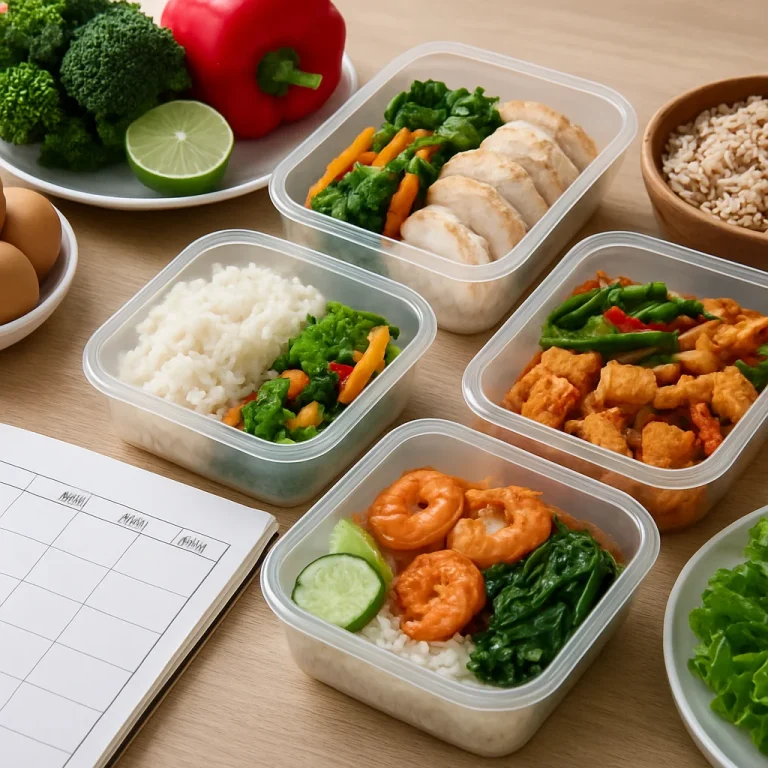
[IMAGE: Meal prep boxes with rice, tofu, vegetables, and fish + alt text: Singapore-style meal prep for insulin resistance and body recomposition]
Blood pressure and kidney health considerations
Many users ask how a body recomposition meal plan fits with high blood pressure or kidney concerns. The answer depends on the diagnosis, medication, and lab results, so blanket advice is risky.
For blood pressure
Focus on:
- More potassium-rich foods if medically suitable
- Less ultra-processed food
- Controlled sodium from sauces and soups
- More vegetables and fruit
- Home-cooked meals using measured soy sauce, oyster sauce, and seasoning
A plate of home-cooked steamed fish, stir-fried kailan, and rice is usually easier to manage than hawker food where sodium can climb fast. Even tasty food can become stealthy if the gravy has ambitions.
For kidney health
If kidney function is reduced, protein targets may need adjustment. That’s one reason “eat as much protein as possible” is poor advice for everyone.
People with kidney disease should speak to a clinician or renal dietitian before setting high-protein targets. For everyone else, normal recomposition protein intakes are generally fine, but medical conditions change the rules.
Best foods for a Singapore recomposition meal plan
A good plan doesn’t need exotic ingredients. It needs repeatable ones.
Affordable protein staples
- Eggs: about S$3.20–S$4.50 per tray depending on size and brand
- Chicken breast: often S$7–S$12/kg
- Tofu and tau kwa: commonly S$1–S$2+ per block
- Canned sardines or tuna: often S$1.50–S$4
- Plain Greek yogurt: around S$5–S$8 per tub, depending on brand
- Fish fillets: varies widely, but frozen options are often cheaper
Fibre-friendly carb staples
- Oats
- Brown rice
- Sweet potato
- Wholegrain bread
- Red rice
- Lentils and chickpeas
- Fruit in season
Vegetable staples
- Cabbage
- Chye sim
- Kai lan
- Broccoli
- Cauliflower
- Carrots
- Cucumbers
- Tomatoes
- Spinach
If budget matters, frozen vegetables are often underrated. They’re convenient, reduce waste, and can be cheaper than “fresh” vegetables that started looking stressed in your fridge two days later.
Sample body recomposition meal plan
Here’s a simple one-day example for a moderately active adult aiming for recomposition.
Breakfast
- 3 eggs scrambled with spinach and tomatoes
- 2 slices wholegrain bread
- 1 banana
Lunch
- Grilled chicken breast
- 1 cup cooked brown rice
- Stir-fried kai lan and carrots
- Clear soup
Snack
- Greek yogurt
- 1 apple
- Small handful of almonds
Dinner
- Steamed fish with ginger
- 1 medium sweet potato
- Tofu and cabbage stir-fry
- Optional fruit if training volume is high
This kind of day usually gives strong protein coverage, enough carbs to train, and fibre that supports fullness and blood sugar control. If you’re doing meal prep for the week, make the chicken, rice, and vegetables in batches and rotate sauces so you don’t quit on day three from pure boredom.
If you want help building a weekly routine, [INTERNAL LINK: weekly meal prep planner] is a natural next step.
How to prep meals without losing your mind
Meal prep fails when it becomes too complicated. Most people don’t need 14 containers and a spreadsheet that looks like tax season.
A simpler method
- Pick 2 proteins
- Pick 2 carbs
- Pick 3 vegetables
- Choose 2 sauces or seasonings
- Cook once or twice weekly
Easy flavour ideas
- Garlic, ginger, light soy sauce
- Curry powder with coconut milk in modest amounts
- Black pepper and oyster sauce
- Chilli, lime, and fish sauce
- Sesame oil in small amounts
For families, meals should align so everyone eats the same core dish. That’s easier when one person is on a recomposition plan and the kids just need a sensible plate, not a lecture about macros before school.
[IMAGE: Family meal prep containers with shared dishes + alt text: Family-friendly meal prep aligned to one shared lunch and dinner menu]
Working with trainers and clients
For personal trainers, a body recomposition meal plan becomes much easier when the nutrition workflow is standardised. I’ve seen too many clients get lost in random WhatsApp notes, half-filled screenshots, and “I think I ate okay” updates.
What helps trainers most
- TDEE-based calorie targets
- Macro targets with rounded numbers
- Shared grocery lists
- Drag-and-drop meal slot changes
- PDF exports with branded logos and client instructions
A useful system should let trainers manage up to 100 clients without rebuilding each plan from scratch. That’s especially helpful when a client changes lunch because of office catering or wants a dinner swap after training.
For coaches, [INTERNAL LINK: personal trainer nutrition workflow] can support client onboarding, meal edits, and branded reporting.
Common mistakes to avoid
The biggest recomposition mistakes are boring, predictable, and fixable.
- Eating too little protein
- Cutting calories too hard
- Ignoring fibre
- Skipping strength training
- Using too much oil and sauces
- Trying to eat “clean” without measuring portions
- Expecting visible change in one week
Results often show up in 4–8 weeks for strength and waist changes, with bigger visual changes over 8–16 weeks if consistency is decent. Progress is rarely dramatic on Tuesday and invisible on Wednesday, despite our best hopes.
FAQ
How much protein do I need for body recomposition?
Most active adults do well with 1.6–2.2g of protein per kg body weight daily. If you’re older, dieting, or training hard, staying toward the higher end can help preserve muscle. If you have kidney disease, get medical advice first.
Can I do body recomposition without losing weight?
Yes. Many people recombine at maintenance calories, especially beginners or those returning to exercise. The scale may stay similar while waist size drops and strength improves.
Is rice okay in a body recomposition meal plan?
Yes, rice is fine. Portion size matters more than banning it, and pairing rice with protein and vegetables helps blood sugar response. Brown rice, red rice, and smaller portions of white rice all have a place.
How much fibre should I aim for?
A practical target is 20–35g daily, with many adults benefiting from the higher end. Build it from vegetables, fruit, oats, beans, lentils, and whole grains. Increase gradually if your gut needs time to catch up.
What if I have diabetes or insulin resistance?
You can still use a body recomposition meal plan, but it should be more structured around carb portions, protein, and fibre. Monitor blood sugar response if advised by your clinician, and review medication timing with your care team. This content is informational, not medical advice.
Can KnowMeal help with family meal prep and trainer clients?
Yes. KnowMeal is built for solo users, families, and personal trainers, with shared grocery lists, meal alignment, and branded PDF outputs. If you want a simpler way to build and adjust plans, that’s exactly the problem it solves.
Final thoughts
A body recomposition meal plan works when it’s realistic, protein-forward, and repeatable. You do not need perfect macros, expensive groceries, or a sad chicken-and-broccoli monastery routine to make progress.
Start with your calories, set protein first, keep fibre high, and choose foods you can actually buy and cook in Singapore. If you want the planning to feel less manual, KnowMeal can generate macro-based meals, align family portions, and help trainers manage clients without spreadsheet chaos.
[PRIMARY CTA] Build your body recomposition meal plan with KnowMeal and turn your calorie and macro targets into practical daily meals. Start planning smarter for fat loss, muscle gain, and family-friendly meal prep today.
Key Takeaways
- Recomposition needs protein, training, and patience.
- Use maintenance or a small calorie deficit.
- Fibre helps fullness and blood sugar control.
- Singapore foods can fit macro targets easily.
- Family meal prep works best with shared dishes.
- Track waist, strength, and energy, not scale only.
Frequently Asked Questions
Q: How long does body recomposition usually take?
Can I eat hawker food on a recomposition plan?
Do I need to count every calorie?
Is a high-protein diet safe for everyone?
What’s the easiest recomposition lunch to prep?
Build your **body recomposition meal plan** with KnowMeal and turn your calorie and macro targets into practical daily meals. Start planning smarter for fat loss, muscle gain, and family-friendly meal prep today.
—ARTICLE END—