How to Create a Family Organization System That Keeps the Whole House Running Smoothly
Table of Contents
- Why a family organization system matters
- The core parts of a family organization system
- How to build your family organization system
- Creating a household command center
- Roles, routines, and shared responsibilities
- Paperwork and calendar systems that prevent chaos
- The weekly reset that keeps everything on track
- Common mistakes to avoid
- How to keep the system simple and sustainable
- Conclusion
Why a family organization system matters
A strong family organization system does more than reduce clutter—it helps your home run with less stress, fewer forgotten tasks, and more teamwork. When everyone knows where things go, what needs to happen next, and who is responsible for what, the whole household feels calmer and more predictable.
For busy families, the challenge is rarely effort. It is usually coordination. School forms get lost, meals are decided too late, chores get repeated or skipped, and nobody knows what is happening on the family calendar. A well-designed family organization system brings all those moving parts together so your home functions smoothly, even during hectic weeks.
The best part? You do not need a perfect house or a complicated set of rules. You need a simple system that fits your family’s real life and is easy enough for everyone to use every day.
The core parts of a family organization system
A practical family organization system usually includes five main pieces:
- A shared calendar for appointments, school events, travel, and activities
- A task system for chores, household jobs, and recurring responsibilities
- A command center where important information lives in one visible place
- A paperwork system for documents, forms, bills, and school notices
- Weekly routines that keep the entire system updated and functional
These parts work together. Without a calendar, the home feels reactive. Without a task system, work falls on one person. Without a paperwork system, important documents disappear. And without weekly upkeep, even the best setup slowly breaks down.
If you want a deeper look at related routines, you may also find [LINK_TO: How to Create a Family Morning Routine System That Gets Everyone Out the Door on Time] and [LINK_TO: How to Create a Family Cleaning System That Keeps the House Tidy Without Weekend Catch-Up] helpful.
How to build your family organization system
1. Start with the biggest pain points
Do not begin by organizing everything at once. Start by identifying the areas that create the most stress in your home. For many families, that might be late mornings, missed appointments, forgotten school items, messy entryways, or the endless question of “What’s for dinner?”
Once you know the main problems, build the system around those problems first. A family organization system is most effective when it solves real friction instead of just looking neat.
2. Choose one home base for information
Families often lose track of things because information is scattered across phones, sticky notes, text threads, and random papers. Decide where your family’s main information will live. This might be a wall-mounted command center, a digital calendar, or a combination of both.
The key is consistency. If one parent writes appointments in a notebook, another stores them in a phone, and the kids hear them verbally, nobody has a complete picture. Centralising information is what makes a family organization system reliable.
3. Keep categories simple
Too many labels make systems hard to use. Use broad categories that everyone understands, such as:
- Today
- This Week
- Important Papers
- School
- Home Tasks
- Needs Action
Simple categories are faster to maintain and easier for children and adults alike to follow.
4. Build habits around the system
The most beautiful organiser will not help if nobody checks it. Tie your family organization system to daily habits, such as reviewing the calendar after dinner, placing bags by the door at night, or sorting papers during a weekly reset. Systems succeed when they become part of the rhythm of the household.
Creating a household command center
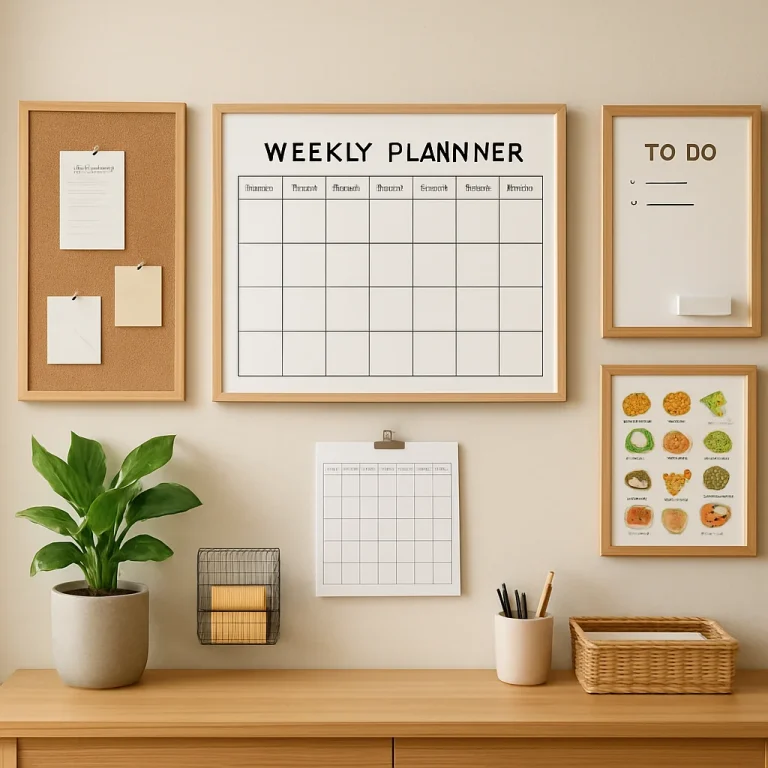
A household command center is the physical or digital hub of your family organization system. It is where key details are stored and where the family checks in on what matters most. Done well, it reduces questions like “Where did I put that?” and “Did anyone remember this?”
Your command center can be as simple as a wall with a calendar, a bin for incoming mail, a corkboard for notices, and hooks for bags and keys. If you want a more complete setup, see [LINK_TO: How to Create a Household Command Center That Keeps Your Family on Track] or [LINK_TO: How to Set Up a Family Command Center That Actually Gets Used].
What to include in a command center
- A family calendar with everyone’s commitments
- A weekly menu or meal planning area
- An inbox tray for papers, forms, and mail
- A to-do list or task board
- Hooks, bins, or labels for commonly used items
To make it useful, keep it visible and easy to maintain. Avoid hiding it in a room nobody visits. The best command centre is one the whole family passes through regularly.
Roles, routines, and shared responsibilities
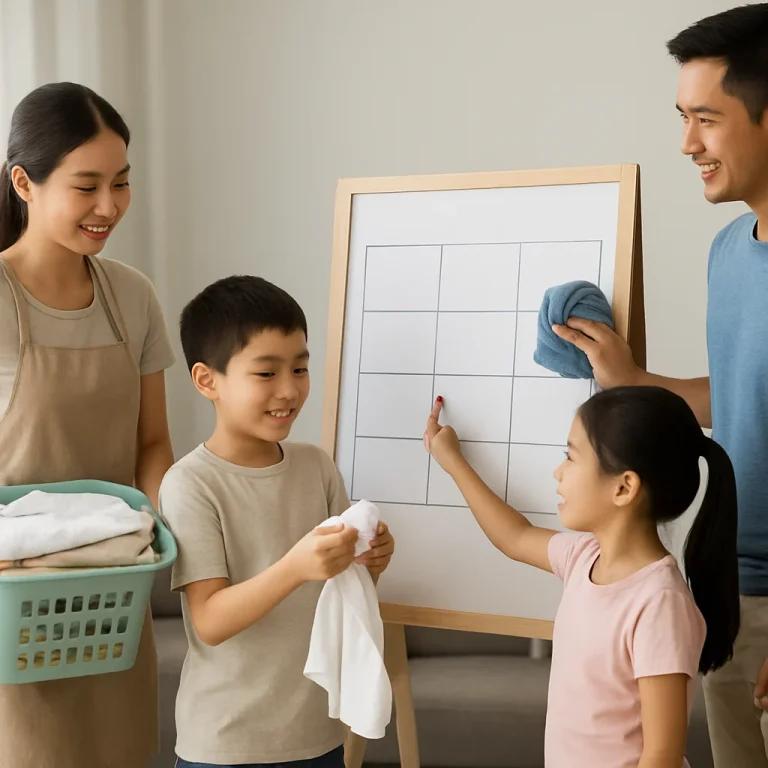
A family organization system should not rely on one overwhelmed adult holding everything together. Assigning roles helps every family member contribute in age-appropriate ways.
How to assign responsibilities
Start with the recurring tasks that happen every week:
- Taking out bins
- Clearing the table
- Packing school bags
- Checking tomorrow’s calendar
- Restocking snacks or toiletries
- Managing sports gear or uniforms
Then assign ownership. Ownership means one person is responsible for seeing that task through, even if others help. This reduces confusion and builds accountability.
If you want a more structured approach, check out [LINK_TO: How to Create a Family Chore System That Actually Gets Done Every Week] and [LINK_TO: How to Build a Family Chore Chart That Actually Gets Used].
Use routines to reduce reminders
Families function better when routine tasks happen automatically. Morning routines, after-school routines, and evening shutdown routines all support the larger family organization system. For example, a nightly reset can include packing school items, reviewing the next day, and placing keys and wallets in the same spot.
For more guidance, see [LINK_TO: The Ultimate Family Routine Template That Keeps Everyone on Track] and [LINK_TO: How to Create a Family Weekly Planning Meeting That Actually Sticks].
Paperwork and calendar systems that prevent chaos
Two of the biggest sources of family stress are paperwork and scheduling. A solid family organization system makes both easier.
Family calendar system
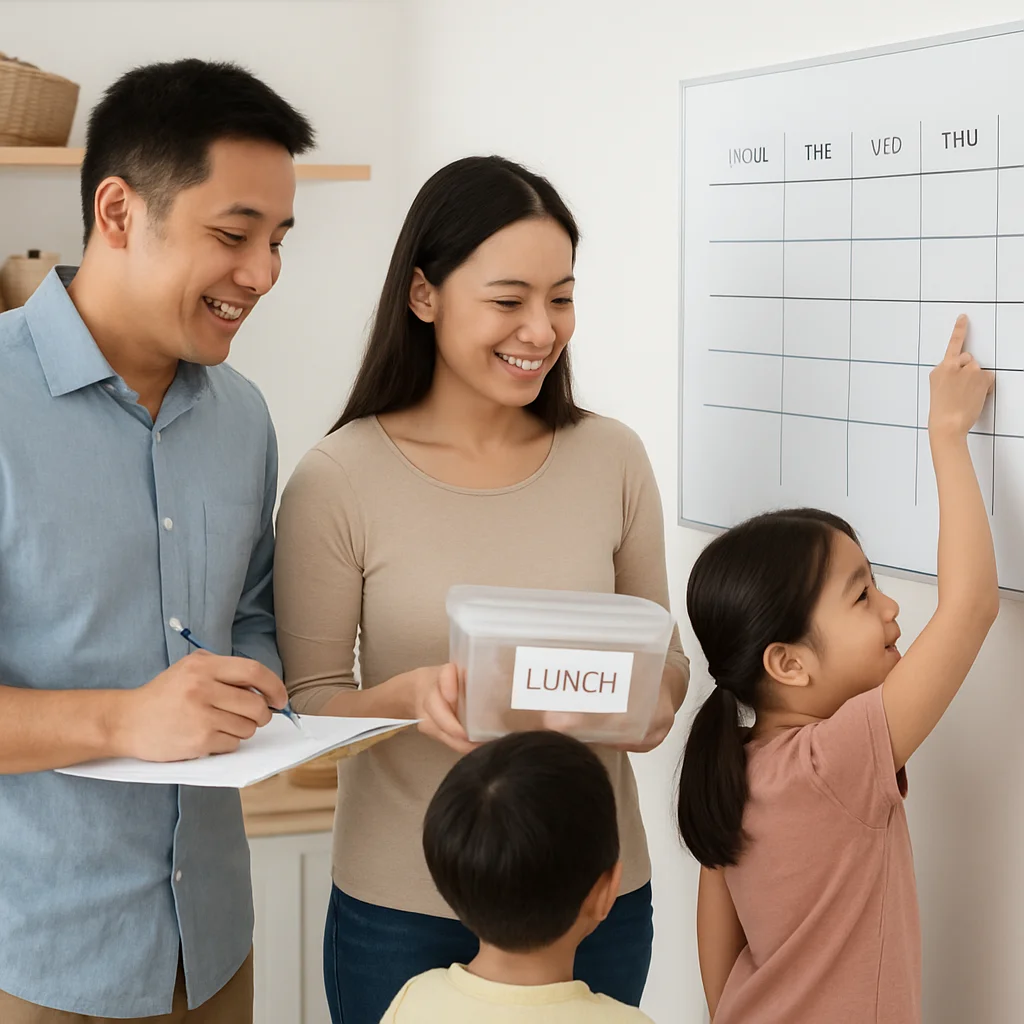
Use one master calendar for the entire household. That calendar should include school events, work trips, medical appointments, birthdays, practices, deadlines, and social plans. If each person keeps separate schedules, conflicts become inevitable.
For a step-by-step setup, explore [LINK_TO: How to Set Up a Family Calendar System That Everyone Actually Uses] and [LINK_TO: Weekly Family Calendar Template That Keeps Busy Households Aligned].
Home paperwork system
Papers pile up quickly when there is no clear process. Create a simple sorting system with three actions: keep, file, and action. Incoming forms should go immediately into one tray or folder, then be processed during the weekly reset.
If paperwork is a constant problem, [LINK_TO: How to Create a Home Paperwork System That Prevents Lost Documents] and [LINK_TO: How to Create a Family Information Binder That Everyone Can Use] can help you build a reliable setup.
Family information hub
Some families prefer a binder, others prefer a wall system, and some use both. The goal is the same: keep passwords, emergency contacts, school details, and household instructions in one organised place. [LINK_TO: How to Build a Family Information Hub That Keeps Everything in One Place] is a useful next step if you want to centralise everything.
The weekly reset that keeps everything on track
A weekly reset is the maintenance routine that keeps your family organization system from falling apart. It is the time to update the calendar, sort papers, review the coming week, restock supplies, and reset common areas.
This does not need to be long. Even 20 to 30 minutes can make a noticeable difference if it happens consistently. A good weekly reset usually includes:
- Reviewing the family calendar
- Checking school and work commitments
- Assigning chores or priorities for the week
- Clearing the paperwork inbox
- Resetting backpacks, bags, and activity gear
- Planning meals and groceries
If you need a practical routine to follow, try [LINK_TO: A Simple Weekly Reset Routine That Makes Monday Feel Easier]. It pairs well with a family organisation setup because it keeps the whole house aligned before the week begins.
Common mistakes to avoid
Making the system too complicated
A family organization system should make life easier, not create a new job. If it takes too long to update, people will stop using it. Keep tools simple and the number of steps low.
Expecting instant cooperation
Habits take time. Children and adults both need repetition to learn a new system. Expect some resistance at first, and focus on consistency rather than perfection.
Letting one person manage everything
If only one adult maintains the calendar, papers, and task lists, the system becomes fragile. The more shared the responsibility, the stronger the system will be.
Ignoring meal planning and daily rhythms
Meals, school prep, and routines are part of family organisation too. If food decisions are chaotic, the whole household feels disorganised. A [LINK_TO: How to Create a Family Meal Planning System That Saves Time and Reduces Stress] can remove a surprising amount of daily friction. Families managing health goals may also benefit from [LINK_TO: Diabetes Friendly Meal Plan Singapore Guide], [LINK_TO: Insulin Resistance Meal Plan for Better Blood Sugar], or [LINK_TO: Body Recomposition Meal Plan for Fat Loss + Muscle].
How to keep the system simple and sustainable
The best family organization system is the one your family will actually use. Simplicity is what makes that possible. Here are a few ways to keep things sustainable:
- Use labels so everyone knows where things belong
- Keep frequently used items near where they are needed
- Review the system every few weeks
- Remove tools that are not being used
- Let your system change as the family grows
It also helps to connect your system to a clear home zone. A tidy entryway, a designated school drop zone, or a kitchen command station can prevent clutter from spreading through the house. If you want more structure, [LINK_TO: How to Create a Family Information Hub That Keeps Everything in One Place] and [LINK_TO: How to Create a Home Paperwork System That Prevents Lost Documents] are excellent companion reads.
Remember, the goal is not a picture-perfect home. The goal is a home where everyone can find what they need, know what is happening next, and contribute without constant reminders.
Conclusion
A well-built family organization system helps your home run with less stress and more teamwork. When calendars, chores, paperwork, routines, and household information all live inside one simple structure, daily life becomes easier for everyone.
Start small. Choose one pain point, create one home base, and build one routine at a time. Over time, those small systems add up to a smoother household and far fewer last-minute scrambles.
Ready to bring more calm into your home? Start by choosing one part of your family organization system to set up this week, then build from there using the linked guides above.