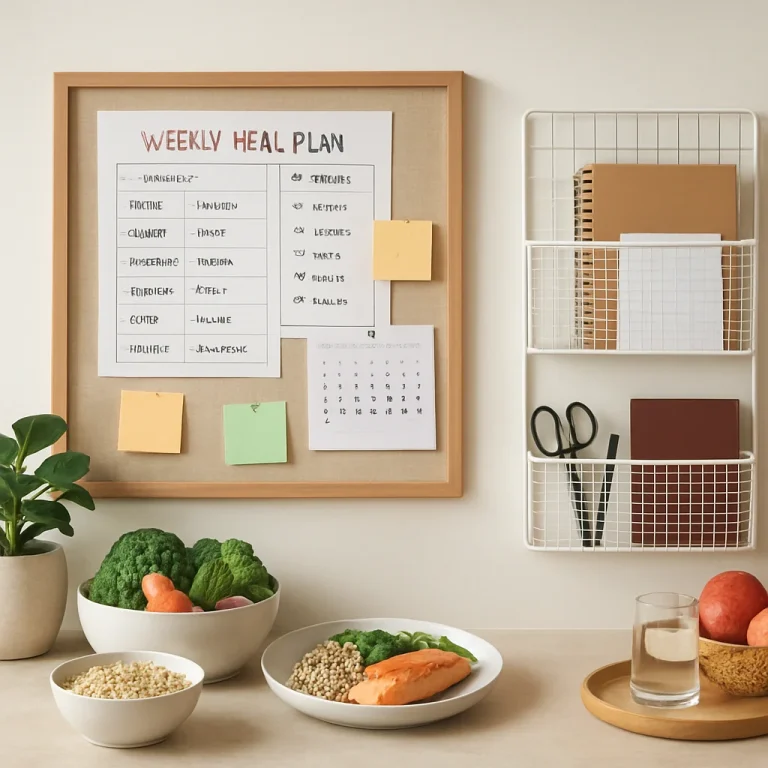

Weekly Family Calendar Template That Keeps Busy Households Aligned
A weekly family calendar template can turn a chaotic household into a coordinated one by giving everyone a clear view of school runs, work shifts, meals, activities, and important reminders in one place. For busy families, the goal is not perfection—it is alignment. When everyone knows what is happening and when, there are fewer missed pickups, fewer last-minute scrambles, and far less mental load for the parent or caregiver carrying everything in their head.
This guide walks you through how to build a practical weekly family calendar template that actually works for real life. You will learn what to include, how to set it up, how to keep it updated, and how to connect it with routines, meals, chores, and weekly planning habits. If you want a simple system that helps your household stay organised without feeling rigid, this is for you.
Table of Contents
- Why a weekly family calendar template matters
- What to include in your weekly family calendar
- How to build your weekly family calendar template
- How it supports routines, chores, and meals
- Best formats: paper, wall, and digital
- How to review and update it each week
- Common mistakes to avoid
- Sample weekly family calendar layout
- Conclusion
Why a weekly family calendar template matters
Most households do not struggle because they are lazy or disorganised—they struggle because too many moving parts are managed informally. A weekly family calendar template brings structure to the invisible work of family life. It helps you see the whole week at a glance, which makes it easier to plan around school, work, appointments, sports, and meals.
When the week is visible, decisions become easier. You can avoid overbooking, protect rest time, plan simple dinners on busy nights, and prep ahead for especially demanding days. For families trying to reduce stress, improve communication, and create calmer routines, the weekly calendar becomes the anchor. It is also a natural companion to systems like [LINK_TO: A Simple Family Calendar Setup for Busy Households], [LINK_TO: How to Create a Weekly Planning System That Reduces Stress], and [LINK_TO: How to Build a Household Routine That Actually Sticks].
What to include in your weekly family calendar
The best weekly family calendar template is comprehensive but not overcrowded. It should include the information that actually affects the household’s flow. If you add too much detail, people stop using it. If you leave out too much, it becomes useless. Aim for a simple “big picture” system with room for the essentials.
1. Fixed commitments
- School start and end times
- Work shifts and remote work blocks
- After-school care or enrichment classes
- Sports practice, tuition, music lessons, and faith activities
- Medical appointments and errands with deadlines
2. Family logistics
- Pick-up and drop-off responsibilities
- Who is cooking dinner
- Who handles bath time, bedtime, or packing bags
- Transport arrangements and car sharing
- Travel plans or guests staying over
3. Household tasks
- Cleaning zones
- Laundry days
- Trash and recycling
- Grocery shopping
- Meal prep and kitchen reset days
4. Meals and nutrition
Many busy families find that meals create the most daily friction, especially on weekdays. Adding meals to your weekly family calendar template can reduce takeout reliance and help everyone know what to expect. This is especially useful if your household follows specific nutritional goals, shares meals across age groups, or is working on healthier routines. You can connect this with [LINK_TO: Weekly Meal Prep Planner for Families | KnowMeal], [LINK_TO: Healthy Family Meal Prep Singapore | KnowMeal], or [LINK_TO: Singaporean Food Healthy Meal Plan for Real Life].
5. Buffer time and rest
Do not forget to include downtime. A strong calendar is not only about productivity; it also protects family energy. Include time for homework, play, rest, and simple transitions. This keeps the system realistic and prevents the week from feeling packed to the edge.
How to build your weekly family calendar template
Creating a weekly family calendar template is easiest when you start with the fixed realities of your week and build outward from there. The goal is to make it clear enough that anyone in the family can look at it and understand what is happening next.
- List all recurring commitments. Start with school schedules, work hours, classes, and standing appointments.
- Mark the busiest days first. Identify nights that need lighter dinners, simpler routines, or earlier preparation.
- Assign ownership. For each item, note who is responsible. This reduces assumptions and missed tasks.
- Add daily anchors. Include morning routines, school prep, dinner, and bedtime so the week feels connected.
- Schedule family admin. Set aside time for grocery planning, bill checks, packing, and review.
- Leave white space. A calendar with breathing room is far more sustainable than one packed with back-to-back tasks.
A practical rule: if an item requires mental energy, transportation, or timing coordination, it belongs on the calendar. That way, the family calendar becomes a shared decision-making tool, not just a record of appointments.
Make it visible to everyone
For a weekly family calendar template to work, it must be easy to see. Put it in a place everyone passes often or pin it to a shared digital platform. Visibility creates accountability. If only one parent knows the schedule, the burden stays trapped in one person’s mind.
Use colour coding
Colour coding makes scanning faster. For example:
- Blue for school
- Green for meals and prep
- Yellow for family events
- Red for deadlines or appointments
- Purple for chores or cleaning
This is especially helpful in larger families or households with multiple children and rotating commitments.
How it supports routines, chores, and meals
A weekly family calendar template works best when it is connected to the rest of the household system. On its own, the calendar gives visibility. Paired with routines, it becomes a tool for smoother execution.
Pair it with family routines
Family schedules work best when morning and evening routines are predictable. Linking the calendar to your routine system makes the whole week feel lighter. If Mondays are busy, a Sunday reset or earlier bedtime may be the answer. Explore [LINK_TO: The Ultimate Family Routine Template That Keeps Everyone on Track] and [LINK_TO: How to Create a Weekly Planning Routine That Actually Works] for a stronger foundation.
Connect it to chores
Many families use the calendar to show when chores happen instead of relying on verbal reminders. For example, laundry might happen on Tuesday and Saturday, while kitchen cleanup and trash take place every evening. This creates a rhythm that feels shared rather than bossed. Helpful resources include [LINK_TO: How to Create a Family Cleaning Schedule That People Actually Follow] and [LINK_TO: How to Create a Family Chore Chart That Actually Gets Used].
Plan meals around the week’s energy
Meals should match the rhythm of the week. If Wednesday is packed with classes and late return times, plan a fast dinner or a meal-prep option. If Sunday is slower, use it for prep. A calendar helps you avoid the common trap of deciding dinner at 6:30 p.m. while everyone is tired. For ideas, see [LINK_TO: A Simple Meal Prep System for Busy Weeks] and [LINK_TO: How to Create a Weekly Planning System That Reduces Stress].
Best formats: paper, wall, and digital
There is no single best format for every family. The right format is the one your household will actually use consistently. Many homes use a combination of systems so everyone can access the schedule in the way that suits them best.
Paper calendar
A paper weekly family calendar template works well for families who like writing things down physically or want a visible kitchen command centre. It is easy to customise and ideal for quick at-a-glance checks. The downside is that it can be harder to update if plans change frequently.
Wall calendar or whiteboard
This is often the best option for families with kids because it is visible, shared, and easy to edit. Use one row per day or one column per family member. A wall format encourages everyone to participate and keeps the schedule in a central place.
Digital calendar
Digital calendars work well when schedules change often or when parents need to coordinate from different locations. Shared calendars allow notifications, reminders, and colour coding. They are especially helpful for school events, appointments, and transport coordination.
Hybrid system
Many households benefit from a hybrid setup: a digital calendar for real-time updates and a wall version for quick family visibility. This is often the most reliable approach for busy homes.
How to review and update it each week
The strongest weekly family calendar template is not the one you create once; it is the one you maintain. A short weekly review keeps the calendar accurate and prevents it from becoming outdated.
Set a regular time each week to update the coming week—many families choose Sunday evening. This becomes a reset moment where you review activities, meals, school reminders, and household tasks. If you want a step-by-step reset process, see [LINK_TO: How to Build a Sunday Evening Reset Routine for a Smoother Monday], [LINK_TO: The Best Sunday Reset Routine for a Less-Stressful Week], and [LINK_TO: The Best Weekly Reset Checklist for a Calm, Productive Week].
Weekly review checklist
- Check appointments and activities for the week
- Confirm who is responsible for each pickup or drop-off
- Plan meals for busy nights
- Review school notices and deadlines
- Check groceries, supplies, and household needs
- Adjust chores based on the week’s schedule
Keeping the review short makes it easier to repeat. Fifteen to twenty minutes is often enough if the system is already set up.
Common mistakes to avoid
Even a helpful weekly family calendar template can fail if it is overcomplicated or poorly maintained. Avoid these common pitfalls.
1. Making it too detailed
If every small task is added, the calendar becomes cluttered and hard to read. Focus on items that affect timing, energy, or coordination.
2. Not assigning responsibility
Writing down a task is not the same as assigning it. Every important item should have an owner.
3. Forgetting meal planning
Without meals, the schedule may look organised but still feel stressful. Add dinner planning to reduce decision fatigue.
4. Leaving one person in charge
If only one parent updates the calendar, the system will eventually break. Shared ownership is key.
5. Failing to review weekly
A calendar that is not maintained becomes decoration. Set a regular review so the family can trust it.
Families who want more structure may also benefit from [LINK_TO: How to Build a Weekly Review Routine That Keeps You Organized] and [LINK_TO: The Ultimate Weekly Planning System for Busy People].
Sample weekly family calendar layout
Here is a simple example of how a weekly family calendar template could look in practice:
- Monday: School, work, quick dinner, homework, early bedtime
- Tuesday: School, soccer practice, laundry, leftovers for dinner
- Wednesday: School, late meeting, simple meal, pack bags for Thursday
- Thursday: School, tutoring, grocery pickup, kitchen reset
- Friday: School, family night, light cleanup, no major tasks
- Saturday: Errands, chores, cleaning, lunch out or home-cooked meal
- Sunday: Meal prep, weekly review, planning, family reset, early night
This style keeps the week balanced by matching tasks to energy levels. It also creates natural pauses after more demanding days.
Conclusion
A well-designed weekly family calendar template does more than organise appointments. It gives your household a shared plan, reduces stress, and makes daily life feel more manageable. By combining schedules, chores, meals, and routines in one place, you create a system that supports both order and flexibility.
Start simple, keep it visible, and review it weekly. The best system is the one your family will actually use. If you want to make your home feel calmer and more coordinated, begin by building your weekly family calendar template today—and then pair it with a routine, reset, and meal planning system that fits your real life.
Ready to get started? Use this guide to build your own weekly family calendar template, then explore our related planning and routine resources to create a smoother, more organised home.