
How to Create a Family Morning Routine System That Gets Everyone Out the Door on Time
Why a Family Morning Routine System Matters
A family morning routine system is more than a checklist for brushing teeth and grabbing shoes. It is a simple structure that reduces decision fatigue, cuts down on arguments, and helps your household start the day with less stress. When mornings feel chaotic, everything else can spiral too — late arrivals, forgotten lunches, missed school items, and frazzled parents. A good system solves the repeat problems once, so your family does not have to fight the same morning battles every day.
The goal is not a perfect morning. The goal is a repeatable one. If your family can move from “Where are my socks?” to “We are ready in 10 minutes,” you have already won.
Start by Designing Your Family Morning Routine System Around Reality
The best family morning routine system is built for the way your household actually lives, not how you wish it lived. Start by mapping out the real morning timeline for everyone in the home:
- Wake-up time
- Bathroom time
- Dress time
- Breakfast time
- Pack-and-go time
- Out-the-door time
Then ask: where are the delays? Is someone always hunting for a water bottle? Does one child need more time to dress? Are lunches being packed at the last minute? Once you see the friction points, you can build around them.
If your home already uses a broader [LINK_TO: How to Build a Household Routine That Actually Sticks], your morning routine should fit into that bigger structure instead of fighting it.
Build a Simple Morning Sequence Everyone Can Follow
A strong family morning routine system works best when it follows the same order every day. Keep the sequence short, visible, and predictable. For example:
- Wake up
- Bathroom and wash up
- Get dressed
- Eat breakfast
- Pack bag, bottle, and lunch
- Shoes on, final check, leave
This reduces the number of choices everyone has to make. Kids do better when the order stays the same, and adults spend less energy reminding and redirecting. Place the sequence where everyone can see it — on the fridge, by the front door, or inside your [LINK_TO: How to Create a Household Command Center That Keeps Your Family on Track].
Keep the routine short enough to repeat
If your morning routine is too long, it will not survive busy weeks. Aim for a version that can be done even on school days, work-from-home days, and rainy days. The best routines are boring in the best way: they work because they are easy to repeat.
Assign Clear Roles to Each Family Member
A family morning routine system works better when everyone knows their job. Instead of one parent doing everything, split the responsibilities. Make the roles age-appropriate and consistent.
- Young children: Get dressed, brush teeth, put shoes in the right spot
- Older children: Pack own water bottle, check bag, help younger sibling
- Parents: Prepare breakfast, final checks, leave on time
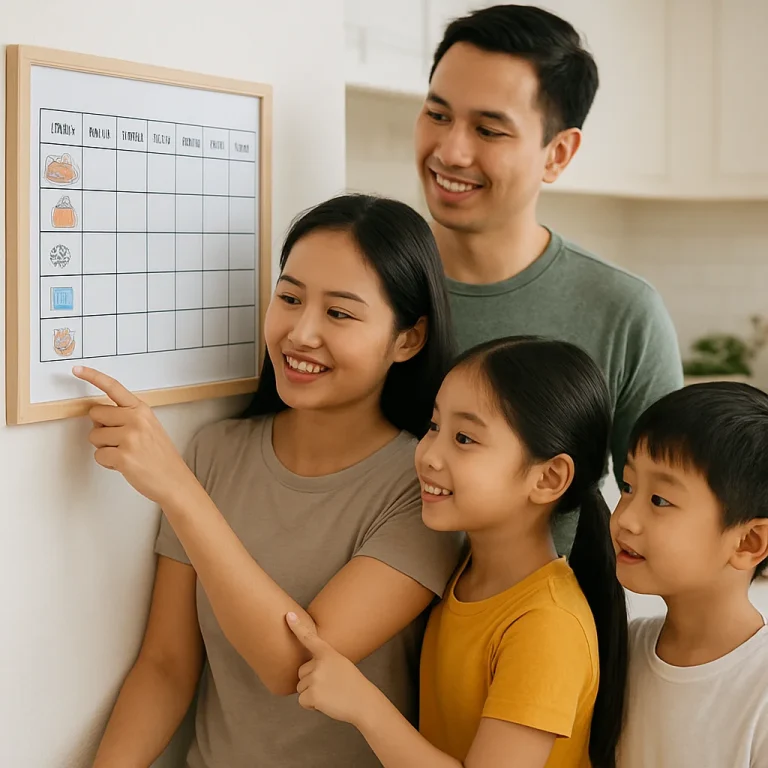
You can even use a visual chart for younger kids so they do not need to rely on memory. This is especially helpful in homes where several people are getting ready at once.
If your household struggles with shared responsibilities, it may help to connect this with [LINK_TO: How to Build a Family Chore Chart That Actually Gets Used] or [LINK_TO: How to Create a Family Chore System That Actually Gets Done Every Week].
Prepare the Night Before to Protect the Morning
The fastest way to improve a family morning routine system is to move as many decisions as possible to the night before. Morning success is usually created the evening before.
- Lay out clothes
- Pack school bags
- Prepare lunch boxes
- Refill water bottles
- Set shoes, keys, and backpacks by the door
This is where meal planning also makes a huge difference. A simple breakfast and lunch plan removes the morning scramble and supports better nutrition. If you want to make this easier, see [LINK_TO: How to Create a Family Meal Planning System That Saves Time and Reduces Stress] and [LINK_TO: How to Make a Family Lunch Planner That Saves Time Every Week].
For families managing blood sugar, planning ahead can also support steadier energy in the morning. You may find [LINK_TO: Diabetes Friendly Meal Plan Singapore Guide] or [LINK_TO: Insulin Resistance Meal Plan for Better Blood Sugar] useful if breakfast choices are part of the daily rush.
Create Visual Cues to Reduce Repeating Yourself
One of the biggest morning time-wasters is constant reminding. A family morning routine system should be visible, not just verbal. Use tools like:
- A printed checklist
- Picture cards for younger children
- A whiteboard with the daily schedule
- Hooks or bins for school items
- Labels for shoes, bags, and lunch boxes
When expectations are visible, kids can self-correct more easily. Parents can stop being the only “memory bank” in the house.
If your home needs a central place for schedules and reminders, a [LINK_TO: How to Set Up a Family Calendar System That Everyone Actually Uses] or [LINK_TO: Weekly Family Calendar Template That Keeps Busy Households Aligned] can help keep mornings aligned with the rest of the week.
Use Time Blocks So Everyone Knows What Happens When
Mornings often run late because time feels vague. Instead of saying “hurry up,” give the family morning routine system specific blocks of time. For example:
- 6:30–6:45 a.m. Wake up and bathroom
- 6:45–7:00 a.m. Dress and tidy up
- 7:00–7:20 a.m. Breakfast
- 7:20–7:35 a.m. Pack and final checks
- 7:35 a.m. Leave the house
For younger children, use a timer or music playlist to signal transitions. This helps make time feel concrete and reduces power struggles.
Build in a small buffer
Always add a little extra time for the unexpected — spilled drinks, missing shoes, bathroom delays, or last-minute paperwork. A 10-minute buffer can be the difference between calm and chaos.
Make Breakfast and Lunch Part of the System
Food choices can either support your morning routine or derail it. A smart family morning routine system includes a low-effort breakfast plan. Keep a few reliable options on hand:
- Eggs and toast
- Greek yogurt with fruit
- Overnight oats
- Wholegrain sandwiches
- Leftovers from dinner
If your family is focused on body composition or fat loss, consistent breakfast structure can also support your goals. See [LINK_TO: Body Recomposition Meal Plan for Fat Loss + Muscle] for a broader nutrition framework.
Lunch should be equally simple. If packing lunch every morning slows the whole family down, prep components the night before and store them in a dedicated section of the fridge. For more support, try [LINK_TO: How to Create a Family Lunch Planner That Saves Time Every Week].
Review and Adjust the System Every Week
No family morning routine system is perfect on day one. The key is to review it regularly and make small improvements. A weekly check-in can answer questions like:
- What slowed us down most this week?
- Which item was forgotten most often?
- Are wake-up times realistic?
- Do any steps need to move to the night before?
If your family already has a planning rhythm, connect this routine to your weekly reset. A good starting point is [LINK_TO: A Simple Weekly Reset Routine That Makes Monday Feel Easier] or [LINK_TO: How to Create a Family Weekly Planning Meeting That Actually Sticks].
The more you refine, the easier it becomes to keep the mornings calm and predictable.
How to Know Your Morning Routine Is Working
Your system is working if mornings feel less reactive and more automatic. Signs of progress include:
- Fewer reminders from parents
- Less arguing over clothing, breakfast, or missing items
- More consistent departure times
- Better mood before school and work
- Less reliance on last-minute rushing
Do not wait for perfection. Even a 20 percent improvement can transform the tone of the whole household.
Conclusion: Build a Family Morning Routine System That Fits Your Life
A strong family morning routine system is not about being strict. It is about making the right things easier to repeat. When you simplify the sequence, assign clear roles, prepare the night before, and use visible reminders, your mornings become calmer and more efficient for everyone.
Start small, keep it realistic, and review it weekly. Over time, those small improvements add up to a smoother household and a more confident start to the day.
Call to action: Choose one change to implement tonight — whether it is laying out clothes, printing a checklist, or preparing breakfast — and build your family morning routine system from there.