
How to Create a Family Chore System That Actually Gets Done Every Week
A strong family chore system can turn a chaotic home into a calmer, more cooperative one—without turning every evening into a battle. The goal is not perfection. It’s building a simple routine that fits your household, gets repeated every week, and makes it easier for everyone to contribute.
If you’ve tried chore charts before and they fizzled out, you’re not alone. Most systems fail because they’re too complicated, too vague, or built without the people who are supposed to use them. In this guide, you’ll learn how to create a family chore system that is realistic, visible, and actually gets done.
Why a Family Chore System Works Better Than “Helping Out”
When chores are handled as random requests, the same parent usually becomes the manager, reminder-giver, and cleanup crew. A family chore system changes that by making responsibilities clear and repeatable. Instead of asking, “Can someone please do the dishes?” you have a plan everyone understands.
A good system helps your family:
- Reduce daily arguments about who should do what
- Build consistency instead of relying on motivation
- Teach kids responsibility and follow-through
- Prevent chores from piling up into a stressful weekend reset
For families already using tools like a [LINK_TO: How to Set Up a Family Calendar System That Everyone Actually Uses], chores work best when they are connected to the household rhythm rather than treated like an extra task.
Start With a Simple Weekly Chore Map
The best family chore system begins with a list, not a chart. Before assigning anything, write down all recurring chores in your home. Keep it practical and specific. For example, “clean kitchen” is too broad, while “wipe counters” and “load dishwasher” are clear.
Group chores into three categories
- Daily chores: dishes, tidying common areas, taking out trash
- Weekly chores: vacuuming, bathroom cleaning, changing sheets
- As-needed chores: watering plants, restocking snacks, laundry folding
Then decide what truly needs to happen every week for the home to stay functional. A smaller list is better than an ambitious one that nobody follows after Wednesday.
If you want a stronger structure, pair this with [LINK_TO: How to Build a Family Chore Chart That Actually Gets Used] so the tasks are easy to see and easy to track.
Assign Chores Based on Age, Energy, and Real Life
A family chore system works best when chores are matched to the person, not just divided equally on paper. Equal does not always mean fair. A working parent, a school-aged child, and a teenager with sports practice all have different capacity levels.
Use these guidelines:
- Young children: put toys away, sort laundry, place napkins on the table
- School-age kids: feed pets, clear dishes, sweep floors, make beds
- Teens: cook simple meals, take out rubbish, clean bathrooms, do laundry
- Adults: handle higher-skill tasks, planning, and quality checks
Try to avoid assigning chores based only on preference. If one child always gets “easy” jobs, resentment builds quickly. Instead, rotate some tasks every week so everyone learns different parts of running the home.
Build the System Around a Weekly Rhythm
The fastest way to make a family chore system stick is to attach it to a weekly routine. Chores should happen at a predictable time, not whenever someone remembers. Many families find success by tying chores to existing habits: after dinner, before school, or during a Sunday reset.
A simple weekly rhythm might look like this:
- Sunday: assign chores and review the week
- Monday to Thursday: complete daily jobs
- Friday: light cleanup and check-in
- Saturday: bigger chores or rotating deep-clean tasks
This works even better if your home already has a planning structure, such as [LINK_TO: How to Create a Family Weekly Planning Meeting That Actually Sticks]. The chore system becomes part of the family workflow, not a separate event nobody wants.
Make the Chore System Visible and Easy to Follow
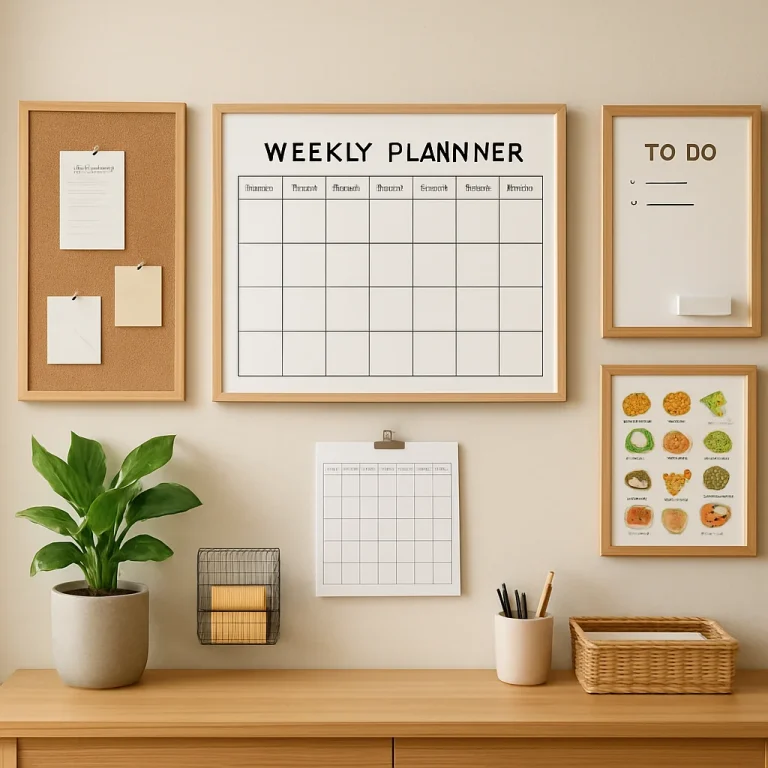
If people have to ask where the chore list is every time, the system is too hidden. Visibility matters. Put the chore chart somewhere everyone sees daily—on the fridge, inside a command center, or on a shared digital board.
When creating your visual setup, keep it simple:
- Use one row per person
- Use short, action-based task labels
- Mark completed chores clearly
- Keep the layout uncluttered
If your household likes a central hub, combine the chore chart with [LINK_TO: How to Create a Household Command Center That Keeps Your Family on Track] so calendars, reminders, and tasks live in one place.
Use Accountability Without Becoming the “Chore Police”
A family chore system should reduce nagging, not create a new form of it. Instead of constantly reminding everyone, build accountability into the process. The system should show what is expected and what happens when it’s not done.
Try these approaches:
- Checklists: kids tick off completed tasks themselves
- End-of-day review: a quick family check-in before screens or downtime
- Natural consequences: unfinished chores lead to task carryover before privileges
- Reward systems: small weekly incentives for consistency, not perfection
For younger children, encouragement works better than criticism. For older kids and teens, keep expectations firm and consistent. If chores are tied to larger routines, [LINK_TO: How to Build a Household Routine That Actually Sticks] can help you make follow-through feel more automatic.
Keep the System Flexible Enough to Survive Busy Weeks
Real families have exams, overtime, sickness, travel, and low-energy days. A family chore system that only works on perfect weeks will not last. Build in flexibility so the system can adapt instead of collapsing.
Here’s how to make it more durable:
- Create “minimum standard” chores for busy weeks
- Allow task swaps when needed
- Keep a backup list of quick chores for short evenings
- Adjust workloads during school holidays or exam periods
This is especially useful if your household already relies on a weekly reset routine like [LINK_TO: A Simple Weekly Reset Routine That Makes Monday Feel Easier]. When the week gets messy, the reset gives everyone a chance to catch up without starting over from zero.
Review and Improve the System Every Month
The best chore systems evolve. What works for a family with toddlers won’t work the same way for a family with teenagers. Once a month, spend a few minutes asking: What’s working? What keeps getting skipped? Which chores need to be simplified or reassigned?
Look for patterns, not blame. If one task always gets missed, it may be too big, too unclear, or scheduled at the wrong time. If one person is overloaded, redistribute before resentment builds.
You can also connect your chore review to other household systems like [LINK_TO: How to Create a Family Meal Planning System That Saves Time and Reduces Stress] or [LINK_TO: How to Create a Family Cleaning Schedule That People Actually Follow]. The more aligned your systems are, the easier your home becomes to manage.
Conclusion: Make It Easy Enough to Repeat
The most effective family chore system is not the fanciest one—it’s the one your family can repeat every week. Keep the list short, assign chores clearly, make the plan visible, and review it regularly. When chores are tied to a simple weekly rhythm, they stop feeling like a constant fight and start becoming part of how your home runs.
If you’re ready to make your household more organised, start with a basic weekly chore list today, then build from there. For more support, explore [LINK_TO: How to Create a Household Command Center That Keeps Your Family on Track] and [LINK_TO: How to Create a Family Weekly Planning Meeting That Actually Sticks] to turn your chore routine into a system that truly lasts.