How to Create a Household Command Center That Keeps Your Family on Track
A well-designed household command center can turn daily chaos into calm by giving your family one clear place to see schedules, meal plans, chores, and important reminders. Instead of searching for notes, missing appointments, or repeating the same instructions, everyone knows exactly where to check first.
In this guide, you’ll learn how to create a practical, family-friendly system that fits real life. Whether you live in a busy Singapore household, manage school runs and shift work, or simply want fewer “What’s happening today?” questions, this household command center framework will help your family stay aligned and reduce stress.
Table of Contents
- What Is a Household Command Center?
- Why a Household Command Center Works
- What to Include in Your Command Center
- Choosing the Best Location
- How to Set It Up Step by Step
- How to Make Sure the Family Actually Uses It
- Customising for Different Household Needs
- How to Maintain It Weekly
- Common Mistakes to Avoid
- Conclusion
What Is a Household Command Center?
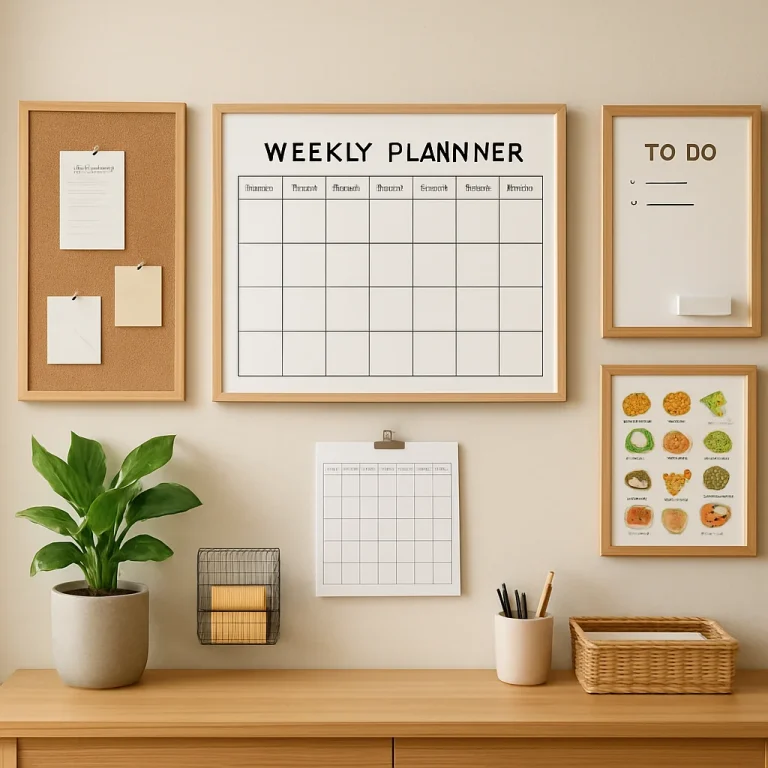
A household command center is a dedicated spot in your home where the most important family information lives. It may be a wall organiser, a drawer system, a whiteboard, a digital screen, or a simple shelf with folders and baskets. The goal is not decoration; it’s visibility and consistency.
Think of it as the home base for your family’s weekly life. It can hold calendars, meal plans, school notices, receipts, forms, keys, medication reminders, and household tasks. A good setup works like a mini operations hub that helps everyone move through the week more smoothly.
Why a Household Command Center Works
The main benefit of a household command center is that it reduces mental load. When everyone relies on memory alone, small tasks are easy to forget. A visible system removes that pressure by making the information easy to find and hard to miss.
- It reduces repeated questions. Family members can check the same place instead of asking multiple times.
- It improves follow-through. When appointments and chores are visible, they’re more likely to happen.
- It supports smoother routines. A central hub helps mornings, evenings, and weekends feel more predictable.
- It makes planning easier. You can see meals, deadlines, and family commitments in one place.
If your home has been feeling disorganised, pairing this system with [LINK_TO: How to Create a Weekly Planning System That Reduces Stress] can make your planning process even more sustainable.
What to Include in Your Household Command Center
The best command centers are simple, not overloaded. Start with the categories your family uses most often.
1. Family calendar
This is the heart of the system. Include school events, work schedules, medical appointments, deadlines, birthdays, and social commitments. A clear calendar prevents double-booking and last-minute surprises. You may also want to explore [LINK_TO: A Simple Family Calendar Setup for Busy Households] for a practical approach.
2. Weekly meal plan
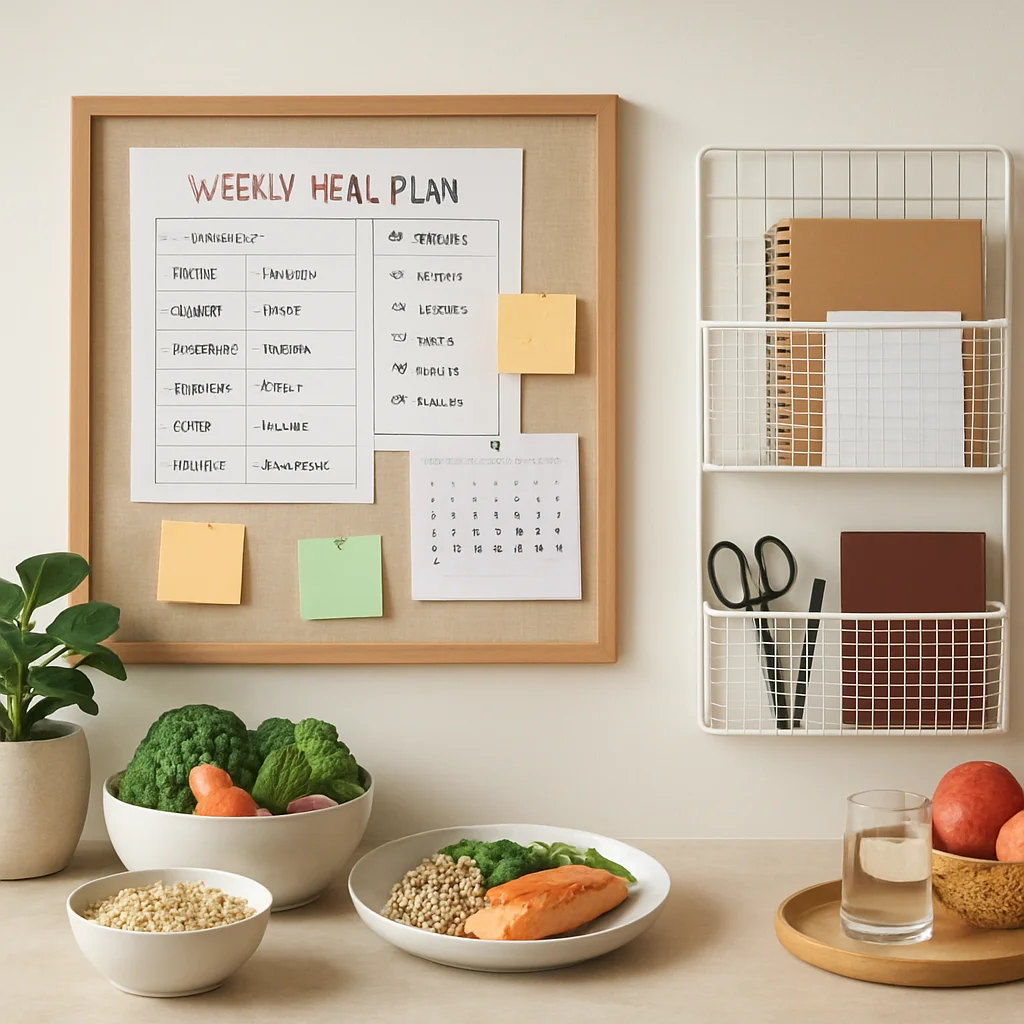
A weekly meal plan helps family members know what’s for dinner and reduces the “What should we eat?” stress. This is especially useful for households managing health goals, picky eaters, or busy evenings. For better structure, connect it with [LINK_TO: Weekly Meal Prep Planner for Families | KnowMeal] and [LINK_TO: Diabetes Friendly Meal Plan Singapore Guide] if you’re planning around blood sugar balance.
3. Chore or task board
Even a simple list of recurring tasks can keep the home running more smoothly. Include bin day, laundry, packing school bags, wiping surfaces, feeding pets, or topping up supplies. For a more detailed approach, see [LINK_TO: How to Create a Family Chore Chart That Actually Gets Used].
4. Incoming papers and action items
Create a spot for forms, school letters, receipts, bills, and documents that need attention. To keep paperwork under control long term, pair your system with [LINK_TO: How to Create a Home Paperwork System That Prevents Lost Documents].
5. Keys, wallets, and grab-and-go items
A command center should help with departures as well as planning. Add hooks, a tray, or a small basket for everyday essentials so your family is not hunting for things before leaving the house.
6. Notes and reminders
This can include grocery needs, permission slips, appointments, or “don’t forget” messages. If your family prefers a deeper all-in-one system, explore [LINK_TO: How to Build a Family Information Hub That Keeps Everything in One Place].
Choosing the Best Location
Place your household command center where your family naturally passes through each day. The best location is usually near the entrance, kitchen, hallway, or mudroom area. The more visible it is, the more likely it will be used.
Ask yourself these questions:
- Where do we walk through most often?
- Where do we check things before leaving the house?
- Where can adults and older children easily see updates?
- Where is there enough wall or surface space without creating clutter?
If wall space is limited, a compact setup with a bulletin board, basket system, and wall hooks can still be highly effective. The key is making it easy to access without turning it into a dumping ground.
How to Set It Up Step by Step
Step 1: Decide what problems you want to solve
Start by identifying your biggest household pain points. Is it forgotten appointments? Lost papers? Dinner indecision? Morning rush? Your command center should solve the problems that happen most often in your home.
Step 2: Choose a simple format
You don’t need a complicated system to get results. A strong household command center can be built with:
- A monthly or weekly calendar
- A whiteboard or corkboard
- Wall hooks
- File folders or baskets
- A meal planning space
- A small inbox for papers
If you prefer a more structured planning rhythm, you may also find [LINK_TO: How to Create a Weekly Planning Routine That Actually Works] useful.
Step 3: Separate categories clearly
One reason family systems fail is that everything gets mixed together. Give each category its own space. For example, the calendar should not compete with the grocery list, and school forms should not sit beside keys. Visual separation makes the system easier to follow.
Step 4: Add only what you’ll use
It’s tempting to include every possible tracker or list, but too much information creates friction. A better command center is one your household actually checks. Start small and expand only if a need becomes consistent.
Step 5: Label everything clearly
Labels reduce confusion, especially in households with children, teens, or multiple adults sharing responsibilities. Use simple words and consistent placement so everyone can understand the system at a glance.
How to Make Sure the Family Actually Uses It
A household command center only works if the family engages with it regularly. The most effective way to build that habit is to connect it to existing routines.
- Check it every morning. Review schedules before school or work.
- Review it every evening. Make sure tomorrow’s essentials are ready.
- Use it during weekly planning. Update calendars, meal plans, and tasks together.
It also helps to keep the design simple enough for children and busy adults to understand quickly. If your family needs a stronger rhythm, [LINK_TO: A Simple Weekly Reset Routine That Makes Monday Feel Easier] and [LINK_TO: How to Build a Sunday Evening Reset Routine for a Smoother Monday] can support the habit.
Another important strategy is making the command center part of family conversation. Instead of verbally reminding everyone several times, point back to the system: “Check the board,” or “It’s on the calendar.” This trains the household to trust the system.
Customising for Different Household Needs
Every home runs differently, so your household command center should reflect your real life.
For families with young children
Use pictures, colour coding, and simple icons. Keep the chore system age-appropriate and easy to understand. A visual routine board can help children know what happens next.
For working parents
Focus on time-sensitive information: pickups, meetings, meal plans, and school notices. A streamlined board near the door can help you leave the house without forgetting essentials.
For multigenerational homes
If seniors live in the home, make sure the system is easy to read and access. Large-print labels, clear calendars, and simple storage can make daily coordination easier. You may also find [LINK_TO: Healthy Meal Planning for Seniors | Simple SG Meals] helpful if meal planning is part of your household routine.
For health-focused households
If you’re managing blood sugar, fitness goals, or body recomposition, your command center can include meal prep reminders and snack planning. That makes it easier to stay consistent with food choices and reduce last-minute decisions. For support, explore [LINK_TO: Insulin Resistance Meal Plan for Better Blood Sugar] and [LINK_TO: Body Recomposition Meal Plan for Fat Loss + Muscle].
If family meals are part of the challenge, [LINK_TO: Weekly Family Calendar Template That Keeps Busy Households Aligned] can help connect mealtimes, appointments, and routines in one place.
How to Maintain It Weekly
The secret to a long-lasting household command center is maintenance. Without a small weekly reset, even the best system starts to lose its value.
Weekly maintenance checklist
- Clear out old papers and recycle what is no longer needed.
- Update the calendar with new appointments and deadlines.
- Refresh meal plans and grocery needs.
- Reset chore assignments if needed.
- Return keys, bags, and essentials to their place.
- Check for missing forms or urgent tasks.
This takes only a short amount of time when done consistently. If you want a more complete rhythm, [LINK_TO: How to Build a Weekly Review Routine That Keeps You Organized] and [LINK_TO: How to Build a Household Routine That Actually Sticks] can help strengthen the habit.
Many households pair this with a Sunday reset so Monday starts calmer and more predictable. That’s also a good time to coordinate groceries and dinner prep using [LINK_TO: How to Create a Weekly Planning Routine That Actually Works].
Common Mistakes to Avoid
Even a well-intentioned system can fail if it becomes too complicated or inconvenient. Watch out for these common mistakes:
- Too much clutter. If the board is crowded, people stop looking at it.
- Hard-to-read labels. Small or unclear text makes the system less accessible.
- Inconsistent updates. An outdated calendar quickly loses trust.
- Too many categories. Keep the focus on what your home actually needs.
- Setting it up in the wrong place. A hidden command center will not get used.
If your challenge is not the setup but the follow-through, [LINK_TO: How to Set Up a Family Command Center That Actually Gets Used] offers a practical next step for improving adoption.
Build a Better Home System Around It
A household command center works best when it connects with other simple systems. For example, your weekly meal plan can support your grocery shopping, your paperwork system can protect important documents, and your family calendar can guide chores and routines.
When these systems work together, your home feels less reactive and more intentional. That means fewer missed appointments, fewer last-minute meals, and fewer conversations that start with “I forgot.”
If you’re ready to expand your home organisation setup, consider building a stronger family reference system with [LINK_TO: How to Create a Family Information Binder That Everyone Can Use] or [LINK_TO: How to Build a Family Information Hub That Keeps Everything in One Place].
Conclusion
A household command center does not need to be fancy to be effective. It simply needs to be clear, visible, and updated regularly. When your family has one trusted place for schedules, meals, tasks, and reminders, daily life becomes easier to manage and less stressful to navigate.
Start with a simple setup, keep only the essentials, and build habits around it. Over time, your household command center can become one of the most useful tools in your home.
Ready to get organised? Start with one small area today, choose the information your family needs most, and turn it into a command center you’ll actually use.