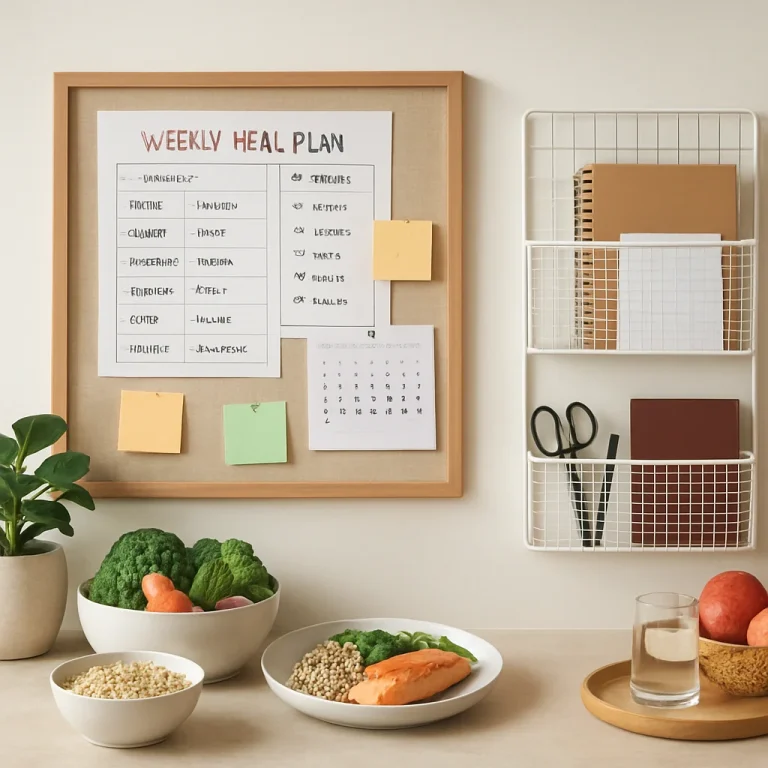

How to Build a Family Information Hub That Keeps Everything in One Place
A well-designed family information hub can transform daily chaos into a calm, easy-to-follow system where everyone knows what’s happening, where to find it, and what needs attention next. Whether you’re juggling school notices, meal plans, appointments, chores, travel forms, or household passwords, a central hub helps your family stay organised without relying on memory alone.
Table of Contents
- What Is a Family Information Hub?
- Why Every Household Needs One
- What to Include in Your Family Information Hub
- Choose the Right Format for Your Home
- How to Build Your Family Information Hub
- How to Make It Easy to Maintain
- Best Places to Store Family Information
- Common Mistakes to Avoid
- Simple Family Information Hub Ideas
- Conclusion
What Is a Family Information Hub?
A family information hub is a central place where your household keeps important information, schedules, and reference materials. Instead of scattering school forms, emergency contacts, medical notes, routines, and planning documents across drawers, apps, and sticky notes, you bring them together in one easy-to-access system.
Think of it as the home base for your household. It can be physical, digital, or a combination of both. The goal is simple: reduce mental load, improve communication, and make daily life smoother for everyone in the family.
For many homes, a family information hub works best when it supports other systems like [LINK_TO: How to Set Up a Family Command Center That Actually Gets Used], [LINK_TO: Weekly Family Calendar Template That Keeps Busy Households Aligned], and [LINK_TO: The Ultimate Family Routine Template That Keeps Everyone on Track].
Why Every Household Needs One
Modern families manage a surprising amount of information. There are school timetables, consent forms, extracurricular schedules, grocery lists, meal plans, cleaning duties, appointment reminders, and family events to track. Without a central system, important details get missed or duplicated.
A family information hub helps you:
- Save time by reducing repeated searching and asking.
- Lower stress by making information easy to find.
- Improve consistency in routines, chores, and planning.
- Reduce forgotten tasks like permission slips or bill due dates.
- Support independence so older children can check what they need themselves.
- Make planning easier for meals, shopping, and weekly coordination.
It also creates a shared system that works even when one parent, caregiver, or family member is busy. That makes it especially useful for households with school-going children, shift workers, or multi-generational families.
What to Include in Your Family Information Hub
The best family information hub is practical, not overloaded. Start with the essentials, then add more only if your household will actually use them.
1. Calendars and schedules
Include school events, work commitments, holidays, appointments, lessons, sports practices, and deadlines. A shared calendar helps everyone see the week at a glance.
2. Emergency information
Keep emergency contacts, doctor details, allergies, medication notes, insurance information, and important numbers in one easy-to-reach place. This is especially important if grandparents, babysitters, or other caregivers help with the family.
3. Household routines
Add morning, after-school, dinner, and bedtime routines so each person can follow the same flow. This pairs well with [LINK_TO: How to Build a Household Routine That Actually Sticks] and [LINK_TO: How to Build a Realistic Morning Routine That Actually Sticks].
4. Meal planning and grocery lists
Your hub can store weekly meal plans, pantry inventories, grocery lists, and prep notes. If your family is trying to eat healthier, save time, or manage special nutrition needs, this section becomes essential. It can also support [LINK_TO: Weekly Meal Prep Planner for Families | KnowMeal], [LINK_TO: Healthy Family Meal Prep Singapore | KnowMeal], and [LINK_TO: A Simple Meal Prep System for Busy Weeks].
5. Chores and cleaning tasks
Put chore charts, cleaning schedules, and task rotations in the hub so responsibilities are visible and fair. This works well alongside [LINK_TO: How to Create a Family Chore Chart That Actually Gets Used] and [LINK_TO: How to Create a Family Cleaning Schedule That People Actually Follow].
6. School and childcare paperwork
Store forms, notices, logins, permission slips, and important school documents. Having these in one place makes mornings and last-minute requests much easier.
7. Passwords and account details
If appropriate, keep a secure record of household logins, utility accounts, and subscription details. Use a safe method with strong privacy controls if you store this digitally.
8. Family notes and reference documents
Include house rules, contact lists, maintenance reminders, event checklists, travel packing lists, and renewal dates for items like passports or licences.
Choose the Right Format for Your Home
There is no single best way to build a family information hub. The right format depends on how your family communicates and what everyone will realistically use.
Physical hub
A physical hub is ideal if your family likes visible reminders. This may include a wall calendar, binder, folder rack, whiteboard, corkboard, or magnetic board placed in a high-traffic area like the kitchen or entryway.
Digital hub
A digital hub works well if your household already uses shared apps or cloud storage. You can use shared calendars, note apps, folders, and task managers to store and access information from anywhere.
Hybrid hub
For many families, the most effective option is a hybrid system. Use a physical space for daily visibility and a digital system for deeper storage, backups, and private records. For example, the wall calendar shows the week, while your phone or shared folder holds the full details.
How to Build Your Family Information Hub
Creating a useful family information hub does not need to be complicated. The key is to build it around your family’s actual routines, not an ideal version of life.
Step 1: Identify your biggest pain points
Ask yourself what gets lost most often. Is it school communication? Meal planning? Appointment reminders? Chores? Start there. A hub works best when it solves real friction, not theoretical problems.
Step 2: Gather everything in one place
Collect the documents, notes, passwords, schedules, and forms your family uses most often. Remove duplicates and outdated papers. Keep only what is current, necessary, and easy to maintain.
Step 3: Sort information into clear categories
Use simple sections such as calendar, meals, chores, school, contacts, routines, and emergencies. The easier the categories are to understand, the more likely your family is to use them.
Step 4: Decide who updates what
Assign responsibility. One person may update the family calendar, another may manage the grocery list, and another may handle school notices. Shared ownership prevents the hub from becoming one person’s burden.
Step 5: Make it easy to see and use
Place your physical hub where people naturally pass by. If it’s digital, pin or bookmark it so it’s quick to access. Avoid hiding important information behind too many folders or tabs.
Step 6: Add a weekly review routine
Review your family information hub once a week to update schedules, check tasks, and prepare for the days ahead. This is a great fit with [LINK_TO: How to Build a Weekly Review Routine That Keeps You Organized], [LINK_TO: How to Create a Weekly Planning Routine That Actually Works], and [LINK_TO: The Ultimate Weekly Planning System for Busy People].
Step 7: Keep refining it
Your family’s needs will change over time. Start small, test the system, and remove anything that doesn’t serve your household. A good hub should feel helpful, not heavy.
How to Make It Easy to Maintain
A family information hub only works if people keep using it. The most successful systems are simple, visible, and built into routines.
- Keep it central so everyone knows where to look.
- Use short labels and simple categories.
- Limit clutter by filing older documents elsewhere.
- Update it on a schedule rather than randomly.
- Make it part of weekly resets like a Sunday evening review.
If your household already does a weekly reset, connect the hub to that rhythm. Helpful related systems include [LINK_TO: How to Build a Sunday Evening Reset Routine for a Smoother Monday], [LINK_TO: The Best Sunday Reset Routine for a Less-Stressful Week], and [LINK_TO: The Best Weekly Reset Checklist for a Calm, Productive Week].
The simpler the maintenance, the more likely the hub will stay useful long term.
Best Places to Store Family Information
Where you place your family information hub can make a huge difference in whether it gets used. Think about traffic flow, visibility, and convenience.
Kitchen
The kitchen is one of the most popular choices because family members naturally pass through it several times a day. This is a great place for calendars, meal plans, reminders, and grocery lists.
Entryway
An entryway hub is ideal for shoes-on-the-go households. You can place keys, school bags, permission slips, and visual reminders here so nothing gets left behind.
Home office or study area
If your family uses a lot of digital tools, a home office may be the best place for the master file system, printer, storage binder, and reference documents.
Digital shared folder
For families who are often away from home, a digital hub is useful for accessibility and backup. Store documents in clearly labelled folders and make sure everyone knows where to find them.
Common Mistakes to Avoid
Many family systems fail because they become too complicated or are designed without considering how real people behave. Avoid these common mistakes:
- Making it too big before proving the basics work.
- Using too many apps or boards that compete with each other.
- Hiding the hub in a place no one checks.
- Overloading it with old papers and unnecessary information.
- Leaving one person responsible for all updates.
- Skipping the weekly review that keeps everything current.
A family information hub should simplify decision-making, not create another system to manage.
Simple Family Information Hub Ideas
If you want a quick and practical start, here are a few easy hub setups you can build this week:
- Wall calendar + binder for schedules and important documents.
- Whiteboard + inbox tray for notes, reminders, and incoming school papers.
- Shared digital folder + fridge checklist for a hybrid setup.
- Entryway command zone with keys, calendar, and forms, inspired by [LINK_TO: How to Set Up a Family Command Center That Actually Gets Used].
- Meal planning station with weekly menu, grocery list, and prep notes for easier dinners.
If your family struggles most with coordination, consider combining your information hub with a calendar routine like [LINK_TO: A Simple Family Calendar Setup for Busy Households] or [LINK_TO: Weekly Family Calendar Template That Keeps Busy Households Aligned].
If meals are the biggest source of stress, your hub can also support a healthier kitchen flow with [LINK_TO: Healthy Meal Planning for Seniors | Simple SG Meals], [LINK_TO: Body Recomposition Meal Plan for Fat Loss + Muscle], and [LINK_TO: A Simple Meal Prep System for Busy Weeks].
How a Family Information Hub Supports a Calmer Home
When your family information hub is set up well, it does more than store information. It creates structure, reduces friction, and helps everyone feel more prepared. Children know where to check for activities. Adults spend less time repeating instructions. Meals, chores, and appointments become easier to manage. The whole household benefits from less confusion and more clarity.
It also creates a sense of shared responsibility. Instead of one person holding every detail in their head, the family has a system that supports teamwork. That is what makes the hub truly valuable: it lightens the mental load while strengthening the flow of daily life.
Conclusion
A well-built family information hub can become one of the most useful tools in your home. By bringing together schedules, routines, meal plans, chores, contacts, and essential documents, you create a system that saves time, reduces stress, and helps your household run more smoothly.
Start small, keep it simple, and build around the information your family uses most. With a little consistency, your family information hub can become the central place that keeps everything in one place and everyone on the same page.
Ready to make your home more organised? Start building your family information hub today, and explore related systems like a family command center, weekly calendar, and reset routine to make it even more effective.