
How to Create a Family Weekly Planning Meeting That Actually Sticks
Table of Contents
- Why a Family Weekly Planning Meeting Matters
- Choose the Right Time and Format
- Build a Simple Agenda That Covers Everything
- How to Make It Stick Week After Week
- Tools That Support the Meeting
- How to Include Kids Without Losing Control
- Common Mistakes to Avoid
- Sample Family Weekly Planning Meeting Agenda
- Final Thoughts
Why a Family Weekly Planning Meeting Matters
A well-run family weekly planning meeting can transform a chaotic household into one that feels calmer, more coordinated, and easier to manage. Instead of reacting to surprises all week long, your family gets a dedicated time to review schedules, plan meals, assign responsibilities, and talk through what matters most. When everyone knows what is coming up, there is less last-minute stress and fewer forgotten tasks.
This is especially helpful for busy families juggling school, work, sport practices, appointments, and meals. A weekly meeting creates one shared source of truth so that the mental load does not fall on one person alone. It also helps children learn planning skills, responsibility, and follow-through in a simple, age-appropriate way.
If your household already uses tools like [LINK_TO: Weekly Family Calendar Template That Keeps Busy Households Aligned], [LINK_TO: How to Create a Household Command Center That Keeps Your Family on Track], or [LINK_TO: How to Build a Family Chore Chart That Actually Gets Used], your weekly meeting becomes the place where all those systems come together.
Choose the Right Time and Format
The best family systems are the ones you can repeat consistently. For most households, the ideal time is a predictable weekly slot such as Sunday afternoon or Sunday evening. The goal is to pick a time when people are relatively calm, not rushed, and able to focus for 15 to 30 minutes.
Keep the format simple. You do not need a formal boardroom-style meeting. A kitchen table, sofa, or even a quick standing meeting near your family calendar can work. What matters is that it happens at the same time each week.
Good timing options
- Sunday evening: Great for reviewing the week ahead and preparing for Monday.
- Friday after dinner: Useful if your weekend is already planned and you want an early reset.
- Saturday morning: Helpful for families who like to plan before the weekend gets busy.
If your family struggles with Monday overwhelm, pairing the meeting with [LINK_TO: A Simple Weekly Reset Routine That Makes Monday Feel Easier] or [LINK_TO: How to Build a Sunday Evening Reset Routine for a Smoother Monday] can make the whole system feel more natural.
Build a Simple Agenda That Covers Everything
A successful family weekly planning meeting needs a clear agenda. Without one, the meeting turns into a long conversation that drifts from topic to topic. With a repeatable agenda, everyone knows what to expect and the meeting stays short enough to be useful.
1. Review the past week
Start by looking back briefly. What went well? What caused stress? Were any tasks left undone? This is not about blame. It is about noticing patterns so you can improve the coming week.
2. Check schedules and commitments
Review school events, work schedules, appointments, sports, tuition, travel, and social activities. Put everything on the family calendar so there are no hidden surprises. If you need a clearer structure, [LINK_TO: A Simple Family Calendar Setup for Busy Households] is a great companion resource.
3. Plan meals for the week
Meal planning belongs in the family meeting because food decisions affect time, energy, and budget. Decide what dinners will be, note any school lunches or packed meals, and create a grocery list together. If your household needs practical support, [LINK_TO: Weekly Meal Prep Planner for Families | KnowMeal] can help you simplify the process.
For households managing blood sugar or specific health goals, you may also find [LINK_TO: Diabetes Friendly Meal Plan Singapore Guide], [LINK_TO: Insulin Resistance Meal Plan for Better Blood Sugar], [LINK_TO: Body Recomposition Meal Plan for Fat Loss + Muscle], or [LINK_TO: Healthy Meal Planning for Seniors | Simple SG Meals] useful when building meals that fit different family needs.
4. Assign responsibilities
Talk through chores, homework, laundry, bins, pet care, and any errands that need doing. This is where [LINK_TO: How to Create a Family Chore Chart That Actually Gets Used] and [LINK_TO: How to Create a Family Cleaning Schedule That People Actually Follow] can support your system. The meeting decides who does what; the chart reminds everyone during the week.
5. Identify priorities and problem spots
Ask: What are the one or two things that would make this week feel successful? Maybe that is getting to bed earlier, prepping lunchboxes on time, or avoiding a rushed Wednesday evening. Priorities help your family focus on what matters most instead of trying to fix everything at once.
How to Make It Stick Week After Week
Starting a new household habit is easy. Keeping it going is the hard part. To make your family weekly planning meeting stick, build it into a larger routine and reduce the effort required to run it.
Keep it short
Most families do best with a meeting of 15 to 20 minutes. Longer meetings usually lose attention fast. If your family needs more time, consider a second short check-in rather than turning one meeting into a marathon.
Use the same script every time
Repetition makes the meeting easier. When the agenda stays the same, everyone can participate without needing a long explanation. You can even print the agenda and place it in your command center or family information hub.
Link it to an existing routine
Habits stick better when they are attached to something you already do. For example, do your meeting after dinner, after Sunday reset, or before everyone starts screen time. Pairing it with [LINK_TO: How to Build a Household Routine That Actually Sticks] can make it feel like a natural part of the week rather than one more task.
Make it visible
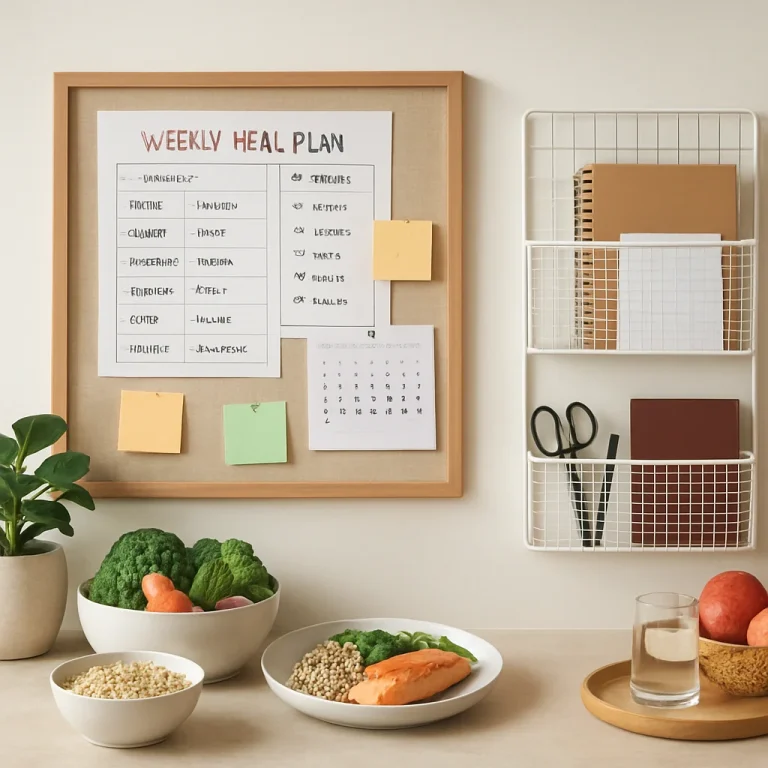
A meeting is more likely to stick when the results are written somewhere everyone can see. Use a whiteboard, wall calendar, shared digital calendar, or a central command center. If you need a better system for this, see [LINK_TO: How to Set Up a Family Command Center That Actually Gets Used] or [LINK_TO: How to Build a Family Information Hub That Keeps Everything in One Place].
End with clear next steps
Before finishing, confirm who is doing what and when. A meeting without action items is just a conversation. The key is to leave with decisions captured and visible.
Tools That Support the Meeting
Your family weekly planning meeting will work better when it is supported by a few simple tools. You do not need a complicated system. You need a reliable one.
- Family calendar: Shared paper or digital calendar for appointments and events.
- Chore chart: Quick reference for responsibilities during the week.
- Meal plan: Helps reduce daily decision fatigue and supports grocery planning.
- Command center: A central spot for schedules, notes, reminders, and forms.
- Paperwork system: Useful for school notices, bills, consent forms, and documents.
If paperwork often goes missing, [LINK_TO: How to Create a Home Paperwork System That Prevents Lost Documents] and [LINK_TO: How to Create a Family Information Binder That Everyone Can Use] can help you keep important information organized and easy to find.
Some families also like using [LINK_TO: How to Create a Family Information Binder That Everyone Can Use] alongside [LINK_TO: How to Build a Family Information Hub That Keeps Everything in One Place] so there is both a digital and physical backup for important details.
How to Include Kids Without Losing Control
Children do not need to lead the meeting, but they should be included in a way that matches their age and attention span. Involving kids helps them feel responsible for the household instead of just being told what to do.
For younger children
- Give them one simple job, such as choosing between two dinner options.
- Ask them to share one school item or event for the week.
- Keep their part brief and positive.
For older children and teens
- Let them manage part of their own schedule.
- Ask them to report on homework, exams, sports, or deadlines.
- Invite them to take ownership of a chore or weekly task.
The aim is not perfect participation. It is building awareness and responsibility over time. If you are already using [LINK_TO: How to Create a Family Chore Chart That Actually Gets Used], the weekly meeting is a great time to review whether tasks are realistic and evenly shared.
Common Mistakes to Avoid
Many families try a planning meeting once, then stop because it feels awkward or unhelpful. Usually the issue is not the idea itself, but the way it is implemented.
1. Making it too long
If the meeting drags on, people will resist it next week. Keep it focused and end on time.
2. Turning it into a criticism session
The goal is planning, not blame. Keep the tone calm and future-focused.
3. Not recording decisions
If the meeting ends and nobody writes anything down, the plan will disappear. Capture commitments immediately.
4. Trying to solve everything at once
Focus on the biggest priorities first. You do not need to redesign the entire household in one meeting.
5. Missing the follow-through
The family weekly planning meeting only works if the actions are visible during the week. Use reminders, checklists, and your command center to support execution. For help creating a system that supports follow-through, [LINK_TO: How to Create a Weekly Planning System That Reduces Stress] is a useful next step.
Sample Family Weekly Planning Meeting Agenda
Here is a simple structure you can use right away:
- Opening check-in: Each person shares one quick win or challenge from last week.
- Calendar review: Confirm appointments, school events, work shifts, and deadlines.
- Meal planning: Decide dinners and prep needs for the week.
- Chore review: Assign household tasks and check for overlap.
- Priority planning: Identify the top two household priorities for the week.
- Document needs: Check school forms, bills, paperwork, and reminders.
- Wrap-up: Confirm who is responsible for each task and where the plan is posted.
If your family likes structure, this agenda can live inside your [LINK_TO: How to Create a Household Command Center That Keeps Your Family on Track] or be paired with [LINK_TO: The Ultimate Family Routine Template That Keeps Everyone on Track].
How Meal Planning Fits Into the Weekly Meeting
Meal planning is one of the biggest reasons families keep coming back to the weekly meeting. When dinner is decided in advance, you save time, avoid decision fatigue, and reduce the chance of expensive takeout or last-minute scrambling.
For many households, the best approach is to choose 5 to 7 dinners, note which nights are busiest, and build simple meals around those days. You can also set one night for leftovers or a quick pantry meal.
If your family has specific health needs, this is also the ideal time to align meals with those goals. Whether you are planning for blood sugar stability, better body composition, or balanced meals for older family members, the weekly discussion helps everyone stay on the same page. A resource like [LINK_TO: Weekly Meal Prep Planner for Families | KnowMeal] can make shopping and prep much easier.
Make the Meeting Feel Positive, Not Like a Chore
For a family weekly planning meeting to stick, people need to see it as helpful, not as another boring obligation. Add a small positive ritual such as a snack, tea, or a short appreciation round where everyone shares one thing they are grateful for that week.
You can also make the meeting feel lighter by celebrating small wins. Did everyone make it to appointments on time? Did the chore chart actually get used? Did the family manage dinner without stress on a busy night? Those are real wins worth noticing.
When the meeting solves real problems and makes life easier, participation becomes more natural. That is when the habit starts to feel like part of the family rhythm instead of an extra task.
Final Thoughts
A strong family weekly planning meeting does not need to be complicated to be effective. With a short agenda, a consistent time, and a clear place to record decisions, your family can reduce stress, improve follow-through, and stay aligned on the things that matter most. The key is consistency, not perfection.
If you want your household to feel calmer and more coordinated, start small this week. Choose a time, write a simple agenda, and make the meeting part of your regular routine. Then support it with tools like a calendar, command center, chore chart, and meal plan so the system is easy to maintain.
Ready to get started? Pick your first meeting time today, gather your family, and use this framework to create a weekly habit that actually sticks.