
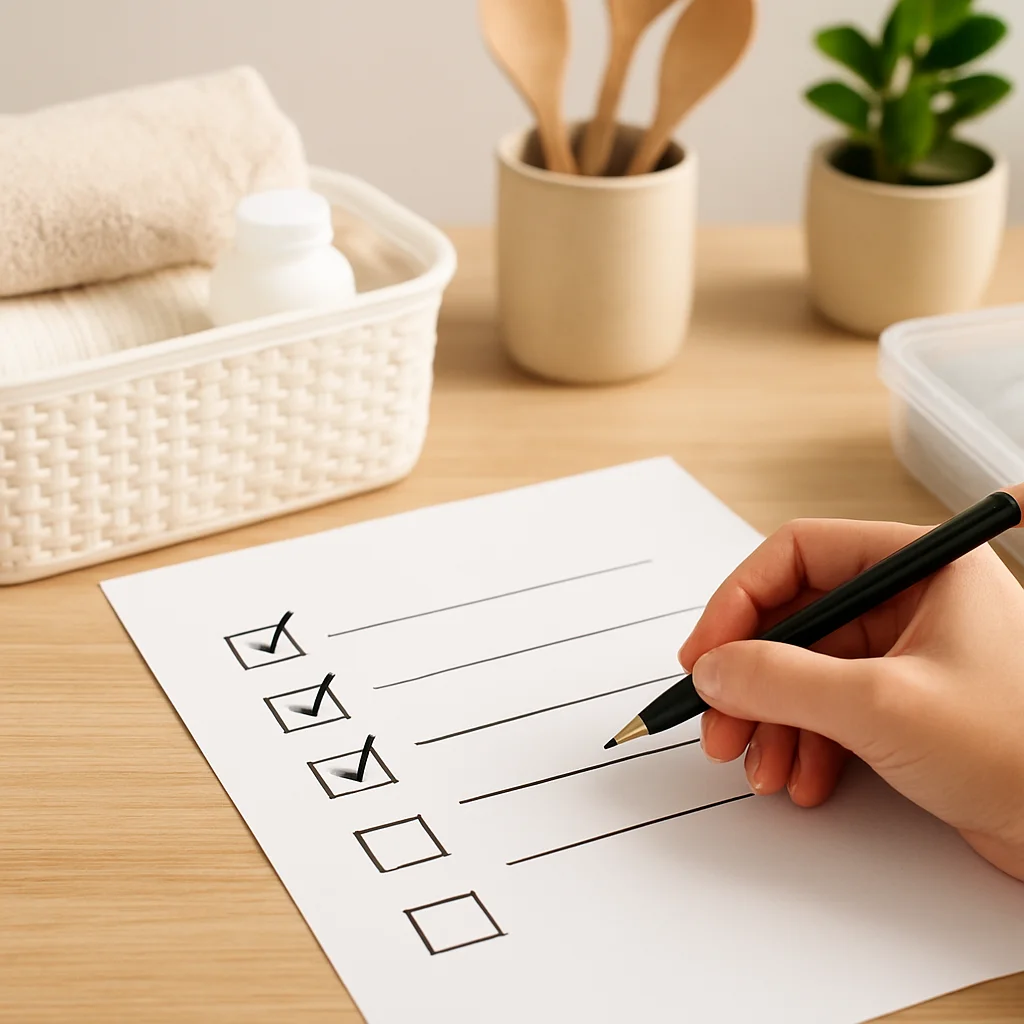
Simple Home Organization Checklist for Busy Households
A practical home organization checklist can make daily life calmer, faster, and far less stressful for busy households. When every item has a place and every routine has a rhythm, it becomes easier to keep your home tidy without spending all weekend cleaning. This guide gives you a complete, realistic system you can use to organise your home room by room, reduce clutter, and create habits that actually stick.
Whether you are managing a family, juggling shift work, or simply tired of re-organising the same spaces over and over, this home organization checklist will help you build a home that feels easier to live in. It is designed to be simple, repeatable, and flexible enough for real life.
Table of Contents
- Why you need a home organization checklist
- How to use the checklist effectively
- Entryway and living room
- Kitchen and pantry
- Bedrooms and wardrobes
- Bathroom and laundry
- Home office and paperwork
- Children and family zones
- Weekly, monthly, and seasonal reset
- Habits that make it stick
- When to simplify even more
- Conclusion
Why you need a home organization checklist
A cluttered home usually is not a sign of laziness; it is often a sign of a system that is too complicated for the people using it. Busy households need organisation that saves time, reduces decision fatigue, and makes cleaning easier. A good home organization checklist does exactly that.
Instead of trying to “get organised” in one exhausting weekend, a checklist breaks the process into manageable steps. You can focus on one room, one category, or one habit at a time. This creates steady progress and prevents the all-or-nothing cycle of tidying hard, burning out, and falling behind again.
It also helps with daily efficiency. When keys, chargers, documents, snacks, and cleaning supplies all have designated spaces, fewer minutes are wasted searching for things. That means smoother mornings, faster evenings, and less stress for everyone in the home.
How to use the checklist effectively
Before you start, gather three containers: keep, donate, and relocate. If an item belongs elsewhere, put it in the relocate box and return it later. This keeps you from getting stuck moving between rooms.
Work in small blocks of 15 to 30 minutes. Busy households do better with short, focused sessions than with long organising marathons. If possible, start with the space that affects your daily flow the most, such as the entryway, kitchen, or bedroom.
As you go through this home organization checklist, ask four simple questions about each item:
- Do we use this regularly?
- Does it belong in this space?
- Is it easy to access?
- Would a simpler setup work better?
If you want more systems that reduce day-to-day stress, you may also like [LINK_TO: How to Create a Simple Home Maintenance Checklist That Saves Time and Prevents Bigger Problems] and [LINK_TO: How to Build a Simple Weekly Life Admin System That Saves Time and Reduces Stress].
Entryway and living room
The entryway sets the tone for the whole home. It is the first place clutter builds up, especially in busy homes where bags, shoes, umbrellas, and parcel deliveries arrive all day. The goal here is to make arrivals and departures effortless.
Entryway checklist
- Install a hook or basket for each family member’s daily essentials.
- Create one shoe zone and keep footwear out of walkways.
- Use a tray or small dish for keys, cards, and loose items.
- Keep only current items near the door: umbrellas, school bags, work bags, and reusable shopping bags.
- Clear out expired mail, flyers, and packaging daily.
Living room checklist
- Assign homes for remotes, chargers, games, and blankets.
- Limit decorative items to what is easy to dust and move.
- Use baskets for throw items that tend to wander.
- Keep flat surfaces mostly clear so they are easier to wipe.
- Store frequently used items within arm’s reach, not in random piles.
A simple living room system reduces visual noise and makes it easier to reset the space quickly before guests arrive or before bedtime.
Kitchen and pantry
The kitchen is often the busiest room in the house, which is why it needs one of the most practical sections in your home organization checklist. A well-organised kitchen supports smoother meal prep, less food waste, and quicker cleanup.
Kitchen checklist
- Keep daily-use utensils in the easiest-to-reach drawer.
- Group items by task: prep, cook, serve, and clean.
- Store cooking oils, spices, and sauces near the stove.
- Clear counters of duplicates and appliances you rarely use.
- Label containers for dry goods, leftovers, and snacks.
- Check expiration dates weekly for perishables.
Pantry checklist
- Group food by category: grains, snacks, canned goods, breakfast, baking, and instant meals.
- Use clear containers or labels where possible.
- Place older items in front so they get used first.
- Keep a running list of staples that need replacing.
- Avoid overbuying by reviewing pantry stock before grocery shopping.
If your household is also trying to save time with food routines, consider pairing this guide with [LINK_TO: Beginner’s Guide to Meal Prep for Busy Weekdays] and [LINK_TO: How to Build a Simple Weekly Meal Planning System That Saves Time and Reduces Stress].
For budget-conscious households, a tidy pantry also supports smarter spending. You can tie your food system to [LINK_TO: How to Build a Simple Grocery Budget System That Saves Money and Reduces Stress] and [LINK_TO: Affordable Healthy Meals Singapore | Budget Meal Ideas].
Bedrooms and wardrobes
Bedrooms should feel restful, not crowded. The biggest improvement usually comes from reducing what is stored in the room and making clothing easy to see and put away.
Bedroom checklist
- Keep bedside tables clear except for essentials.
- Use under-bed storage only for seasonal or rarely used items.
- Remove laundry baskets, bags, and random clutter from floor spaces.
- Make the bed area simple to clean and easy to access.
- Return books, glasses, and chargers to one consistent spot.
Wardrobe checklist
- Sort clothing into keep, donate, tailor, and store.
- Keep everyday outfits at eye level or in the easiest drawers.
- Separate workwear, activewear, home wear, and occasion wear.
- Remove items that no longer fit your lifestyle or body.
- Use the hanger rule: if you do not wear it, let it go.
A simplified wardrobe can also reduce morning stress. When clothes are easier to find, it becomes easier to start the day with less friction.
Bathroom and laundry
Bathrooms and laundry areas are often small, which means organisation matters even more. These spaces work best when you keep only what is needed for everyday routines.
Bathroom checklist
- Group toiletries by person or by category.
- Discard expired skincare, medication, and cosmetics.
- Keep cleaning supplies in a safe, designated place.
- Use drawer dividers or small trays to prevent loose clutter.
- Restock toilet paper, soap, and tissue before they run out.
Laundry checklist
- Create clear zones for dirty laundry, clean laundry, and folding.
- Keep detergent, stain remover, and clothespins together.
- Use one basket per family member if that helps sorting.
- Fold or hang clothes as soon as possible to prevent pile-ups.
- Keep only current-season laundry tools in the laundry area.
If you like structured systems that reduce ongoing overwhelm, [LINK_TO: How to Build a Simple Personal Budget System That Saves Time and Reduces Stress] and [LINK_TO: How to Create a Simple Monthly Budget Review System That Saves Time and Reduces Stress] use the same principle: small, repeatable habits beat big, occasional cleanups.
Home office and paperwork
Paper clutter can quietly become one of the most stressful parts of the home. A few bills, school forms, receipts, and warranties can quickly turn into a drawer full of uncertainty. That is why your home organization checklist should include a simple paper system.
Home office checklist
- Keep only active documents on your desk.
- Use one filing system for bills, receipts, medical records, and warranties.
- Store office supplies together in one container or drawer.
- Charge devices in a designated spot.
- Shred or recycle outdated documents regularly.
Paperwork checklist
- Create a “to file” tray and empty it weekly.
- Digitise important documents where practical.
- Keep school letters, forms, and reminders in one folder.
- Review subscriptions, memberships, and recurring paperwork monthly.
If your household includes budgeting, admin, or planning tasks, these systems connect well with [LINK_TO: How to Build a Simple Monthly Life Admin System That Saves Time and Reduces Stress] and [LINK_TO: How to Create a Simple Weekly Life Admin System That Saves Time and Reduces Stress].
Children and family zones
For families, organisation needs to be simple enough that children can participate. If a system is too complicated, it will not survive busy school mornings or tired evenings. Keep storage low, visible, and easy to understand.
Family-friendly checklist
- Use open bins for toys and books by category.
- Label storage with words or pictures.
- Keep school bags, water bottles, and lunch items near the exit.
- Rotate toys instead of storing everything in one space.
- Place frequently used family items where children can access them safely.
- Create a “drop zone” for homework, consent forms, and school notices.
Teach children one simple rule: everything returns to its home after use. That single habit, repeated often, is more effective than any elaborate system.
Weekly, monthly, and seasonal reset
A strong home organization checklist is not just about the initial tidy-up. It is about maintaining the system so it does not fall apart. The best way to do that is with a reset routine.
Weekly reset
- Return misplaced items to their proper places.
- Clear expired food, rubbish, and recycling.
- Reset the entryway, kitchen counters, and main surfaces.
- Review laundry, paperwork, and supplies.
- Check what needs restocking for the week ahead.
Monthly reset
- Declutter one category or one room.
- Review clothing, pantry items, and household supplies.
- Wipe down storage areas and hard-to-reach spots.
- Donate unused items before they become permanent clutter.
- Adjust storage if your family’s routines have changed.
Seasonal reset
- Switch out seasonal clothing, bedding, and equipment.
- Review school, holiday, or travel-related items.
- Refresh labels, containers, and storage zones.
- Let go of items that are no longer useful this season.
These regular resets are similar to having a planning rhythm for food or finances. For example, [LINK_TO: Budget Planner Template for Beginners: A Weekly System That Actually Sticks] and [LINK_TO: How to Build a Simple Monthly Budget Review System That Saves Time and Reduces Stress] work because they prevent small issues from becoming large ones.
Habits that make it stick
Organising your home is only half the job. The real win comes from keeping the system easy enough to maintain. These habits help busy households stay on track.
- One-minute reset — At the end of each day, spend one minute returning obvious items to their homes.
- One in, one out — For items like clothing, toys, and kitchen tools, remove one thing when a new one comes in.
- Put it away now — Avoid creating “temporary” piles that become permanent clutter.
- Keep categories small — Fewer categories usually mean easier upkeep.
- Make the path of least resistance the tidy path — Store items where they are most likely to be returned properly.
If your household is already using planning systems for food, you will recognise this principle in [LINK_TO: Macro Based Diet Management: Update Calories & Macros] or [LINK_TO: How to Count Macros for Beginners | KnowMeal]. Simplicity helps consistency, whether you are organising a kitchen, a budget, or your meals.
When to simplify even more
Sometimes a home feels messy not because the household is failing, but because there is simply too much stuff, too many storage steps, or too many categories. If you keep reorganising the same areas, it may be time to simplify further.
Ask whether you can:
- Remove a storage basket, not add one.
- Combine two categories into one.
- Keep less on display.
- Store items closer to where they are used.
- Reduce duplicate products.
This is especially helpful in small homes, shared spaces, or homes with children. A lighter system is easier to maintain, and easier systems create more consistency over time.
In the same way that [LINK_TO: Whole Food Meal Plan for Easy, Healthy Weight Loss] and [LINK_TO: High Protein Meal Plan Singapore for Fat Loss] focus on sustainability rather than perfection, home organisation works best when it supports real life rather than ideal life.
Conclusion
A practical home organization checklist gives busy households a clear way to reduce clutter, save time, and make the home feel calmer every day. Instead of trying to organise everything at once, focus on the spaces that affect your daily routine most, then maintain them with small weekly and monthly resets.
The goal is not a perfect home. The goal is a home that works better for the people living in it. Start with one area today, keep the system simple, and build from there. For more easy-to-maintain systems that reduce stress in everyday life, explore KnowMeal’s guides and build a home routine that truly fits your family.
Ready to make home life simpler? Start with this checklist, choose one room, and organise for the way you actually live.