
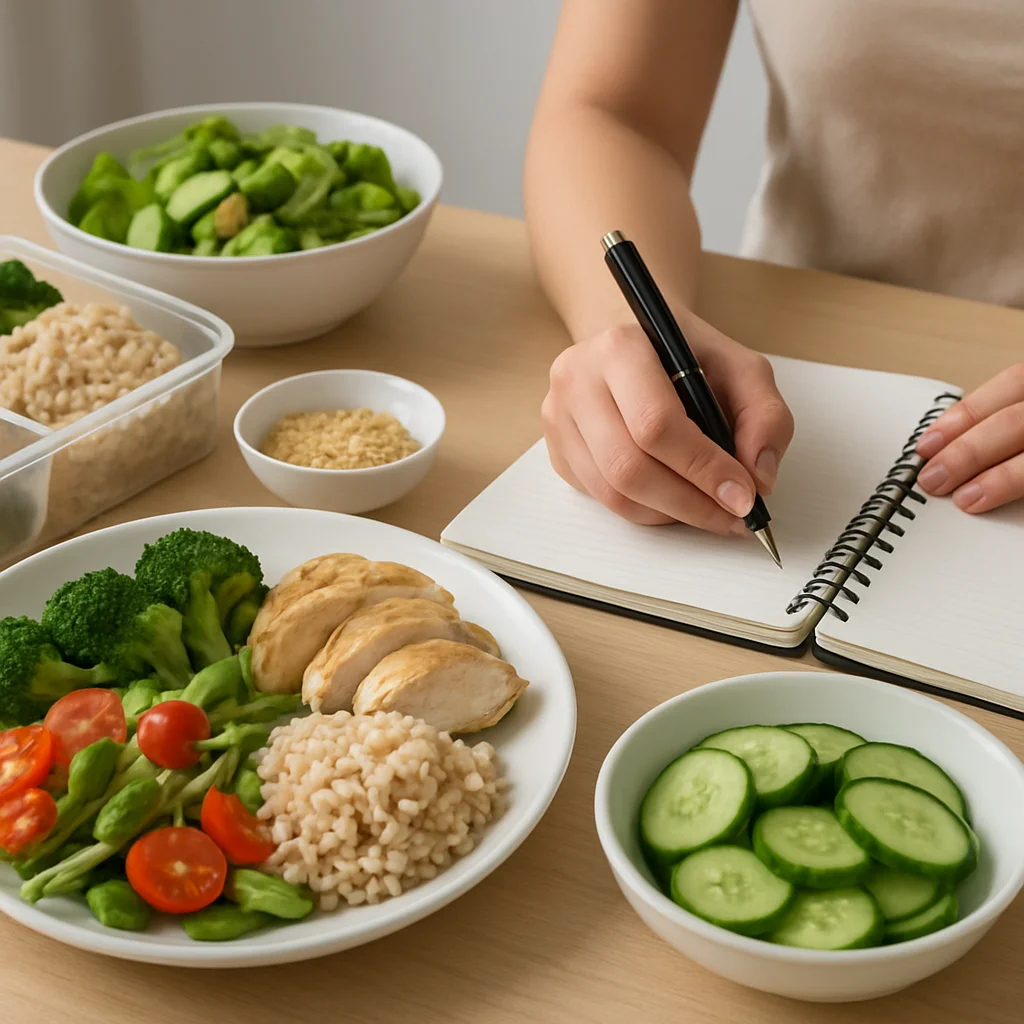
Healthy Meal Planning for Busy People: A Simple System That Actually Sticks
Table of contents
- Why healthy meal planning for busy people works
- The core principles of a system that sticks
- A simple step-by-step weekly meal planning system
- Time-saving strategies for busy weekdays
- How to build balanced meals without overthinking
- Shopping, prep, and storage made easy
- How to make it work for families and budgets
- Common mistakes that break consistency
- Conclusion
Why healthy meal planning for busy people works
Healthy meal planning for busy people is not about making perfect meals or spending Sundays cooking for six hours. It is about reducing decision fatigue, saving time, and making the healthy choice the easiest choice when your schedule is full. If you are juggling work, school runs, long commutes, training, or family responsibilities, the biggest challenge is rarely knowing what healthy food looks like. The real challenge is consistently putting it together when life gets hectic.
A simple planning system helps you eat better with less stress. It keeps groceries focused, meals predictable, and portions easier to manage. That means fewer last-minute takeout orders, fewer skipped meals, and more energy throughout the day. For many people, consistency matters far more than complexity.
This approach is especially useful if your goals include weight management, body recomposition, better blood sugar control, or just feeling more in control around food. When your plan is built around realistic routines and familiar foods, it becomes sustainable instead of restrictive. For a more tailored approach, you can also explore [LINK_TO: personalised nutrition meal plan for Singapore] and [LINK_TO: tdee calculator singapore set calories and macros].
The core principles of a system that sticks
Before you build your weekly plan, it helps to understand the few rules that make healthy meal planning for busy people actually work long term.
1. Keep the number of decisions low
The more choices you make each day, the harder it becomes to stay consistent. A meal plan should reduce choices, not create a new project. Use repeatable breakfasts, rotate a short list of lunches and dinners, and keep snacks simple.
2. Build meals around anchors
Every meal should have a protein anchor, a fibre source, and a satisfying carb or fat source. This makes meals more filling and balanced without needing complicated recipes. For example, chicken, tofu, eggs, fish, tempeh, Greek yogurt, or lean beef can be your anchor foods.
3. Match your plan to your real schedule
A plan that assumes you have two hours to cook every evening will fail if your weekdays are packed. Instead, design around your busiest days. Use quick meals on weekdays and save slightly more involved cooking for weekends.
4. Repeat what works
One of the smartest habits in healthy meal planning for busy people is repetition. Repeating breakfasts and lunches creates structure and cuts mental load. Variety can still come from sauces, spices, vegetables, and rotating proteins.
A simple step-by-step weekly meal planning system
Here is a practical system you can use every week without overcomplicating the process.
Step 1: Choose your weekly structure
Start by deciding how many meals you need to plan. For example, you may only need:
- 5 workday breakfasts
- 5 lunches
- 3 to 5 dinners
- 2 to 3 snack options
If you eat out often, plan only the meals you can control. Healthy meal planning for busy people should fit your reality, not an ideal schedule.
Step 2: Pick 2 to 3 options per meal
Instead of creating seven different meals, select a small rotation. For breakfast, you might choose overnight oats, eggs with toast, and a high-protein yogurt bowl. For lunch, maybe rice bowls, wrap lunches, and noodle salads. For dinner, choose one tray bake, one stir-fry, and one simple soup or curry.
If breakfast is where your routine usually breaks down, start with [LINK_TO: high-protein breakfast ideas for busy weekdays]. A strong breakfast can make the rest of the day much easier.
Step 3: Build your grocery list from the meals
Write your shopping list only after selecting meals. Group ingredients by category: protein, vegetables, fruits, carbs, fats, sauces, and pantry items. This makes grocery shopping faster and prevents overbuying.
If you want a shortcut, use [LINK_TO: healthy meal plan singapore affordable whole foods] for a practical, localised food strategy, or [LINK_TO: high-protein budget grocery list for busy weekdays] if you are trying to keep costs down.
Step 4: Prep only the time-saving parts
You do not need to batch cook every meal. Instead, prep the parts that save the most time: wash and chop vegetables, cook a batch of rice or noodles, marinate proteins, boil eggs, or portion snacks into containers.
Step 5: Review and repeat
At the end of the week, ask three questions:
- What meals were easiest to stick to?
- What meals were ignored or wasted?
- What one change would make next week easier?
This simple review helps you refine the system until it feels natural.
Time-saving strategies for busy weekdays
When schedule pressure is high, the key is not cooking more. It is cooking smarter.
Use shortcut ingredients
Frozen vegetables, pre-washed greens, canned beans, rotisserie chicken, tofu, and microwave rice can all support a healthy plan. Convenience foods are not the enemy if they help you stay consistent and still eat well.
Choose meals with overlapping ingredients
One protein can serve multiple meals. For example, cooked chicken can become a rice bowl for lunch, a wrap for dinner, and a salad topper the next day. This reduces waste and speeds up prep.
Cook once, eat twice
Make larger portions of dinner and save leftovers for lunch. This is one of the easiest habits in healthy meal planning for busy people because it cuts both cooking time and decision-making.
Keep emergency meals on hand
Busy weeks happen. Build a backup list of meals that require almost no effort, such as eggs on toast, tuna with crackers and fruit, yogurt with oats and berries, or a quick tofu and vegetable stir-fry.
Use a meal planner or generator
If planning still feels overwhelming, a tool can help you turn ideas into action. Try the [LINK_TO: daily meal plan generator for smarter meals] to simplify weekly decisions and stay consistent.
How to build balanced meals without overthinking
A balanced meal does not need to be complicated. Use this easy formula:
Protein + fibre-rich plants + smart carbs or healthy fats + flavour
This structure helps support fullness, stable energy, and better portion control. It also works well for a wide range of goals, from fat loss to muscle gain.
Examples of balanced meals
- Breakfast: Greek yogurt, oats, berries, and chia seeds
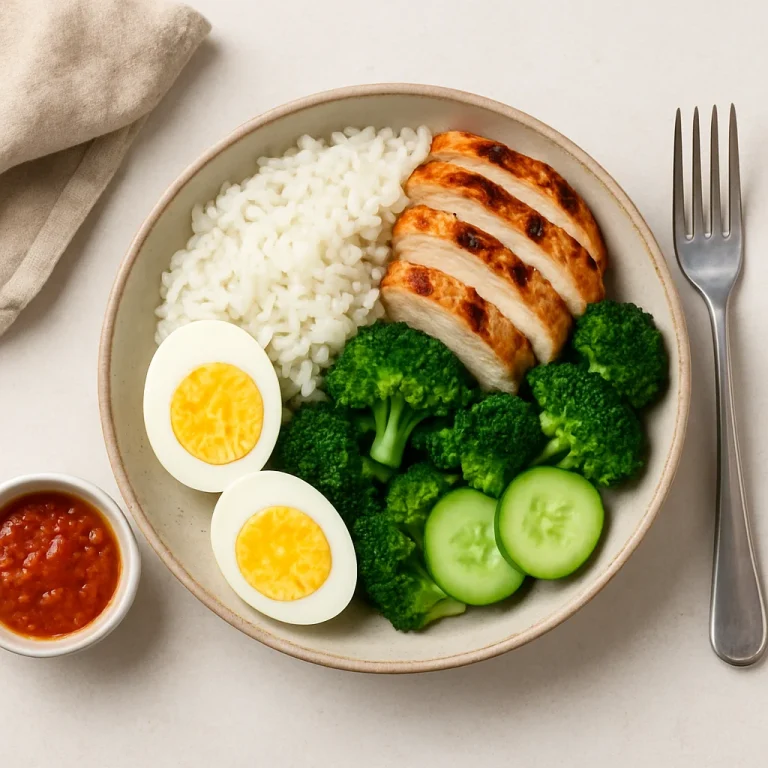
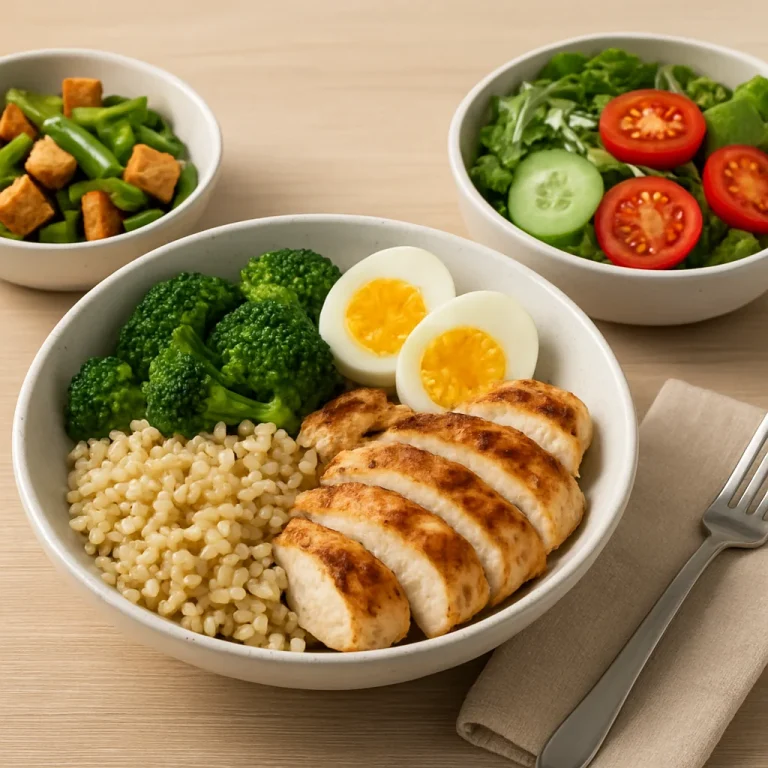
- Lunch: Chicken rice bowl with mixed vegetables and a light sauce
- Dinner: Salmon, sweet potato, and stir-fried greens
- Snack: Boiled eggs and fruit
If you are trying to manage appetite more effectively, prioritising protein at each meal can help. For practical support, see [LINK_TO: what to eat when you need high protein on a budget 7-day grocery and meal strategy].
Simple portion guide
You do not need perfect macro tracking to benefit from structure. A simple visual guide can work well:
- 1 palm of protein
- 1 to 2 fists of vegetables
- 1 cupped hand of carbs
- 1 thumb of fats
If your goal is body recomposition or fat loss, you may need more specific calorie and macro targets. In that case, use [LINK_TO: tdee calculator singapore set calories and macros] before adjusting meal portions. For a more targeted plan, [LINK_TO: body recomposition meal plan singapore] can also help you align meals with your training goals.
Shopping, prep, and storage made easy
The best meal plan fails if the food spoils, gets forgotten, or becomes too inconvenient to use. That is why shopping and storage matter just as much as recipe choice.
Shop from a master list
Create a recurring grocery list of your most-used foods. This might include eggs, chicken, tofu, Greek yogurt, oats, rice, bananas, apples, leafy greens, carrots, tomatoes, frozen vegetables, beans, and a few sauces or seasonings.
Store food by meal type
Keep cooked proteins, chopped vegetables, and ready-to-eat snacks visible in the fridge. Put high-priority foods at eye level. The easier it is to grab a healthy option, the more likely you are to use it.
Use batch prep blocks, not all-day prep
Set aside 20 to 45 minutes, two times a week, rather than one exhausting prep session. Small prep windows are easier to maintain and less likely to feel overwhelming.
Label leftovers
Use containers with dates so you know what needs to be eaten first. This prevents waste and makes weekday meals less stressful.
How to make it work for families and budgets
Healthy meal planning for busy people should be realistic for family life too. If you are feeding more than one person, the goal is not to make separate meals for everyone. The goal is to create a base meal that can be adapted.
Build family-friendly meal bases
Choose meals that can be customised at the table, such as rice bowls, wraps, noodle dishes, soups, curries, and tray bakes. Add different toppings or sides to suit different preferences without cooking from scratch twice.
Keep the budget under control
Affordable healthy eating is possible when you focus on whole foods that are filling and versatile. Eggs, tofu, chicken thighs, canned fish, lentils, beans, oats, rice, seasonal vegetables, and fruit can all support a strong meal plan.
If you want a local food approach that stays practical and affordable, explore [LINK_TO: healthy meal plan singapore affordable whole foods]. For families, [LINK_TO: family meal planning app for easier weekly meals] may also help coordinate shopping, meals, and routines.
Use theme nights
Theme nights reduce planning pressure. For example:
- Monday: rice bowls
- Tuesday: wraps or sandwiches
- Wednesday: stir-fry
- Thursday: soup or curry
- Friday: leftover night
This keeps the system simple enough to repeat every week.
Common mistakes that break consistency
Even a good meal plan can fail if it becomes too ambitious. These are the most common mistakes to avoid.
Planning too many new recipes
New recipes can be exciting, but too many create friction. Stick to a small pool of reliable meals first, then add variety slowly.
Ignoring your busiest days
If Tuesday and Thursday are your hardest days, plan your easiest meals then. Do not save all the convenience meals for the weekend.
Trying to be too strict
A plan that has no flexibility usually breaks after the first unexpected event. Leave room for restaurant meals, social events, and cravings. Sustainable planning includes real life.
Not keeping backup food
Without emergency food in the house, hunger often leads to impulsive choices. A few shelf-stable meals can protect your progress.
Making planning too complicated
The more detailed the system, the harder it is to maintain. Healthy meal planning for busy people should feel easy enough to repeat on a stressful week.
Conclusion
The best healthy meal planning for busy people is simple, repeatable, and built around your actual life. You do not need a perfect menu or a long list of recipes. You need a small system that reduces decisions, saves time, and makes healthier eating feel manageable even on your most hectic days.
Start with a few reliable breakfasts, lunches, and dinners. Keep your grocery list focused. Prep only the parts that save time. Review what works, adjust what does not, and repeat the meals that make your week easier. Over time, those small choices add up to better energy, better consistency, and better results.
Ready to make meal planning easier? Start with one week of simple meals, use a planner or generator to reduce decision fatigue, and build a routine you can actually stick to. Explore KnowMeal’s tools and guides to create a healthier system that fits your schedule.




One Comment