Daily Meal Plan Generator for Smarter Meals | KnowMeal
daily meal plan generator
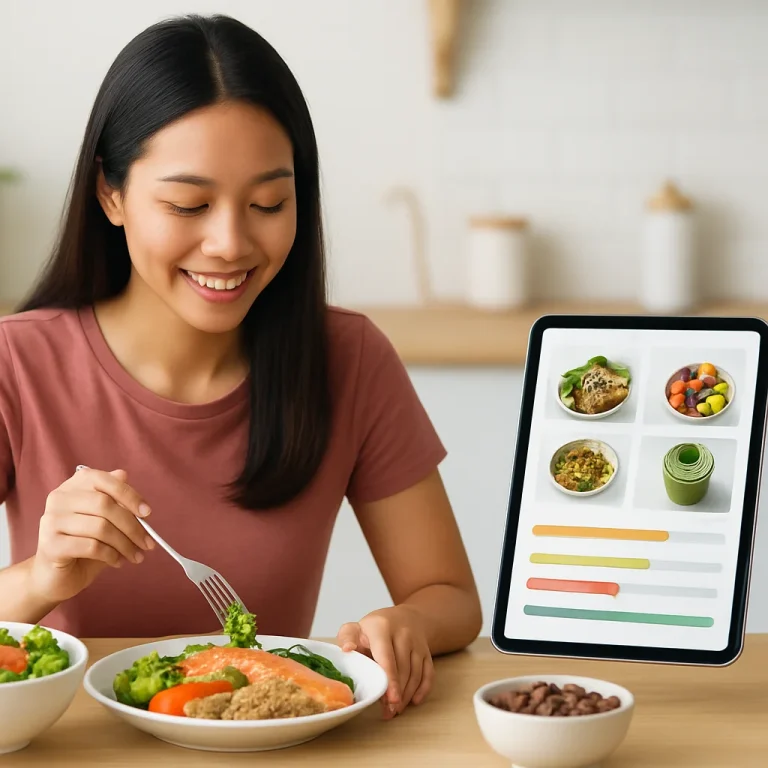
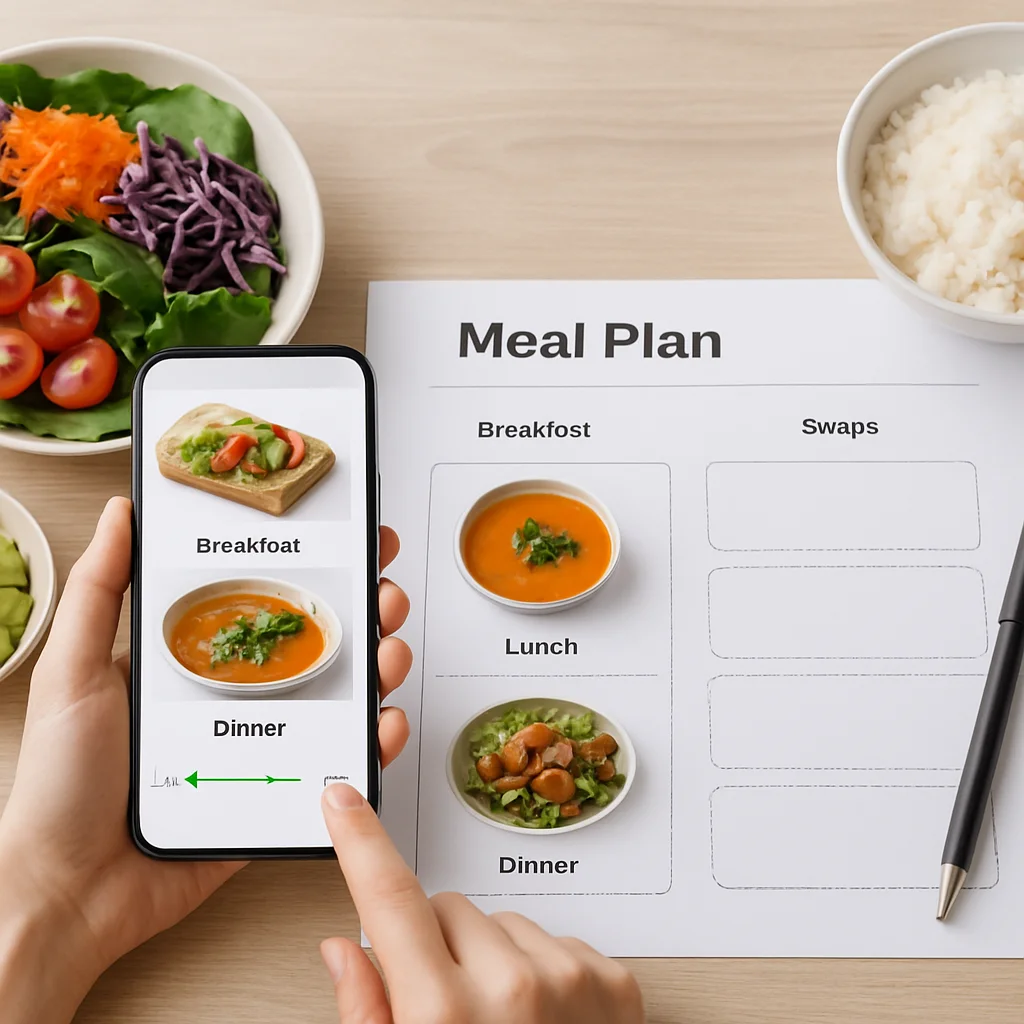
A daily meal plan generator turns your calorie and macro targets into actual meals you can cook, eat, and repeat without guesswork. The best ones do more than spit out a list of foods: they let you adjust portions, swap ingredients, and keep the day aligned when real life changes the plan at 11:47 a.m.
This guide shows you how the workflow should work from target-setting to meal generation, portion tweaking, and practical swaps. You’ll also learn how to use a daily meal plan generator for weight loss, muscle gain, family meal prep, and insulin-resistant or blood-pressure-conscious eating with Singapore-available foods.
Key takeaways
- Start with calories, protein, carbs, and fats.
- Generate meals, then adjust portions.
- Keep swaps simple and culturally familiar.
- Use whole foods from local markets.
- Plan for family and work realities.
- Track fibre and sodium, not just calories.
If you’ve ever stared at chicken, rice, and broccoli and thought, “Surely there’s a smarter way,” there is. The trick is using a system that gives structure first, then flexibility second. That balance matters more than people think.
What a daily meal plan generator actually does
A daily meal plan generator takes your TDEE-based calorie target and macro goals, then builds a day of meals that roughly fits those numbers. Good systems also respect food preferences, meal timing, and practical constraints like budget, cooking time, and household size.
For KnowMeal, that means the meal plan isn’t random. It starts with your goal, whether that’s weight loss, muscle gain, maintenance, or body recomposition, and then generates a day from a curated whole-food database with calorie and macro tolerance ranges. That usually means calories ±50, protein ±10g, carbs ±8g, and fat ±5g. Those ranges are much easier to live with than a plan that pretends exactness survives a dinner plate and a busy schedule.
A useful generator should also understand real activity, not just a vague “lightly active” label. KnowMeal’s component-based method looks at work type and exercise sessions with duration, which is more accurate than a simple 1-to-5 scale. A desk job plus a 45-minute hypertrophy session doesn’t behave like a person standing all day at a hawker centre stall. Bodies notice the difference.
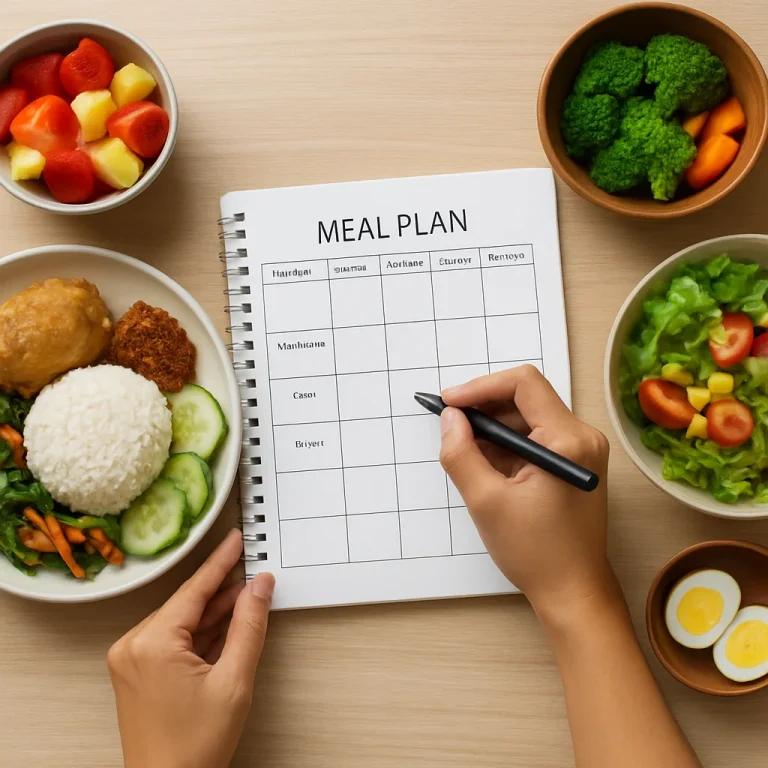
[IMAGE: Meal planning dashboard with calorie and macro targets — alt text: daily meal plan generator dashboard showing calorie and macro targets with meal slots]
The workflow: from targets to meals
The best way to use a daily meal plan generator is to think in stages. First, set the target. Then generate. Then adjust. That sequence matters because the plan should serve your life, not the other way around.
1) Set the target properly
Start with your TDEE, then apply a goal-specific calorie target. A moderate fat-loss phase often uses a 300–500 kcal deficit, while muscle gain may need a small surplus. For body recomposition, many people do best around maintenance or a very slight deficit, especially if protein intake is high and training is consistent.
Protein is the anchor. A practical range for many active adults is around 1.6–2.2g per kg body weight per day, though personal needs vary. Carbs support training and energy. Fat matters for hormones, satiety, and food satisfaction. None of that is glamorous, but it works.
If someone has diabetes, hypertension, kidney disease, or a history of medical nutrition issues, the target should be set with appropriate professional guidance. This article is informational, not medical advice.
2) Generate the day from whole foods
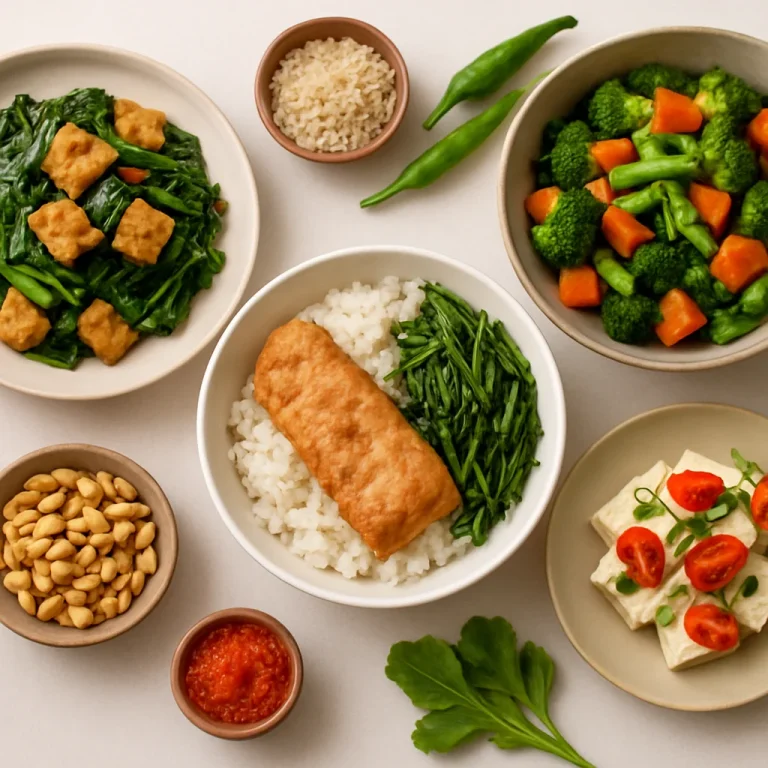
A strong generator uses actual foods people can buy. In Singapore, that means items from NTUC FairPrice, Sheng Siong, Cold Storage, Giant, wet markets, and local provision shops. Think eggs, tofu, Greek yogurt, ikan kembung, chicken breast, salmon, tempeh, brown rice, oats, sweet potato, chapati, leafy greens, and fruit like papaya, guava, and bananas.
The best meal generation avoids food chaos. KnowMeal’s smart meal generation uses rules like:
- Max-2-per-food variety so you don’t end up with three meals built on the same chicken thigh
- Must-have foods if a user needs specific ingredients included
- Calorie-budget-aware logic so the day stays within the target
- Family alignment so everyone can eat the same meal at the same time
That last one matters more than people expect. A family meal prep plan that gives every person a separate dinner is technically “personalised” and practically exhausting.
3) Review the meals before cooking
A generator should never be treated like a vending machine. Review the day with a human eye. Ask:
- Does breakfast have enough protein?
- Is lunch too low in fibre?
- Is dinner too heavy for a late training session?
- Are sodium levels reasonable if blood pressure is a concern?
- Does the day include enough vegetables to hit 20g+ fibre?
A day that looks good on a screen can still feel terrible in real life if every meal is dry chicken and steamed beans. Food should be edible, not just compliant.
How to adjust portions without breaking the plan
This is where most people either overcomplicate things or give up. A daily meal plan generator should make portion changes easy, because real life rarely matches the first draft.
Use portion changes before food swaps
If the plan is close, adjust the portion first. That’s usually the cleanest move. For example:
- Reduce cooked rice from 200g to 150g
- Increase chicken breast from 120g to 160g
- Add one boiled egg for extra satiety
- Trim cooking oil from 1 tbsp to 1 tsp
- Add a banana if training volume is higher that day
Small changes are often enough to fix the numbers. It’s the nutrition version of tightening a screw instead of rebuilding the whole table.
Know which macro each adjustment changes
This part helps people stop guessing.
- Protein: chicken breast, tofu, eggs, Greek yogurt, fish, tempeh
- Carbs: rice, oats, potatoes, sweet potato, wholemeal bread, fruit
- Fat: avocado, nuts, seeds, whole eggs, salmon, olive oil
If a meal is low in protein, don’t fix it with more rice. If it’s too high in calories, reducing oil can help quickly because fats are calorie-dense. One tablespoon of cooking oil is roughly 120 kcal. That adds up faster than most people expect, especially in stir-fries and sambal-heavy dishes.
Keep the food familiar
The easiest plan to follow is the one that tastes normal. For Singapore and Southeast Asian households, that might mean:
- Brown rice with steamed cai xin and chicken thigh
- Oats with Greek yogurt, chia seeds, and banana
- Tofu, tempeh, and stir-fried kangkong
- Fish soup with extra vegetables and reduced noodles
- Chapati with eggs and dhal
- Sliced papaya or guava as a snack
Familiar foods reduce decision fatigue. They also make it easier for family members to eat the same meal, which is one of the reasons a daily meal plan generator is useful for households, not just solo users.
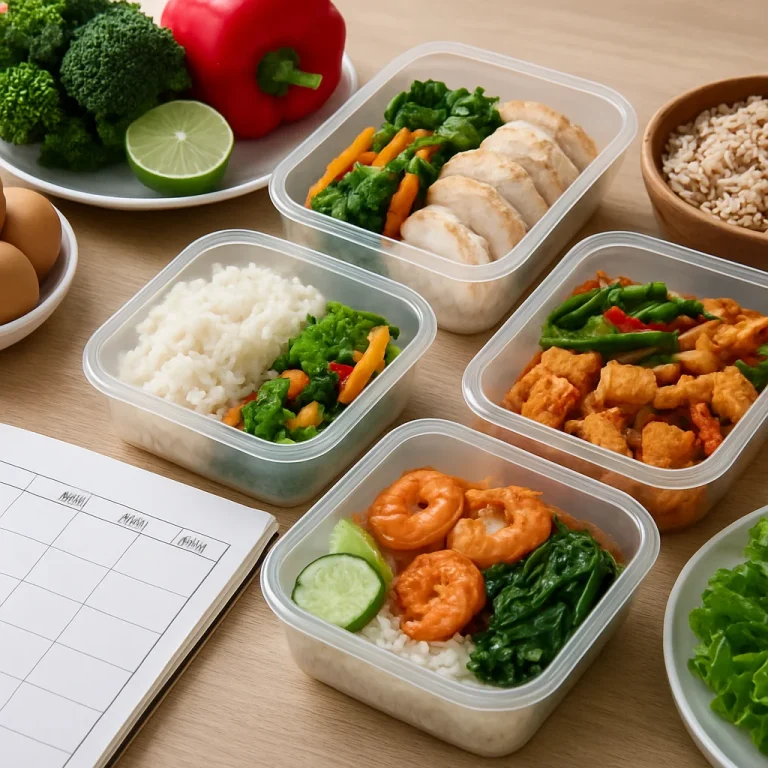
[IMAGE: Singapore-style meal prep containers — alt text: portion-controlled Southeast Asian meal prep with rice, fish, vegetables, and fruit]
Smart swaps for real-life situations
A plan is only useful if it survives interruptions. Meetings happen. Children refuse vegetables they liked yesterday. Someone eats your yoghurt. Life is extremely committed to this bit.
If you need more calories
Add one of these:
- Extra rice or noodles
- A second fruit serving
- An additional egg
- More tofu or tempeh
- A small handful of nuts
This works well for muscle gain or high-activity days. It also helps people who under-eat during busy workweeks and then overeat at night.
If you need fewer calories
Trim one of these first:
- Cooking oil
- Sauce and gravy portions
- Rice or noodle serving size
- Nuts and nut butters
- Fatty cuts of meat
The best cut is usually the least disruptive one. Nobody misses the hidden oil, but they do notice when dinner becomes tiny and joyless.
If insulin resistance is a concern
Focus on protein, fibre, and slower-digesting carbs. Pair carbs with protein and vegetables instead of eating them alone. For example, rice with chicken and kangkong is usually more balanced than a lone bowl of white rice.
Practical choices include:
- Brown or mixed-grain rice in sensible portions
- Oats instead of sugary cereals
- Whole fruit instead of fruit juice
- Dhal, beans, and chickpeas
- Vegetables at every meal
This isn’t about demonising carbs. It’s about timing and pairing them in a way that supports better blood glucose control.
If high blood pressure is a concern
Lower sodium where possible and make room for potassium-rich foods like leafy greens, mushrooms, beans, bananas, and yoghurt if tolerated. Go easy on processed meats, instant noodles, salty sauces, and heavy gravies.
In Singapore, this often means choosing less sambal, less soy sauce, and more boiled, steamed, or stir-fried dishes with measured seasoning. Hawker food can still fit, but the portion and frequency matter.
If kidney health is a concern
Protein targets need individualised guidance. That’s not a DIY corner of nutrition. People with kidney disease or reduced kidney function should work with a qualified clinician or dietitian before using high-protein goals. A meal plan generator should support that conversation, not replace it.
Why family mode matters more than people expect
Family planning fails when everyone gets a separate menu. That’s a fast route to resentment and three piles of dishes. KnowMeal’s family mode solves this by aligning meals so the household eats the same food at the same meal, then adjusting portions per person.
That means one dinner can serve a parent, a teenager, and a grandparent without turning the kitchen into a short-order café. Shared grocery lists also keep shopping manageable. That’s especially useful in Singapore where many families shop once or twice a week at NTUC FairPrice, Sheng Siong, or a wet market.
A practical family meal prep week might include:
- Chicken stir-fry with mixed vegetables
- Fish soup with tofu and leafy greens
- Egg omelette with mushrooms and tomatoes
- Lean minced pork with cabbage and rice
- Steamed sweet potato, fruit, and yoghurt for snacks
If you’re cooking for four people, that shared format saves time. It also reduces waste because you can buy in bulk and batch-cook intelligently.
How trainers and busy professionals use it
Personal trainers don’t need a spreadsheet jungle. They need a clear way to set targets, generate meal plans, and export them in a format clients will actually read. KnowMeal supports up to 100 clients with branded PDF exports, configurable logos, taglines, and promotional content.
That matters because clients don’t always remember what was said in session. A clean PDF with meals, portions, and grocery guidance is more likely to be followed than a voice note buried under WhatsApp memes.
Busy professionals benefit too. If you’re handling meetings, commuting, and family meals, the goal isn’t perfection. The goal is consistency. A daily meal plan generator can reduce decision fatigue so you’re not negotiating with yourself at 8 p.m. about whether “just one more snack” counts. It usually does.
What to look for in a good daily meal plan generator
Not all tools are equal. Some are glorified calorie calculators with a prettier interface. A worthwhile system should include:
- TDEE-based targets
- Macro-based meal planning
- Food variety controls
- Drag-and-drop meal slot editing
- Real-time macro updates
- Shared family meal support
- Professional export options
- Simple food database with local options
It should also be transparent about tolerance ranges and not pretend every meal is mathematically perfect. Food labels vary. Cooking methods vary. Chicken thighs are not all the same size, inconvenient as that may be.
[IMAGE: Drag-and-drop meal planning interface — alt text: daily meal plan generator with drag and drop meal slot customisation and macro updates]
A simple example of the workflow
Let’s say a user in Singapore wants fat loss with enough protein for strength training. The system calculates a calorie target, then generates a day like this:
- Breakfast: oats, Greek yogurt, chia seeds, banana
- Lunch: brown rice, grilled chicken breast, broccoli, carrots
- Snack: boiled eggs and guava
- Dinner: tofu, ikan kembung, kangkong, small serving of rice
If the user trains in the evening, the generator can shift more carbs to dinner or add a fruit snack before training. If lunch is eaten at a hawker centre, the plan can swap to economical rice with steamed veg and braised tofu, then adjust dinner portions to stay on target.
That workflow is the whole point. Generate, check, adjust, repeat. Simple enough to use on a Tuesday. Flexible enough to survive Friday.
Common mistakes to avoid
People usually don’t fail because they lack information. They fail because the system is too rigid or too vague.
Avoid these mistakes:
- Picking a calorie target without checking activity level
- Ignoring protein because calories feel more dramatic
- Swapping foods randomly until the macro target disappears
- Forgetting fibre and ending up hungry all afternoon
- Using a plan that doesn’t match family or work routines
- Treating one day like a moral test instead of data
The better approach is to keep the framework steady and change the parts that need changing. That’s how a daily meal plan generator becomes useful instead of decorative.
FAQs about daily meal plan generators
Can a daily meal plan generator help with weight loss?
Yes, if it starts with the right calorie target and keeps protein high enough to preserve fullness and lean mass. The plan still needs your follow-through, which is where portion control and realistic food choices matter.
Is it better to swap foods or change portions?
Change portions first if the meal is already close to your target. Swap foods when the plan doesn’t fit your taste, budget, or digestion well.
Can I use a meal plan generator for my whole family?
Yes, and family mode is often easier than making separate meals. The key is aligning the main dish, then adjusting portions for different ages and goals.
What foods work best for Singapore meal planning?
Affordable whole foods like eggs, tofu, chicken, ikan kembung, brown rice, oats, leafy vegetables, papaya, and beans work well. They’re easy to find, reasonably priced, and simple to batch-cook.
How do I keep fibre high enough?
Include vegetables at every main meal and add beans, fruit, oats, or seeds where possible. A practical goal is 20g or more per day, though some people benefit from more.
Is this a substitute for medical advice?
No. If you have diabetes, kidney disease, high blood pressure, or another medical condition, use any meal-planning tool alongside qualified medical guidance. Nutrition tools support decisions; they don’t replace clinical care.
Final thought
A daily meal plan generator works best when it does two jobs well: it turns targets into meals, and it gives you a sane way to adjust those meals when reality intervenes. That combination is what makes the plan stick.
If you want a system built for Singapore foods, family meals, body recomposition, and practical macro tracking, KnowMeal is designed for that workflow. It’s the difference between “I should eat better” and actually knowing what dinner looks like before you get hungry.
[PRIMARY CTA] Build a personalised meal plan that fits your calories, macros, and real life. Try KnowMeal to generate Singapore-friendly daily meal plans, adjust portions fast, and keep the whole household on track.
Key Takeaways
- Start with targets, not random recipes.
- Generate meals, then adjust portions.
- Choose familiar whole foods you’ll repeat.
- Keep family meals aligned and simple.
- Track fibre, sodium, and protein together.
Frequently Asked Questions
Q: What does a daily meal plan generator do?
How accurate is a daily meal plan generator?
Can I use it for body recomposition?
What if I eat mostly Singapore hawker food?
Is the meal plan suitable for people with diabetes?
Can one plan work for the whole family?
Build a personalised meal plan that fits your calories, macros, and real life. Try KnowMeal to generate Singapore-friendly daily meal plans, adjust portions fast, and keep the whole household on track.
—ARTICLE END—